

migration from inshore to offshore in winter (Garcia-Martínez et al. 2017, 2018;
Ciércoles et al. 2019). As with annual fluctuations, this seasonality in population
abundance and structure of O. vulgaris could be modulated by environmental variables (Vargas-Yáñez et al. 2009; Puerta et al. 2016).
The maximum size reported in European waters is 40 cm mantel length
(ML) (Guerra 1992; Pierce et al. 2010; Sanchez et al. 2015). In GSA01
O. vulgaris size landings range between 10 and 29 cm dorsal mantel length
(DML) with an average of 16.36 cm (Æ2.88 SD) and modal size of 15 cm for a
small-scale fleet. For trawl fleet size landings range between 5 and 32 cm DML with
an average of 12.76 cm (Æ4.10 SD) and a modal size of 13–14 cm. Taking into
account the landings of both fleets, the O. vulgaris size ranges between 5 and 32 cm
DML with an average of 12.76 cm (Æ4.10 SD) and modal size of 15 cm. Regarding
this biometric characteristics, pots catch large specimens associated with the selectivity of the gear and the octopus’s annual life cycle (migration of mature individuals
to shallower waters for reproduction), while trawlers catch all sizes, but especially
the small ones probably owing to migration of young individuals to offshore
(Quetglas et al. 1998). For MEDITS data, the size catches range between 1 and
21 cm DML with an average of 9.64 cm (Æ10.06 SD) and a modal size of
9 cm DML.
Males become mature at a smaller size (600 gr in the Northern Alboran Sea
according to Tirado et al. 2003 and 9.67 cm DLM according to González et al.
(2011) in adjacent areas Gulf of Alicante) than females (1000 gr in the Northern
Alboran Sea according to Tirado et al. (2003) and 14.38 cm DML according to
González et al. (2011) in adjacent areas Gulf of Alicante). Males are in the reproductive state throughout the year, while females are in sexual inactivity state most of
the year (Tirado et al. 2003; González et al. 2011). Regarding the trawl fleet,
O. vulgaris was one of the five most important species, being the third one in
landings (8.33%) and the fifth one in economic value (7.61%) (Junta de Andalucía
0
30
60
90
120
150
180
0
300
600
900
1200
1500
1800
2002 2004 2006 2008 2010 2012 2014 2016
kg·km-2
Tons
Trawl fleet
Small-scale fleet
MEDITS Biomass
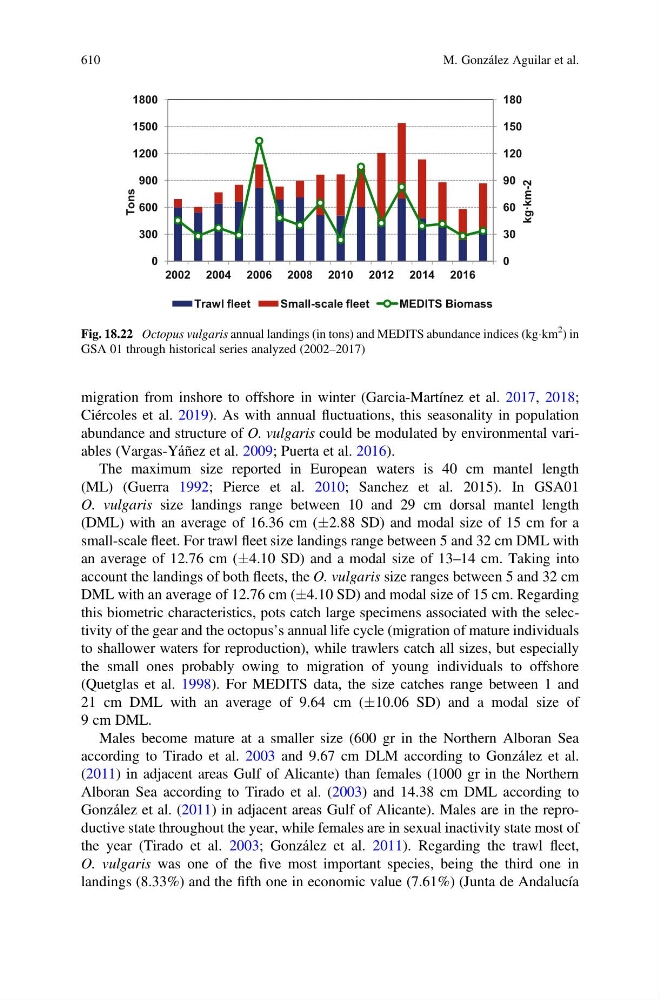
Fig. 18.22 Octopus vulgaris annual landings (in tons) and MEDITS abundance indices (kgÁkm
2
) in
GSA 01 through historical series analyzed (2002–2017)
610
M. González Aguilar et al.
Ciércoles et al. 2019). As with annual fluctuations, this seasonality in population
abundance and structure of O. vulgaris could be modulated by environmental variables (Vargas-Yáñez et al. 2009; Puerta et al. 2016).
The maximum size reported in European waters is 40 cm mantel length
(ML) (Guerra 1992; Pierce et al. 2010; Sanchez et al. 2015). In GSA01
O. vulgaris size landings range between 10 and 29 cm dorsal mantel length
(DML) with an average of 16.36 cm (Æ2.88 SD) and modal size of 15 cm for a
small-scale fleet. For trawl fleet size landings range between 5 and 32 cm DML with
an average of 12.76 cm (Æ4.10 SD) and a modal size of 13–14 cm. Taking into
account the landings of both fleets, the O. vulgaris size ranges between 5 and 32 cm
DML with an average of 12.76 cm (Æ4.10 SD) and modal size of 15 cm. Regarding
this biometric characteristics, pots catch large specimens associated with the selectivity of the gear and the octopus’s annual life cycle (migration of mature individuals
to shallower waters for reproduction), while trawlers catch all sizes, but especially
the small ones probably owing to migration of young individuals to offshore
(Quetglas et al. 1998). For MEDITS data, the size catches range between 1 and
21 cm DML with an average of 9.64 cm (Æ10.06 SD) and a modal size of
9 cm DML.
Males become mature at a smaller size (600 gr in the Northern Alboran Sea
according to Tirado et al. 2003 and 9.67 cm DLM according to González et al.
(2011) in adjacent areas Gulf of Alicante) than females (1000 gr in the Northern
Alboran Sea according to Tirado et al. (2003) and 14.38 cm DML according to
González et al. (2011) in adjacent areas Gulf of Alicante). Males are in the reproductive state throughout the year, while females are in sexual inactivity state most of
the year (Tirado et al. 2003; González et al. 2011). Regarding the trawl fleet,
O. vulgaris was one of the five most important species, being the third one in
landings (8.33%) and the fifth one in economic value (7.61%) (Junta de Andalucía
0
30
60
90
120
150
180
0
300
600
900
1200
1500
1800
2002 2004 2006 2008 2010 2012 2014 2016
kg·km-2
Tons
Trawl fleet
Small-scale fleet
MEDITS Biomass
Fig. 18.22 Octopus vulgaris annual landings (in tons) and MEDITS abundance indices (kgÁkm
2
) in
GSA 01 through historical series analyzed (2002–2017)
610
M. González Aguilar et al.