

O. vulgaris is a short lifespan species (1–2 years) with rapid growth and large
individual variation in growth rates (Mangold 1983; Domain et al. 2000). Spawning
takes place once in their lifetime, often seasonally, with a high fecundity and an
indirect embryonic development with a planktonic phase (paralarval) (Rocha et al.
2001). The natural mortality in this species is high (especially on the paralarvae
phase) and depends on environmental conditions, with highly variable recruitment
success (Faure 2002; Sánchez et al. 2015).
In the Northern Alboran Sea, O. vulgaris is the most important marketed cephalopod, with a great commercial interest and economic value (Junta de Andalucía
2016). It is mainly fished by coastal trawlers and small-scale fleets (pots and traps).
Trawl fleet operates on depths below 50 m only in soft, sandy, or muddy bottoms,
while small-scale fleet operates in any type of bottoms in coastal areas and is a highly
selective gear, focusing on O. vulgaris (Sánchez and Obarti 1993; Quetglas et al.
1998; Borges et al. 2000; Tsangridis et al. 2002; Belcari et al. 2002). The annual
average landings for 2002–2017 in the Northern Alboran Sea were 1009.9 t (56.40%
was caught by trawl fleet). These annual landings showed significant fluctuations,
from 600 t to more than 1600 t. Similar trend occurs in the MEDITS survey
(Fig. 18.22).
The cause of these fluctuations in O. vulgaris landings are unknown; although
different assumptions are suggested, like the following: (i) the influence of environmental conditions on recruitment through influence on adult fecundity, hatching
success, growth and mortality of paralarvae, and the food availability and (ii) the
increase of the fishing effort (Sobrino et al. 2002; Vargas-Yáñez et al. 2009;
Caballero-Alfonso et al. 2010; González et al. 2011; Rodhouse et al. 2014). Furthermore, intra-annual landings and population structure of O. vulgaris reveal a
marked seasonality reflecting the octopus’s annual life cycle in the study area: the
migration of mature individuals to shallower waters for reproduction purposes in
summer and followed by the dead of post-spawning specimens. The incorporation of
recruitment of young individuals to the fishery is in autumn and their fast growth and
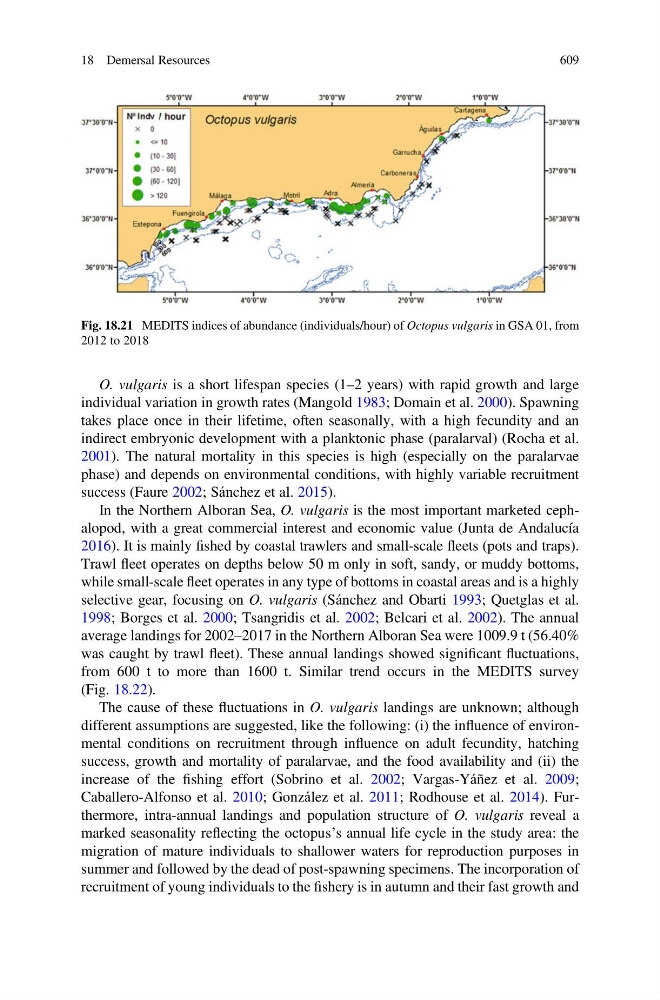
Fig. 18.21 MEDITS indices of abundance (individuals/hour) of Octopus vulgaris in GSA 01, from
2012 to 2018
18 Demersal Resources
609
individual variation in growth rates (Mangold 1983; Domain et al. 2000). Spawning
takes place once in their lifetime, often seasonally, with a high fecundity and an
indirect embryonic development with a planktonic phase (paralarval) (Rocha et al.
2001). The natural mortality in this species is high (especially on the paralarvae
phase) and depends on environmental conditions, with highly variable recruitment
success (Faure 2002; Sánchez et al. 2015).
In the Northern Alboran Sea, O. vulgaris is the most important marketed cephalopod, with a great commercial interest and economic value (Junta de Andalucía
2016). It is mainly fished by coastal trawlers and small-scale fleets (pots and traps).
Trawl fleet operates on depths below 50 m only in soft, sandy, or muddy bottoms,
while small-scale fleet operates in any type of bottoms in coastal areas and is a highly
selective gear, focusing on O. vulgaris (Sánchez and Obarti 1993; Quetglas et al.
1998; Borges et al. 2000; Tsangridis et al. 2002; Belcari et al. 2002). The annual
average landings for 2002–2017 in the Northern Alboran Sea were 1009.9 t (56.40%
was caught by trawl fleet). These annual landings showed significant fluctuations,
from 600 t to more than 1600 t. Similar trend occurs in the MEDITS survey
(Fig. 18.22).
The cause of these fluctuations in O. vulgaris landings are unknown; although
different assumptions are suggested, like the following: (i) the influence of environmental conditions on recruitment through influence on adult fecundity, hatching
success, growth and mortality of paralarvae, and the food availability and (ii) the
increase of the fishing effort (Sobrino et al. 2002; Vargas-Yáñez et al. 2009;
Caballero-Alfonso et al. 2010; González et al. 2011; Rodhouse et al. 2014). Furthermore, intra-annual landings and population structure of O. vulgaris reveal a
marked seasonality reflecting the octopus’s annual life cycle in the study area: the
migration of mature individuals to shallower waters for reproduction purposes in
summer and followed by the dead of post-spawning specimens. The incorporation of
recruitment of young individuals to the fishery is in autumn and their fast growth and
Fig. 18.21 MEDITS indices of abundance (individuals/hour) of Octopus vulgaris in GSA 01, from
2012 to 2018
18 Demersal Resources
609