

characteristics, such as the mean size of individuals, female maturity stages, and sex
ratio, varied according to the spatial location (Sardà et al. 1997, 2003; Demestre
2003; Tudela et al. 2003; Cartes et al. 2018).
Sexual dimorphism is a dominant condition between species of crustaceans. The
females of A. antennatus are larger than the males (Sardá and Demestre 1987),
and the rostrum is short in adult males and long in juveniles and adult females (Sardá
and Demestre 1989) (Fig. 18.10). It is estimated that they have longevity between
5 and 7 years for females and 3 and 5 years for males (Carbonell et al. 1999). The
reproductive period starting at the end of the spring and lasting through the summer,
with the greatest intensity in the months of June to September (Sardá and Demestre
1987; García-Rodríguez and Esteban 1999). There is variability in the size of the first
maturity described in the bibliography in response to the geographic area, where the
study has been conducted, fluctuating it in a range between 18.1 mm and 26.0 mm
for males and 21.9 mm and 31.8 mm for females (García-Rodríguez and Esteban
1999; Carbonell et al. 1999).
It began to be exploited on the Mediterranean coasts of Spain in the decade of the
1940s of the last century. Studies on its biology and fisheries began to develop from
the 1960s (Bas 1960, 1965, 1966, 1967; Massutí 1961, 1973, 1975). Studies on the
biology and population dynamics are abundant on the coasts of the Spanish Mediterranean Sea, with the exception of Alboran Sea: e.g., Catalan coast (Demestre and
Martin 1993; Demestre and Lleonart 1993; Sardà et al. 1994), Balearic Islands
(Carbonell et al. 1999; Guijarro et al. 2008), Ibiza channel (García-Rodríguez and
Esteban 1999), and Alicante gulf (García-Rodríguez 2003).
Aristeus antennatus is one of the main target species of Mediterranean deepwater
trawling (Demestre and Martin 1993; Carbonell et al. 1999; Mouffok et al. 2008),
and its fishing has certain characteristics which differentiate it considerably from
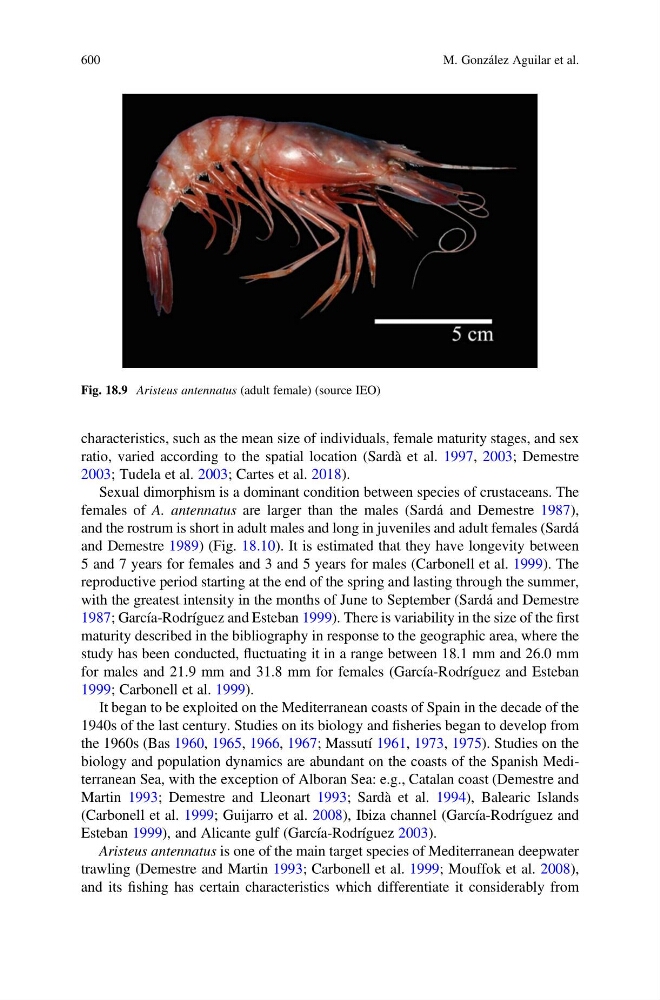
Fig. 18.9 Aristeus antennatus (adult female) (source IEO)
600
M. González Aguilar et al.
ratio, varied according to the spatial location (Sardà et al. 1997, 2003; Demestre
2003; Tudela et al. 2003; Cartes et al. 2018).
Sexual dimorphism is a dominant condition between species of crustaceans. The
females of A. antennatus are larger than the males (Sardá and Demestre 1987),
and the rostrum is short in adult males and long in juveniles and adult females (Sardá
and Demestre 1989) (Fig. 18.10). It is estimated that they have longevity between
5 and 7 years for females and 3 and 5 years for males (Carbonell et al. 1999). The
reproductive period starting at the end of the spring and lasting through the summer,
with the greatest intensity in the months of June to September (Sardá and Demestre
1987; García-Rodríguez and Esteban 1999). There is variability in the size of the first
maturity described in the bibliography in response to the geographic area, where the
study has been conducted, fluctuating it in a range between 18.1 mm and 26.0 mm
for males and 21.9 mm and 31.8 mm for females (García-Rodríguez and Esteban
1999; Carbonell et al. 1999).
It began to be exploited on the Mediterranean coasts of Spain in the decade of the
1940s of the last century. Studies on its biology and fisheries began to develop from
the 1960s (Bas 1960, 1965, 1966, 1967; Massutí 1961, 1973, 1975). Studies on the
biology and population dynamics are abundant on the coasts of the Spanish Mediterranean Sea, with the exception of Alboran Sea: e.g., Catalan coast (Demestre and
Martin 1993; Demestre and Lleonart 1993; Sardà et al. 1994), Balearic Islands
(Carbonell et al. 1999; Guijarro et al. 2008), Ibiza channel (García-Rodríguez and
Esteban 1999), and Alicante gulf (García-Rodríguez 2003).
Aristeus antennatus is one of the main target species of Mediterranean deepwater
trawling (Demestre and Martin 1993; Carbonell et al. 1999; Mouffok et al. 2008),
and its fishing has certain characteristics which differentiate it considerably from
Fig. 18.9 Aristeus antennatus (adult female) (source IEO)
600
M. González Aguilar et al.