

(Froude number (ratio of flow speed to phase speed of internal waves) is between 0.5
and 1) or supercritical (Sánchez-Laulhé 2001). Expansion fans form at convex bends
in the coastline, such as Cape Gata, where the flow in the MBL diverges, the MBL
thins, and wind speed increases. Compression bulges form at concave bends in the
coastline where the flow in the MBL converges, deepens, and wind speed decreases,
developing a blocking high in sea level pressure field, as it occurs in mesoscale
levanter events windward the Strait of Gibraltar. The alongshore wind stress on the
sea surface close to the coast induces offshore Ekman transport of the upper ocean
layer and induces coastal upwelling of the cooler water from below.
Waterspouts and non-mesocyclone tornadoes (landspouts) (Lee and Wilhelmson
1997) are frequents in winter along the Spanish Mediterranean seacoasts, as can be
seen in Fig. 3.14, where a maximum of events in the Alboran west coast can be
observed. Mostly they are primarily F0 or F1 in the Fujita scale of tornado intensity,
although F2 have also occurred, and there is a historical reference of F3 tornado in
the Cádiz Gulf (Sánchez-Laulhé 2005). Waterspouts of a more intense kind than F1
are generated in convective storms. The most intense waterspouts form immediately
after the presence of a strong cold outflow directed from land to sea at surface,
associated with mature convective cells. It is hypothesized that this cold outflow
would surround an existing misocyclone, enhancing the convergence within, that in
turn would develop new deep convection causing the misocyclone to become a
tornado (Lee and Wilhelmson 1997). Another hypothesis is that the tornado would
be formed by tilting of horizontal vorticity in a hydraulic jump generated as a result
37 a
c
d
36
35
–8
–7
–6
–5
–4
–3
–2
–1
0
40°N
30°N
10°E
10°W
0°
40°N
30°N
10°E
10°W
0
5ms
–1
2
4
6
8
1 0
(m/s)
12
14
16
18
0°
DJF
DJF
37 b
36
35
–8
–7
–6
–5
–4
< 5.5 m/s (Beaufort < 4)
5.5 – 11.1 m/s (Beaufort 4 – 5)
> 11.1 m/s (Beaufort > 5)
–3
–2
–1
0
JJA
JJA
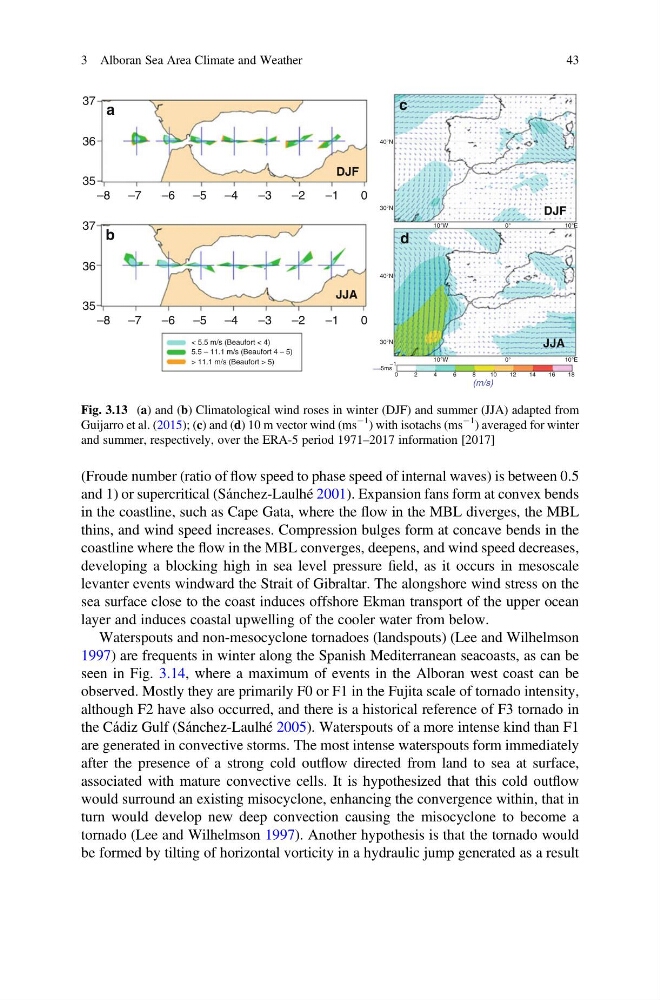
Fig. 3.13 (a) and (b) Climatological wind roses in winter (DJF) and summer (JJA) adapted from
Guijarro et al. (2015); (c) and (d) 10 m vector wind (ms
À1
) with isotachs (ms
À1
) averaged for winter
and summer, respectively, over the ERA-5 period 1971–2017 information [2017]
3 Alboran Sea Area Climate and Weather
43
and 1) or supercritical (Sánchez-Laulhé 2001). Expansion fans form at convex bends
in the coastline, such as Cape Gata, where the flow in the MBL diverges, the MBL
thins, and wind speed increases. Compression bulges form at concave bends in the
coastline where the flow in the MBL converges, deepens, and wind speed decreases,
developing a blocking high in sea level pressure field, as it occurs in mesoscale
levanter events windward the Strait of Gibraltar. The alongshore wind stress on the
sea surface close to the coast induces offshore Ekman transport of the upper ocean
layer and induces coastal upwelling of the cooler water from below.
Waterspouts and non-mesocyclone tornadoes (landspouts) (Lee and Wilhelmson
1997) are frequents in winter along the Spanish Mediterranean seacoasts, as can be
seen in Fig. 3.14, where a maximum of events in the Alboran west coast can be
observed. Mostly they are primarily F0 or F1 in the Fujita scale of tornado intensity,
although F2 have also occurred, and there is a historical reference of F3 tornado in
the Cádiz Gulf (Sánchez-Laulhé 2005). Waterspouts of a more intense kind than F1
are generated in convective storms. The most intense waterspouts form immediately
after the presence of a strong cold outflow directed from land to sea at surface,
associated with mature convective cells. It is hypothesized that this cold outflow
would surround an existing misocyclone, enhancing the convergence within, that in
turn would develop new deep convection causing the misocyclone to become a
tornado (Lee and Wilhelmson 1997). Another hypothesis is that the tornado would
be formed by tilting of horizontal vorticity in a hydraulic jump generated as a result
37 a
c
d
36
35
–8
–7
–6
–5
–4
–3
–2
–1
0
40°N
30°N
10°E
10°W
0°
40°N
30°N
10°E
10°W
0
5ms
–1
2
4
6
8
1 0
(m/s)
12
14
16
18
0°
DJF
DJF
37 b
36
35
–8
–7
–6
–5
–4
< 5.5 m/s (Beaufort < 4)
5.5 – 11.1 m/s (Beaufort 4 – 5)
> 11.1 m/s (Beaufort > 5)
–3
–2
–1
0
JJA
JJA
Fig. 3.13 (a) and (b) Climatological wind roses in winter (DJF) and summer (JJA) adapted from
Guijarro et al. (2015); (c) and (d) 10 m vector wind (ms
À1
) with isotachs (ms
À1
) averaged for winter
and summer, respectively, over the ERA-5 period 1971–2017 information [2017]
3 Alboran Sea Area Climate and Weather
43