

The trees should be able to reach a height of 10 m also under very poor nutrient
conditions. Trees normally have a single stem in contrary to shrubs. Also this feature
may help to distinguish woodland and scrub/shrubland.
2.1.9 Desert and Rocky Habitats
Inland rocky places, calcareous cliffs, rocks, rocky and stony ground, unvegetated,
barren and sparsely vegetated ground, rocky hillsides, screes, alpine moraines, stony
slopes, rock-crevices, desert (Fig. 6), and caves are included in this type. Also
glaciers and sparsely vegetated moraines of the terrestrial land belong to this
group of ecosystems. The vegetation cover is normally much less than 30%. Deserts
have been classified e.g. by precipitation and vegetation cover. We here follow the
general trend to define sparsely vegetated habitats with less than 5% cover as desert,
and between 5 and 30% as semi-desert. For relating moraines, screes and other rocky
habitats the terms desert or semi-desert are normally not used.
Coastal rocks with a typical—coastal—species composition between 0 and
200 m asl. are excluded and included in coastal ecosystems even if they are not
directly influenced by salt water and even if the vegetation cover is less than 30%.
2.1.10 Arable Land
The central ecosystem of this group of habitats is agricultural land where the ground
is regularly tilled and cultivated with crops (Fig. 7). Cropland, cornfields, ricefields,
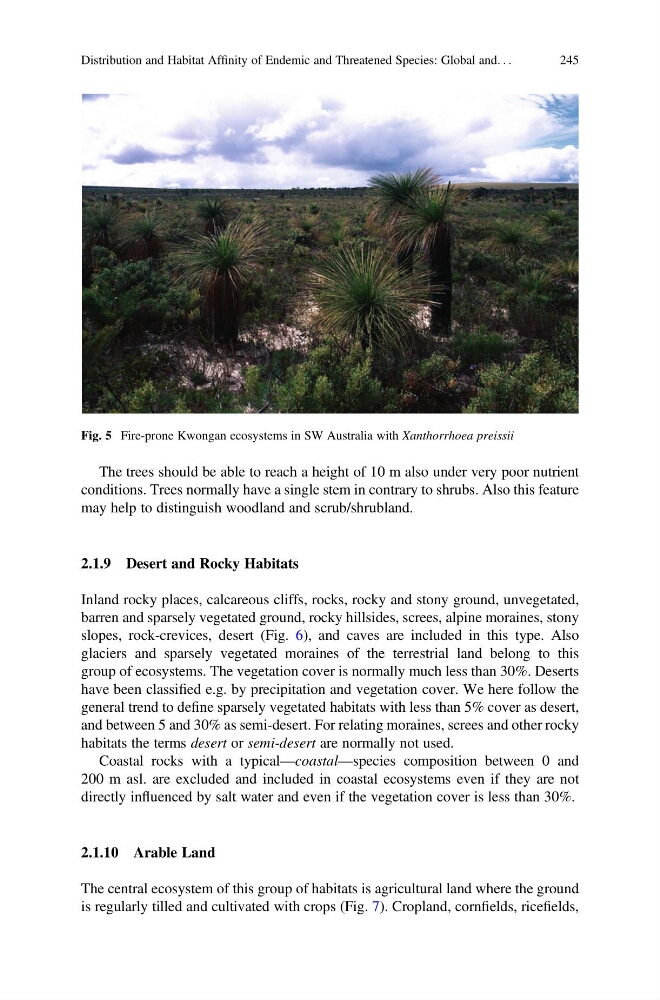
Fig. 5 Fire-prone Kwongan ecosystems in SW Australia with Xanthorrhoea preissii
Distribution and Habitat Affinity of Endemic and Threatened Species: Global and. . .
245
conditions. Trees normally have a single stem in contrary to shrubs. Also this feature
may help to distinguish woodland and scrub/shrubland.
2.1.9 Desert and Rocky Habitats
Inland rocky places, calcareous cliffs, rocks, rocky and stony ground, unvegetated,
barren and sparsely vegetated ground, rocky hillsides, screes, alpine moraines, stony
slopes, rock-crevices, desert (Fig. 6), and caves are included in this type. Also
glaciers and sparsely vegetated moraines of the terrestrial land belong to this
group of ecosystems. The vegetation cover is normally much less than 30%. Deserts
have been classified e.g. by precipitation and vegetation cover. We here follow the
general trend to define sparsely vegetated habitats with less than 5% cover as desert,
and between 5 and 30% as semi-desert. For relating moraines, screes and other rocky
habitats the terms desert or semi-desert are normally not used.
Coastal rocks with a typical—coastal—species composition between 0 and
200 m asl. are excluded and included in coastal ecosystems even if they are not
directly influenced by salt water and even if the vegetation cover is less than 30%.
2.1.10 Arable Land
The central ecosystem of this group of habitats is agricultural land where the ground
is regularly tilled and cultivated with crops (Fig. 7). Cropland, cornfields, ricefields,
Fig. 5 Fire-prone Kwongan ecosystems in SW Australia with Xanthorrhoea preissii
Distribution and Habitat Affinity of Endemic and Threatened Species: Global and. . .
245