

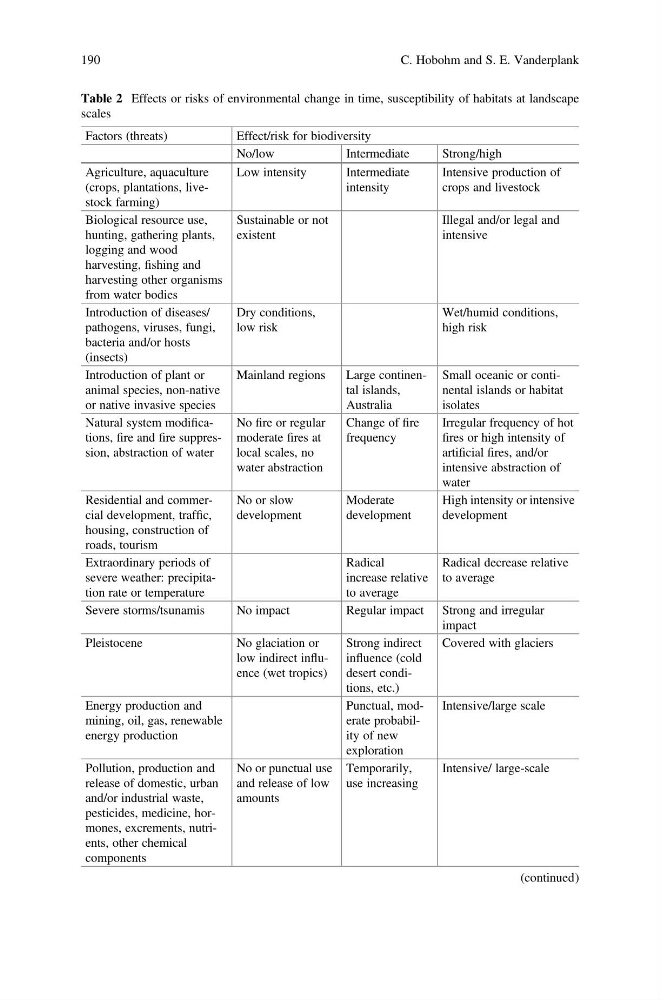
Table 2 Effects or risks of environmental change in time, susceptibility of habitats at landscape
scales
Factors (threats)
Effect/risk for biodiversity
No/low
Intermediate
Strong/high
Agriculture, aquaculture
(crops, plantations, livestock farming)
Low intensity
Intermediate
intensity
Intensive production of
crops and livestock
Biological resource use,
hunting, gathering plants,
logging and wood
harvesting, fishing and
harvesting other organisms
from water bodies
Sustainable or not
existent
Illegal and/or legal and
intensive
Introduction of diseases/
pathogens, viruses, fungi,
bacteria and/or hosts
(insects)
Dry conditions,
low risk
Wet/humid conditions,
high risk
Introduction of plant or
animal species, non-native
or native invasive species
Mainland regions
Large continental islands,
Australia
Small oceanic or continental islands or habitat
isolates
Natural system modifications, fire and fire suppression, abstraction of water
No fire or regular
moderate fires at
local scales, no
water abstraction
Change of fire
frequency
Irregular frequency of hot
fires or high intensity of
artificial fires, and/or
intensive abstraction of
water
Residential and commercial development, traffic,
housing, construction of
roads, tourism
No or slow
development
Moderate
development
High intensity or intensive
development
Extraordinary periods of
severe weather: precipitation rate or temperature
Radical
increase relative
to average
Radical decrease relative
to average
Severe storms/tsunamis
No impact
Regular impact Strong and irregular
impact
Pleistocene
No glaciation or
low indirect influence (wet tropics)
Strong indirect
influence (cold
desert conditions, etc.)
Covered with glaciers
Energy production and
mining, oil, gas, renewable
energy production
Punctual, moderate probability of new
exploration
Intensive/large scale
Pollution, production and
release of domestic, urban
and/or industrial waste,
pesticides, medicine, hormones, excrements, nutrients, other chemical
components
No or punctual use
and release of low
amounts
Temporarily,
use increasing
Intensive/ large-scale
(continued)
190
C. Hobohm and S. E. Vanderplank
scales
Factors (threats)
Effect/risk for biodiversity
No/low
Intermediate
Strong/high
Agriculture, aquaculture
(crops, plantations, livestock farming)
Low intensity
Intermediate
intensity
Intensive production of
crops and livestock
Biological resource use,
hunting, gathering plants,
logging and wood
harvesting, fishing and
harvesting other organisms
from water bodies
Sustainable or not
existent
Illegal and/or legal and
intensive
Introduction of diseases/
pathogens, viruses, fungi,
bacteria and/or hosts
(insects)
Dry conditions,
low risk
Wet/humid conditions,
high risk
Introduction of plant or
animal species, non-native
or native invasive species
Mainland regions
Large continental islands,
Australia
Small oceanic or continental islands or habitat
isolates
Natural system modifications, fire and fire suppression, abstraction of water
No fire or regular
moderate fires at
local scales, no
water abstraction
Change of fire
frequency
Irregular frequency of hot
fires or high intensity of
artificial fires, and/or
intensive abstraction of
water
Residential and commercial development, traffic,
housing, construction of
roads, tourism
No or slow
development
Moderate
development
High intensity or intensive
development
Extraordinary periods of
severe weather: precipitation rate or temperature
Radical
increase relative
to average
Radical decrease relative
to average
Severe storms/tsunamis
No impact
Regular impact Strong and irregular
impact
Pleistocene
No glaciation or
low indirect influence (wet tropics)
Strong indirect
influence (cold
desert conditions, etc.)
Covered with glaciers
Energy production and
mining, oil, gas, renewable
energy production
Punctual, moderate probability of new
exploration
Intensive/large scale
Pollution, production and
release of domestic, urban
and/or industrial waste,
pesticides, medicine, hormones, excrements, nutrients, other chemical
components
No or punctual use
and release of low
amounts
Temporarily,
use increasing
Intensive/ large-scale
(continued)
190
C. Hobohm and S. E. Vanderplank