

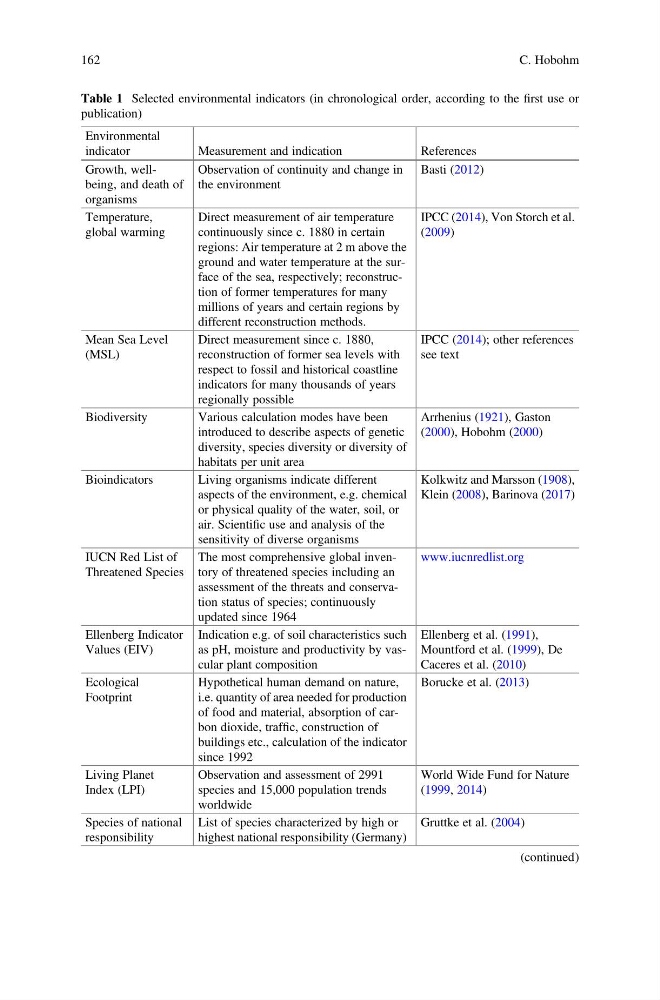
Table 1 Selected environmental indicators (in chronological order, according to the first use or
publication)
Environmental
indicator
Measurement and indication
References
Growth, wellbeing, and death of
organisms
Observation of continuity and change in
the environment
Basti (2012)
Temperature,
global warming
Direct measurement of air temperature
continuously since c. 1880 in certain
regions: Air temperature at 2 m above the
ground and water temperature at the surface of the sea, respectively; reconstruction of former temperatures for many
millions of years and certain regions by
different reconstruction methods.
IPCC (2014), Von Storch et al.
(2009)
Mean Sea Level
(MSL)
Direct measurement since c. 1880,
reconstruction of former sea levels with
respect to fossil and historical coastline
indicators for many thousands of years
regionally possible
IPCC (2014); other references
see text
Biodiversity
Various calculation modes have been
introduced to describe aspects of genetic
diversity, species diversity or diversity of
habitats per unit area
Arrhenius (1921), Gaston
(2000), Hobohm (2000)
Bioindicators
Living organisms indicate different
aspects of the environment, e.g. chemical
or physical quality of the water, soil, or
air. Scientific use and analysis of the
sensitivity of diverse organisms
Kolkwitz and Marsson (1908),
Klein (2008), Barinova (2017)
IUCN Red List of
Threatened Species
The most comprehensive global inventory of threatened species including an
assessment of the threats and conservation status of species; continuously
updated since 1964
www.iucnredlist.org
Ellenberg Indicator
Values (EIV)
Indication e.g. of soil characteristics such
as pH, moisture and productivity by vascular plant composition
Ellenberg et al. (1991),
Mountford et al. (1999), De
Caceres et al. (2010)
Ecological
Footprint
Hypothetical human demand on nature,
i.e. quantity of area needed for production
of food and material, absorption of carbon dioxide, traffic, construction of
buildings etc., calculation of the indicator
since 1992
Borucke et al. (2013)
Living Planet
Index (LPI)
Observation and assessment of 2991
species and 15,000 population trends
worldwide
World Wide Fund for Nature
(1999, 2014)
Species of national
responsibility
List of species characterized by high or
highest national responsibility (Germany)
Gruttke et al. (2004)
(continued)
162
C. Hobohm
publication)
Environmental
indicator
Measurement and indication
References
Growth, wellbeing, and death of
organisms
Observation of continuity and change in
the environment
Basti (2012)
Temperature,
global warming
Direct measurement of air temperature
continuously since c. 1880 in certain
regions: Air temperature at 2 m above the
ground and water temperature at the surface of the sea, respectively; reconstruction of former temperatures for many
millions of years and certain regions by
different reconstruction methods.
IPCC (2014), Von Storch et al.
(2009)
Mean Sea Level
(MSL)
Direct measurement since c. 1880,
reconstruction of former sea levels with
respect to fossil and historical coastline
indicators for many thousands of years
regionally possible
IPCC (2014); other references
see text
Biodiversity
Various calculation modes have been
introduced to describe aspects of genetic
diversity, species diversity or diversity of
habitats per unit area
Arrhenius (1921), Gaston
(2000), Hobohm (2000)
Bioindicators
Living organisms indicate different
aspects of the environment, e.g. chemical
or physical quality of the water, soil, or
air. Scientific use and analysis of the
sensitivity of diverse organisms
Kolkwitz and Marsson (1908),
Klein (2008), Barinova (2017)
IUCN Red List of
Threatened Species
The most comprehensive global inventory of threatened species including an
assessment of the threats and conservation status of species; continuously
updated since 1964
www.iucnredlist.org
Ellenberg Indicator
Values (EIV)
Indication e.g. of soil characteristics such
as pH, moisture and productivity by vascular plant composition
Ellenberg et al. (1991),
Mountford et al. (1999), De
Caceres et al. (2010)
Ecological
Footprint
Hypothetical human demand on nature,
i.e. quantity of area needed for production
of food and material, absorption of carbon dioxide, traffic, construction of
buildings etc., calculation of the indicator
since 1992
Borucke et al. (2013)
Living Planet
Index (LPI)
Observation and assessment of 2991
species and 15,000 population trends
worldwide
World Wide Fund for Nature
(1999, 2014)
Species of national
responsibility
List of species characterized by high or
highest national responsibility (Germany)
Gruttke et al. (2004)
(continued)
162
C. Hobohm