

74
J. Abe et al.
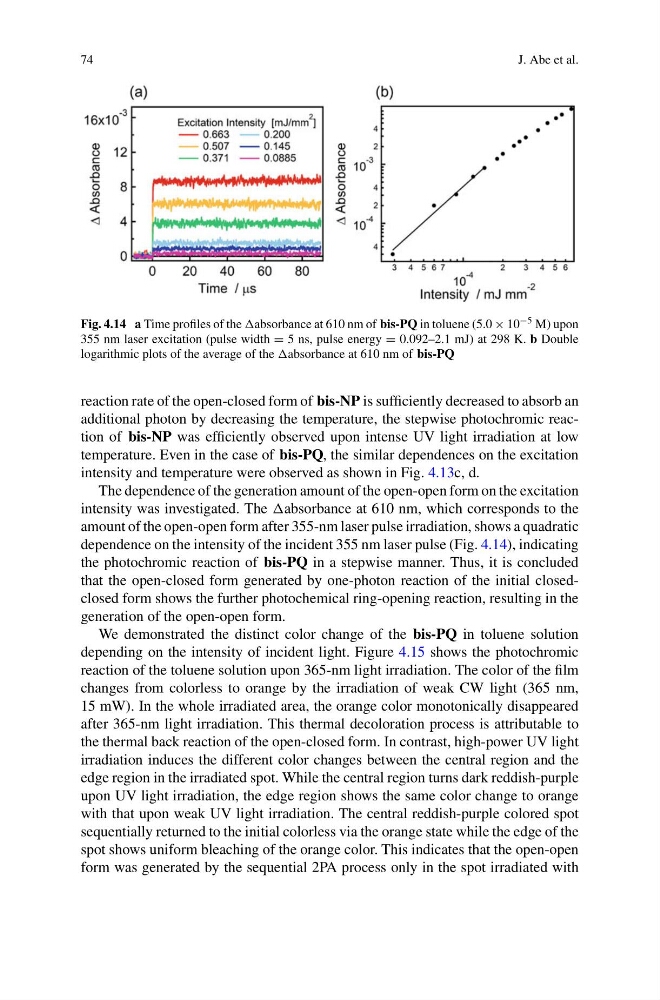
Fig. 4.14 a Time profiles of the absorbance at 610 nm of bis-PQ in toluene (5.0 × 10 −5 M) upon
355 nm laser excitation (pulse width = 5 ns, pulse energy = 0.092–2.1 mJ) at 298 K. b Double
logarithmic plots of the average of the absorbance at 610 nm of bis-PQ
reaction rate of the open-closed form of bis-NP is sufficiently decreased to absorb an
additional photon by decreasing the temperature, the stepwise photochromic reaction of bis-NP was efficiently observed upon intense UV light irradiation at low
temperature. Even in the case of bis-PQ, the similar dependences on the excitation
intensity and temperature were observed as shown in Fig. 4.13c, d.
The dependence of the generation amount of the open-open form on the excitation
intensity was investigated. The absorbance at 610 nm, which corresponds to the
amount of the open-open form after 355-nm laser pulse irradiation, shows a quadratic
dependence on the intensity of the incident 355 nm laser pulse (Fig. 4.14), indicating
the photochromic reaction of bis-PQ in a stepwise manner. Thus, it is concluded
that the open-closed form generated by one-photon reaction of the initial closedclosed form shows the further photochemical ring-opening reaction, resulting in the
generation of the open-open form.
We demonstrated the distinct color change of the bis-PQ in toluene solution
depending on the intensity of incident light. Figure 4.15 shows the photochromic
reaction of the toluene solution upon 365-nm light irradiation. The color of the film
changes from colorless to orange by the irradiation of weak CW light (365 nm,
15 mW). In the whole irradiated area, the orange color monotonically disappeared
after 365-nm light irradiation. This thermal decoloration process is attributable to
the thermal back reaction of the open-closed form. In contrast, high-power UV light
irradiation induces the different color changes between the central region and the
edge region in the irradiated spot. While the central region turns dark reddish-purple
upon UV light irradiation, the edge region shows the same color change to orange
with that upon weak UV light irradiation. The central reddish-purple colored spot
sequentially returned to the initial colorless via the orange state while the edge of the
spot shows uniform bleaching of the orange color. This indicates that the open-open
form was generated by the sequential 2PA process only in the spot irradiated with
J. Abe et al.
Fig. 4.14 a Time profiles of the absorbance at 610 nm of bis-PQ in toluene (5.0 × 10 −5 M) upon
355 nm laser excitation (pulse width = 5 ns, pulse energy = 0.092–2.1 mJ) at 298 K. b Double
logarithmic plots of the average of the absorbance at 610 nm of bis-PQ
reaction rate of the open-closed form of bis-NP is sufficiently decreased to absorb an
additional photon by decreasing the temperature, the stepwise photochromic reaction of bis-NP was efficiently observed upon intense UV light irradiation at low
temperature. Even in the case of bis-PQ, the similar dependences on the excitation
intensity and temperature were observed as shown in Fig. 4.13c, d.
The dependence of the generation amount of the open-open form on the excitation
intensity was investigated. The absorbance at 610 nm, which corresponds to the
amount of the open-open form after 355-nm laser pulse irradiation, shows a quadratic
dependence on the intensity of the incident 355 nm laser pulse (Fig. 4.14), indicating
the photochromic reaction of bis-PQ in a stepwise manner. Thus, it is concluded
that the open-closed form generated by one-photon reaction of the initial closedclosed form shows the further photochemical ring-opening reaction, resulting in the
generation of the open-open form.
We demonstrated the distinct color change of the bis-PQ in toluene solution
depending on the intensity of incident light. Figure 4.15 shows the photochromic
reaction of the toluene solution upon 365-nm light irradiation. The color of the film
changes from colorless to orange by the irradiation of weak CW light (365 nm,
15 mW). In the whole irradiated area, the orange color monotonically disappeared
after 365-nm light irradiation. This thermal decoloration process is attributable to
the thermal back reaction of the open-closed form. In contrast, high-power UV light
irradiation induces the different color changes between the central region and the
edge region in the irradiated spot. While the central region turns dark reddish-purple
upon UV light irradiation, the edge region shows the same color change to orange
with that upon weak UV light irradiation. The central reddish-purple colored spot
sequentially returned to the initial colorless via the orange state while the edge of the
spot shows uniform bleaching of the orange color. This indicates that the open-open
form was generated by the sequential 2PA process only in the spot irradiated with