

27 Crawling and Bending Motions of Azobenzene Derivatives …
467
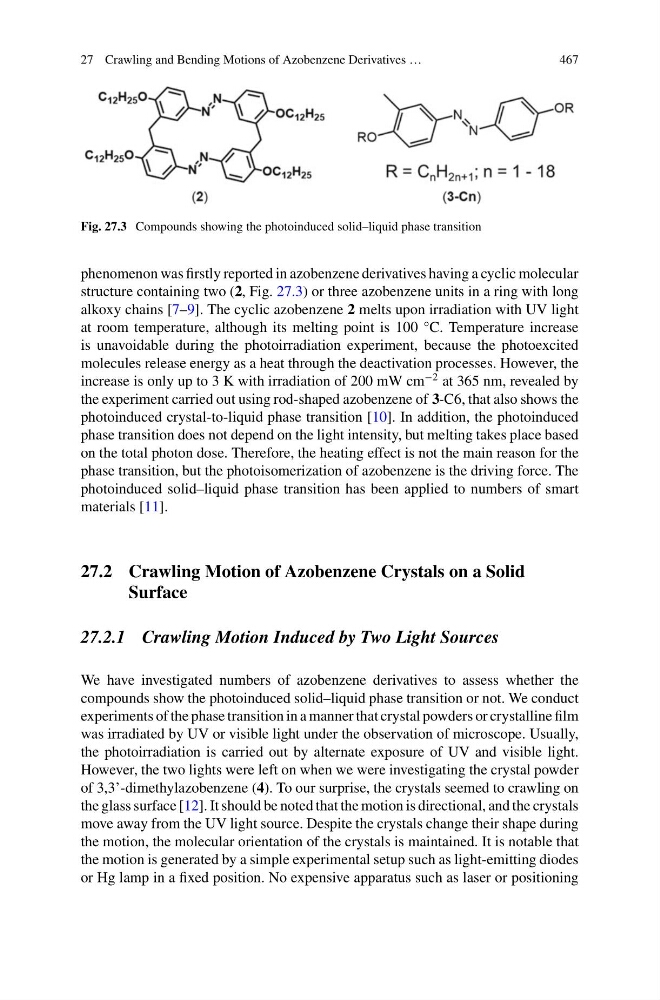
Fig. 27.3 Compounds showing the photoinduced solid–liquid phase transition
phenomenon was firstly reported in azobenzene derivatives having a cyclic molecular
structure containing two (2, Fig. 27.3) or three azobenzene units in a ring with long
alkoxy chains [7–9]. The cyclic azobenzene 2 melts upon irradiation with UV light
at room temperature, although its melting point is 100 °C. Temperature increase
is unavoidable during the photoirradiation experiment, because the photoexcited
molecules release energy as a heat through the deactivation processes. However, the
increase is only up to 3 K with irradiation of 200 mW cm
−2 at 365 nm, revealed by
the experiment carried out using rod-shaped azobenzene of 3-C6, that also shows the
photoinduced crystal-to-liquid phase transition [10]. In addition, the photoinduced
phase transition does not depend on the light intensity, but melting takes place based
on the total photon dose. Therefore, the heating effect is not the main reason for the
phase transition, but the photoisomerization of azobenzene is the driving force. The
photoinduced solid–liquid phase transition has been applied to numbers of smart
materials [11].
27.2 Crawling Motion of Azobenzene Crystals on a Solid
Surface
27.2.1 Crawling Motion Induced by Two Light Sources
We have investigated numbers of azobenzene derivatives to assess whether the
compounds show the photoinduced solid–liquid phase transition or not. We conduct
experiments of the phase transition in a manner that crystal powders or crystalline film
was irradiated by UV or visible light under the observation of microscope. Usually,
the photoirradiation is carried out by alternate exposure of UV and visible light.
However, the two lights were left on when we were investigating the crystal powder
of 3,3’-dimethylazobenzene (4). To our surprise, the crystals seemed to crawling on
the glass surface [12]. It should be noted that the motion is directional, and the crystals
move away from the UV light source. Despite the crystals change their shape during
the motion, the molecular orientation of the crystals is maintained. It is notable that
the motion is generated by a simple experimental setup such as light-emitting diodes
or Hg lamp in a fixed position. No expensive apparatus such as laser or positioning
467
Fig. 27.3 Compounds showing the photoinduced solid–liquid phase transition
phenomenon was firstly reported in azobenzene derivatives having a cyclic molecular
structure containing two (2, Fig. 27.3) or three azobenzene units in a ring with long
alkoxy chains [7–9]. The cyclic azobenzene 2 melts upon irradiation with UV light
at room temperature, although its melting point is 100 °C. Temperature increase
is unavoidable during the photoirradiation experiment, because the photoexcited
molecules release energy as a heat through the deactivation processes. However, the
increase is only up to 3 K with irradiation of 200 mW cm
−2 at 365 nm, revealed by
the experiment carried out using rod-shaped azobenzene of 3-C6, that also shows the
photoinduced crystal-to-liquid phase transition [10]. In addition, the photoinduced
phase transition does not depend on the light intensity, but melting takes place based
on the total photon dose. Therefore, the heating effect is not the main reason for the
phase transition, but the photoisomerization of azobenzene is the driving force. The
photoinduced solid–liquid phase transition has been applied to numbers of smart
materials [11].
27.2 Crawling Motion of Azobenzene Crystals on a Solid
Surface
27.2.1 Crawling Motion Induced by Two Light Sources
We have investigated numbers of azobenzene derivatives to assess whether the
compounds show the photoinduced solid–liquid phase transition or not. We conduct
experiments of the phase transition in a manner that crystal powders or crystalline film
was irradiated by UV or visible light under the observation of microscope. Usually,
the photoirradiation is carried out by alternate exposure of UV and visible light.
However, the two lights were left on when we were investigating the crystal powder
of 3,3’-dimethylazobenzene (4). To our surprise, the crystals seemed to crawling on
the glass surface [12]. It should be noted that the motion is directional, and the crystals
move away from the UV light source. Despite the crystals change their shape during
the motion, the molecular orientation of the crystals is maintained. It is notable that
the motion is generated by a simple experimental setup such as light-emitting diodes
or Hg lamp in a fixed position. No expensive apparatus such as laser or positioning