

466
Y. Norikane et al.
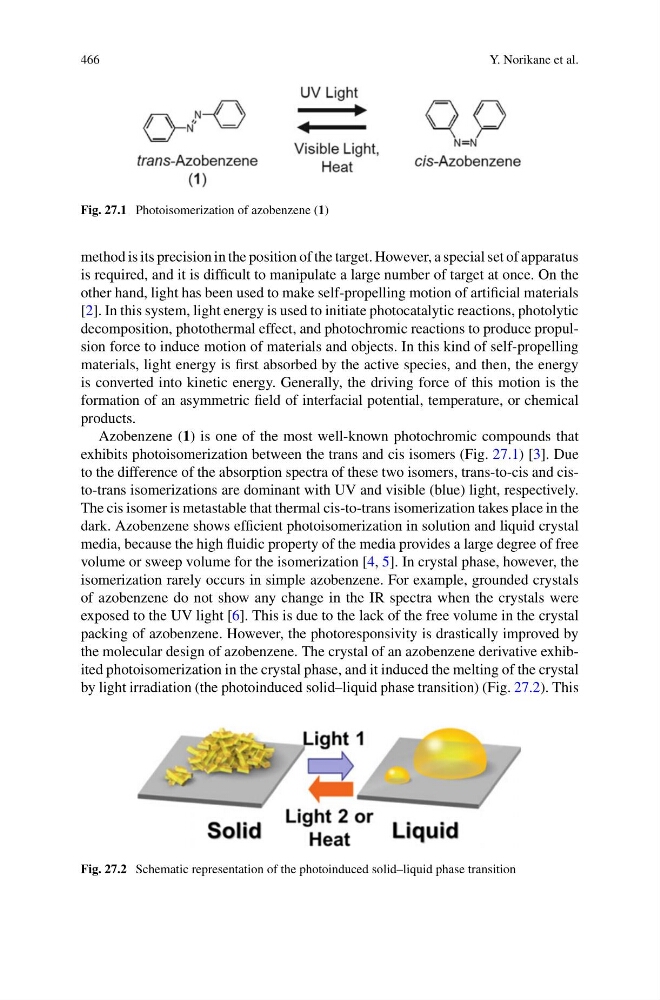
Fig. 27.1 Photoisomerization of azobenzene (1)
method is its precision in the position of the target. However, a special set of apparatus
is required, and it is difficult to manipulate a large number of target at once. On the
other hand, light has been used to make self-propelling motion of artificial materials
[2]. In this system, light energy is used to initiate photocatalytic reactions, photolytic
decomposition, photothermal effect, and photochromic reactions to produce propulsion force to induce motion of materials and objects. In this kind of self-propelling
materials, light energy is first absorbed by the active species, and then, the energy
is converted into kinetic energy. Generally, the driving force of this motion is the
formation of an asymmetric field of interfacial potential, temperature, or chemical
products.
Azobenzene (1) is one of the most well-known photochromic compounds that
exhibits photoisomerization between the trans and cis isomers (Fig. 27.1) [3]. Due
to the difference of the absorption spectra of these two isomers, trans-to-cis and cisto-trans isomerizations are dominant with UV and visible (blue) light, respectively.
The cis isomer is metastable that thermal cis-to-trans isomerization takes place in the
dark. Azobenzene shows efficient photoisomerization in solution and liquid crystal
media, because the high fluidic property of the media provides a large degree of free
volume or sweep volume for the isomerization [4, 5]. In crystal phase, however, the
isomerization rarely occurs in simple azobenzene. For example, grounded crystals
of azobenzene do not show any change in the IR spectra when the crystals were
exposed to the UV light [6]. This is due to the lack of the free volume in the crystal
packing of azobenzene. However, the photoresponsivity is drastically improved by
the molecular design of azobenzene. The crystal of an azobenzene derivative exhibited photoisomerization in the crystal phase, and it induced the melting of the crystal
by light irradiation (the photoinduced solid–liquid phase transition) (Fig. 27.2). This
Fig. 27.2 Schematic representation of the photoinduced solid–liquid phase transition
Y. Norikane et al.
Fig. 27.1 Photoisomerization of azobenzene (1)
method is its precision in the position of the target. However, a special set of apparatus
is required, and it is difficult to manipulate a large number of target at once. On the
other hand, light has been used to make self-propelling motion of artificial materials
[2]. In this system, light energy is used to initiate photocatalytic reactions, photolytic
decomposition, photothermal effect, and photochromic reactions to produce propulsion force to induce motion of materials and objects. In this kind of self-propelling
materials, light energy is first absorbed by the active species, and then, the energy
is converted into kinetic energy. Generally, the driving force of this motion is the
formation of an asymmetric field of interfacial potential, temperature, or chemical
products.
Azobenzene (1) is one of the most well-known photochromic compounds that
exhibits photoisomerization between the trans and cis isomers (Fig. 27.1) [3]. Due
to the difference of the absorption spectra of these two isomers, trans-to-cis and cisto-trans isomerizations are dominant with UV and visible (blue) light, respectively.
The cis isomer is metastable that thermal cis-to-trans isomerization takes place in the
dark. Azobenzene shows efficient photoisomerization in solution and liquid crystal
media, because the high fluidic property of the media provides a large degree of free
volume or sweep volume for the isomerization [4, 5]. In crystal phase, however, the
isomerization rarely occurs in simple azobenzene. For example, grounded crystals
of azobenzene do not show any change in the IR spectra when the crystals were
exposed to the UV light [6]. This is due to the lack of the free volume in the crystal
packing of azobenzene. However, the photoresponsivity is drastically improved by
the molecular design of azobenzene. The crystal of an azobenzene derivative exhibited photoisomerization in the crystal phase, and it induced the melting of the crystal
by light irradiation (the photoinduced solid–liquid phase transition) (Fig. 27.2). This
Fig. 27.2 Schematic representation of the photoinduced solid–liquid phase transition