

344
K. Higashiguchi and K. Matsuda
(a)
(b)
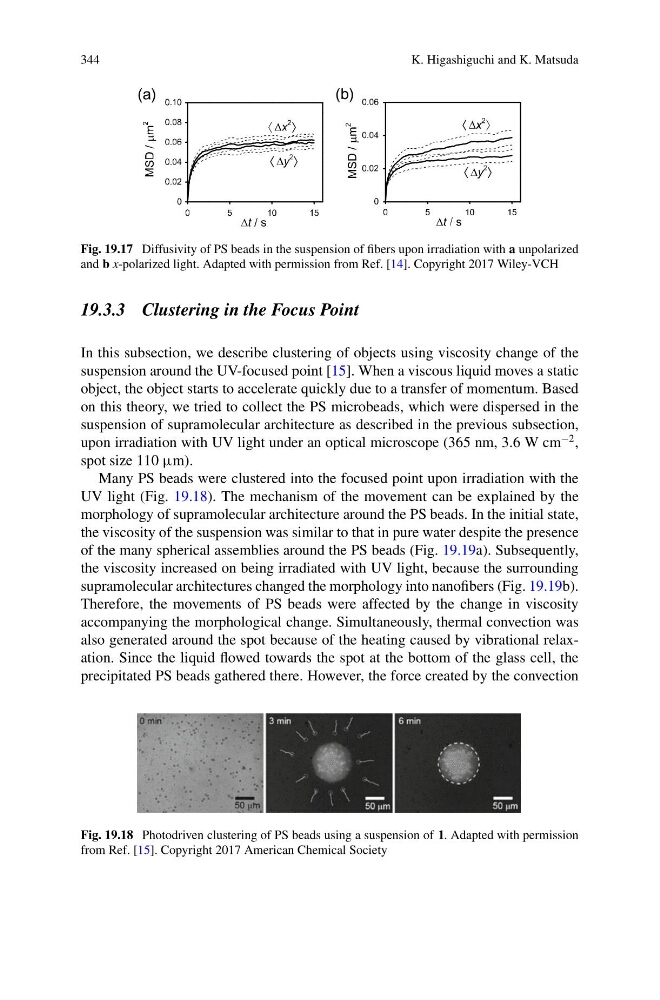
Fig. 19.17 Diffusivity of PS beads in the suspension of fibers upon irradiation with a unpolarized
and b x-polarized light. Adapted with permission from Ref. [14]. Copyright 2017 Wiley-VCH
19.3.3 Clustering in the Focus Point
In this subsection, we describe clustering of objects using viscosity change of the
suspension around the UV-focused point [15]. When a viscous liquid moves a static
object, the object starts to accelerate quickly due to a transfer of momentum. Based
on this theory, we tried to collect the PS microbeads, which were dispersed in the
suspension of supramolecular architecture as described in the previous subsection,
upon irradiation with UV light under an optical microscope (365 nm, 3.6 W cm
−2 ,
spot size 110 µm).
Many PS beads were clustered into the focused point upon irradiation with the
UV light (Fig. 19.18). The mechanism of the movement can be explained by the
morphology of supramolecular architecture around the PS beads. In the initial state,
the viscosity of the suspension was similar to that in pure water despite the presence
of the many spherical assemblies around the PS beads (Fig. 19.19a). Subsequently,
the viscosity increased on being irradiated with UV light, because the surrounding
supramolecular architectures changed the morphology into nanofibers (Fig. 19.19b).
Therefore, the movements of PS beads were affected by the change in viscosity
accompanying the morphological change. Simultaneously, thermal convection was
also generated around the spot because of the heating caused by vibrational relaxation. Since the liquid flowed towards the spot at the bottom of the glass cell, the
precipitated PS beads gathered there. However, the force created by the convection
Fig. 19.18 Photodriven clustering of PS beads using a suspension of 1. Adapted with permission
from Ref. [15]. Copyright 2017 American Chemical Society
K. Higashiguchi and K. Matsuda
(a)
(b)
Fig. 19.17 Diffusivity of PS beads in the suspension of fibers upon irradiation with a unpolarized
and b x-polarized light. Adapted with permission from Ref. [14]. Copyright 2017 Wiley-VCH
19.3.3 Clustering in the Focus Point
In this subsection, we describe clustering of objects using viscosity change of the
suspension around the UV-focused point [15]. When a viscous liquid moves a static
object, the object starts to accelerate quickly due to a transfer of momentum. Based
on this theory, we tried to collect the PS microbeads, which were dispersed in the
suspension of supramolecular architecture as described in the previous subsection,
upon irradiation with UV light under an optical microscope (365 nm, 3.6 W cm
−2 ,
spot size 110 µm).
Many PS beads were clustered into the focused point upon irradiation with the
UV light (Fig. 19.18). The mechanism of the movement can be explained by the
morphology of supramolecular architecture around the PS beads. In the initial state,
the viscosity of the suspension was similar to that in pure water despite the presence
of the many spherical assemblies around the PS beads (Fig. 19.19a). Subsequently,
the viscosity increased on being irradiated with UV light, because the surrounding
supramolecular architectures changed the morphology into nanofibers (Fig. 19.19b).
Therefore, the movements of PS beads were affected by the change in viscosity
accompanying the morphological change. Simultaneously, thermal convection was
also generated around the spot because of the heating caused by vibrational relaxation. Since the liquid flowed towards the spot at the bottom of the glass cell, the
precipitated PS beads gathered there. However, the force created by the convection
Fig. 19.18 Photodriven clustering of PS beads using a suspension of 1. Adapted with permission
from Ref. [15]. Copyright 2017 American Chemical Society