

16 Efficient Singlet Fission in Acene-Based Molecular Assemblies
281
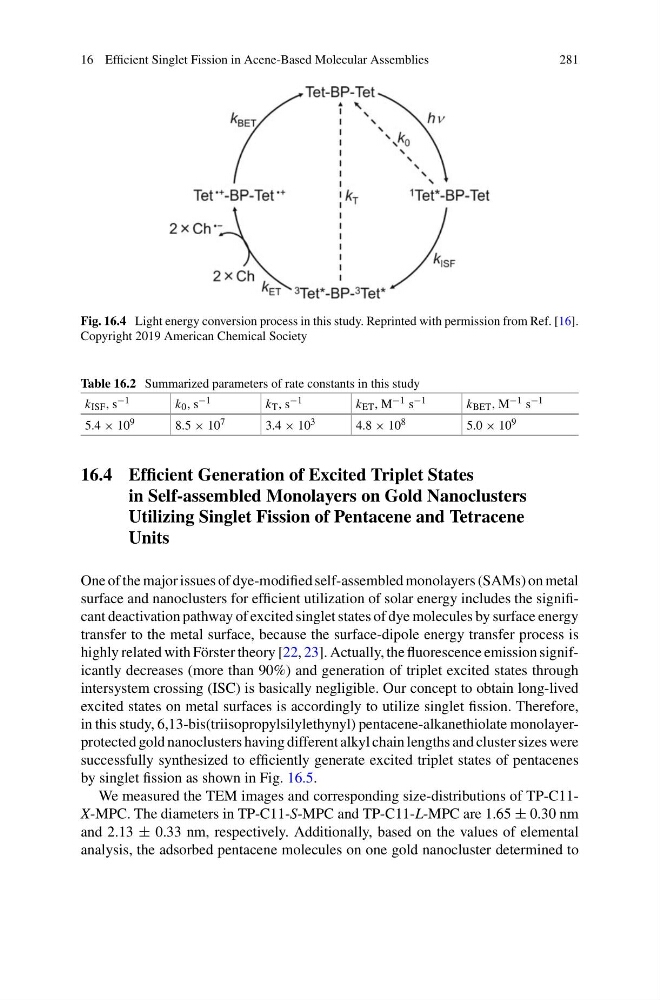
Fig. 16.4 Light energy conversion process in this study. Reprinted with permission from Ref. [16].
Copyright 2019 American Chemical Society
Table 16.2 Summarized parameters of rate constants in this study
k ISF , s −1
k 0 , s −1
k T , s −1
k ET , M −1 s −1
k BET , M −1 s −1
5.4 × 10 9
8.5 × 10 7
3.4 × 10 3
4.8 × 10 8
5.0 × 10 9
16.4 Efficient Generation of Excited Triplet States
in Self-assembled Monolayers on Gold Nanoclusters
Utilizing Singlet Fission of Pentacene and Tetracene
Units
One of the major issues of dye-modified self-assembled monolayers (SAMs) on metal
surface and nanoclusters for efficient utilization of solar energy includes the significant deactivation pathway of excited singlet states of dye molecules by surface energy
transfer to the metal surface, because the surface-dipole energy transfer process is
highly related with Förster theory [22, 23]. Actually, the fluorescence emission significantly decreases (more than 90%) and generation of triplet excited states through
intersystem crossing (ISC) is basically negligible. Our concept to obtain long-lived
excited states on metal surfaces is accordingly to utilize singlet fission. Therefore,
in this study, 6,13-bis(triisopropylsilylethynyl) pentacene-alkanethiolate monolayerprotected gold nanoclusters having different alkyl chain lengths and cluster sizes were
successfully synthesized to efficiently generate excited triplet states of pentacenes
by singlet fission as shown in Fig. 16.5.
We measured the TEM images and corresponding size-distributions of TP-C11X-MPC. The diameters in TP-C11-S-MPC and TP-C11-L-MPC are 1.65 ± 0.30 nm
and 2.13 ± 0.33 nm, respectively. Additionally, based on the values of elemental
analysis, the adsorbed pentacene molecules on one gold nanocluster determined to
281
Fig. 16.4 Light energy conversion process in this study. Reprinted with permission from Ref. [16].
Copyright 2019 American Chemical Society
Table 16.2 Summarized parameters of rate constants in this study
k ISF , s −1
k 0 , s −1
k T , s −1
k ET , M −1 s −1
k BET , M −1 s −1
5.4 × 10 9
8.5 × 10 7
3.4 × 10 3
4.8 × 10 8
5.0 × 10 9
16.4 Efficient Generation of Excited Triplet States
in Self-assembled Monolayers on Gold Nanoclusters
Utilizing Singlet Fission of Pentacene and Tetracene
Units
One of the major issues of dye-modified self-assembled monolayers (SAMs) on metal
surface and nanoclusters for efficient utilization of solar energy includes the significant deactivation pathway of excited singlet states of dye molecules by surface energy
transfer to the metal surface, because the surface-dipole energy transfer process is
highly related with Förster theory [22, 23]. Actually, the fluorescence emission significantly decreases (more than 90%) and generation of triplet excited states through
intersystem crossing (ISC) is basically negligible. Our concept to obtain long-lived
excited states on metal surfaces is accordingly to utilize singlet fission. Therefore,
in this study, 6,13-bis(triisopropylsilylethynyl) pentacene-alkanethiolate monolayerprotected gold nanoclusters having different alkyl chain lengths and cluster sizes were
successfully synthesized to efficiently generate excited triplet states of pentacenes
by singlet fission as shown in Fig. 16.5.
We measured the TEM images and corresponding size-distributions of TP-C11X-MPC. The diameters in TP-C11-S-MPC and TP-C11-L-MPC are 1.65 ± 0.30 nm
and 2.13 ± 0.33 nm, respectively. Additionally, based on the values of elemental
analysis, the adsorbed pentacene molecules on one gold nanocluster determined to