

282
T. Hasobe
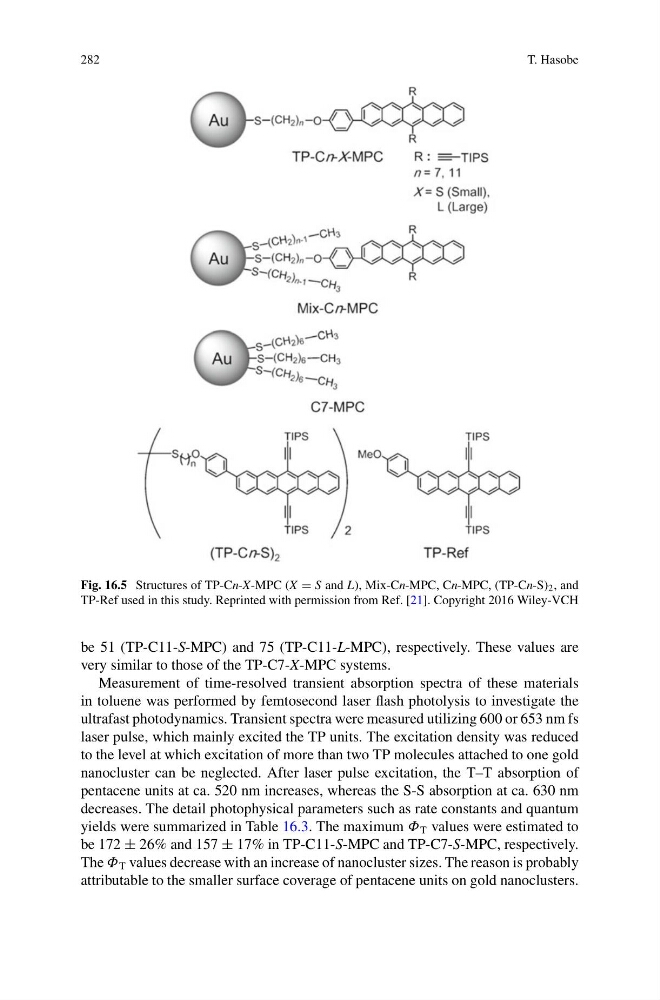
Fig. 16.5 Structures of TP-Cn-X-MPC (X = S and L), Mix-Cn-MPC, Cn-MPC, (TP-Cn-S) 2 , and
TP-Ref used in this study. Reprinted with permission from Ref. [21]. Copyright 2016 Wiley-VCH
be 51 (TP-C11-S-MPC) and 75 (TP-C11-L-MPC), respectively. These values are
very similar to those of the TP-C7-X-MPC systems.
Measurement of time-resolved transient absorption spectra of these materials
in toluene was performed by femtosecond laser flash photolysis to investigate the
ultrafast photodynamics. Transient spectra were measured utilizing 600 or 653 nm fs
laser pulse, which mainly excited the TP units. The excitation density was reduced
to the level at which excitation of more than two TP molecules attached to one gold
nanocluster can be neglected. After laser pulse excitation, the T–T absorption of
pentacene units at ca. 520 nm increases, whereas the S-S absorption at ca. 630 nm
decreases. The detail photophysical parameters such as rate constants and quantum
yields were summarized in Table 16.3. The maximum Φ T values were estimated to
be 172 ± 26% and 157 ± 17% in TP-C11-S-MPC and TP-C7-S-MPC, respectively.
The Φ T values decrease with an increase of nanocluster sizes. The reason is probably
attributable to the smaller surface coverage of pentacene units on gold nanoclusters.
T. Hasobe
Fig. 16.5 Structures of TP-Cn-X-MPC (X = S and L), Mix-Cn-MPC, Cn-MPC, (TP-Cn-S) 2 , and
TP-Ref used in this study. Reprinted with permission from Ref. [21]. Copyright 2016 Wiley-VCH
be 51 (TP-C11-S-MPC) and 75 (TP-C11-L-MPC), respectively. These values are
very similar to those of the TP-C7-X-MPC systems.
Measurement of time-resolved transient absorption spectra of these materials
in toluene was performed by femtosecond laser flash photolysis to investigate the
ultrafast photodynamics. Transient spectra were measured utilizing 600 or 653 nm fs
laser pulse, which mainly excited the TP units. The excitation density was reduced
to the level at which excitation of more than two TP molecules attached to one gold
nanocluster can be neglected. After laser pulse excitation, the T–T absorption of
pentacene units at ca. 520 nm increases, whereas the S-S absorption at ca. 630 nm
decreases. The detail photophysical parameters such as rate constants and quantum
yields were summarized in Table 16.3. The maximum Φ T values were estimated to
be 172 ± 26% and 157 ± 17% in TP-C11-S-MPC and TP-C7-S-MPC, respectively.
The Φ T values decrease with an increase of nanocluster sizes. The reason is probably
attributable to the smaller surface coverage of pentacene units on gold nanoclusters.