

1 Advanced Control of Photochemical Reactions …
7
In the condition with much longer time interval, the relaxed 2A state is excited.
Accordingly, we can choose the initial state of the second photon absorption by
changing t. In addition to the selection of the initial state leading to the formation
of the different final state, the wavelength of Pump 2 also determines the final state.
Thus, the detailed information on the enhancement of the cycloreversion can be
obtained as functions of the time interval, t, and the wavelength of Pump 2.
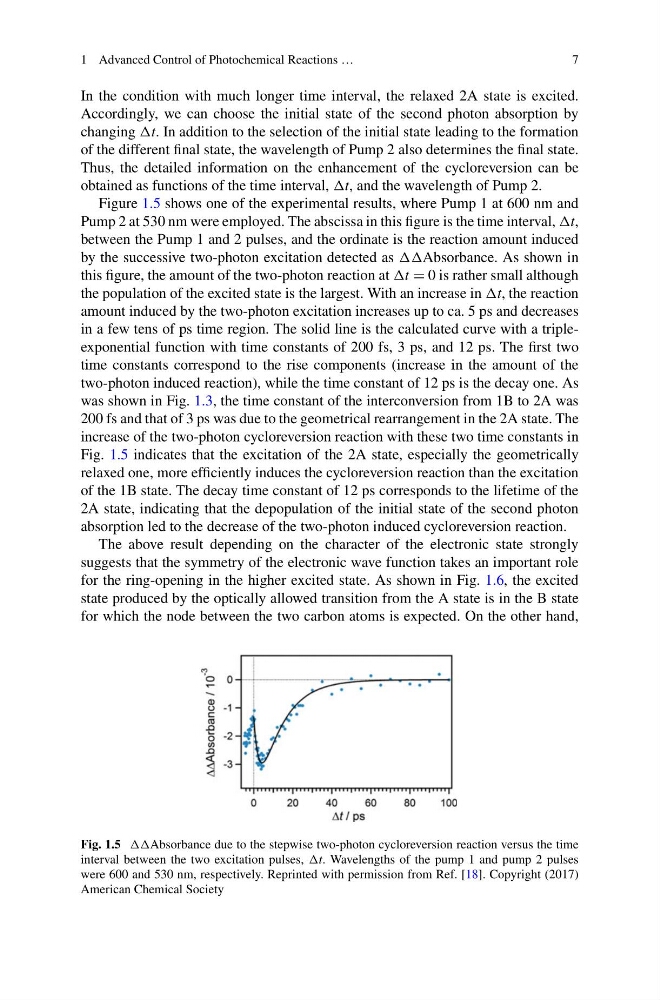
Figure 1.5 shows one of the experimental results, where Pump 1 at 600 nm and
Pump 2 at 530 nm were employed. The abscissa in this figure is the time interval, t,
between the Pump 1 and 2 pulses, and the ordinate is the reaction amount induced
by the successive two-photon excitation detected as Absorbance. As shown in
this figure, the amount of the two-photon reaction at t = 0 is rather small although
the population of the excited state is the largest. With an increase in t, the reaction
amount induced by the two-photon excitation increases up to ca. 5 ps and decreases
in a few tens of ps time region. The solid line is the calculated curve with a tripleexponential function with time constants of 200 fs, 3 ps, and 12 ps. The first two
time constants correspond to the rise components (increase in the amount of the
two-photon induced reaction), while the time constant of 12 ps is the decay one. As
was shown in Fig. 1.3, the time constant of the interconversion from 1B to 2A was
200 fs and that of 3 ps was due to the geometrical rearrangement in the 2A state. The
increase of the two-photon cycloreversion reaction with these two time constants in
Fig. 1.5 indicates that the excitation of the 2A state, especially the geometrically
relaxed one, more efficiently induces the cycloreversion reaction than the excitation
of the 1B state. The decay time constant of 12 ps corresponds to the lifetime of the
2A state, indicating that the depopulation of the initial state of the second photon
absorption led to the decrease of the two-photon induced cycloreversion reaction.
The above result depending on the character of the electronic state strongly
suggests that the symmetry of the electronic wave function takes an important role
for the ring-opening in the higher excited state. As shown in Fig. 1.6, the excited
state produced by the optically allowed transition from the A state is in the B state
for which the node between the two carbon atoms is expected. On the other hand,
Fig. 1.5 Absorbance due to the stepwise two-photon cycloreversion reaction versus the time
interval between the two excitation pulses, t. Wavelengths of the pump 1 and pump 2 pulses
were 600 and 530 nm, respectively. Reprinted with permission from Ref. [18]. Copyright (2017)
American Chemical Society
7
In the condition with much longer time interval, the relaxed 2A state is excited.
Accordingly, we can choose the initial state of the second photon absorption by
changing t. In addition to the selection of the initial state leading to the formation
of the different final state, the wavelength of Pump 2 also determines the final state.
Thus, the detailed information on the enhancement of the cycloreversion can be
obtained as functions of the time interval, t, and the wavelength of Pump 2.
Figure 1.5 shows one of the experimental results, where Pump 1 at 600 nm and
Pump 2 at 530 nm were employed. The abscissa in this figure is the time interval, t,
between the Pump 1 and 2 pulses, and the ordinate is the reaction amount induced
by the successive two-photon excitation detected as Absorbance. As shown in
this figure, the amount of the two-photon reaction at t = 0 is rather small although
the population of the excited state is the largest. With an increase in t, the reaction
amount induced by the two-photon excitation increases up to ca. 5 ps and decreases
in a few tens of ps time region. The solid line is the calculated curve with a tripleexponential function with time constants of 200 fs, 3 ps, and 12 ps. The first two
time constants correspond to the rise components (increase in the amount of the
two-photon induced reaction), while the time constant of 12 ps is the decay one. As
was shown in Fig. 1.3, the time constant of the interconversion from 1B to 2A was
200 fs and that of 3 ps was due to the geometrical rearrangement in the 2A state. The
increase of the two-photon cycloreversion reaction with these two time constants in
Fig. 1.5 indicates that the excitation of the 2A state, especially the geometrically
relaxed one, more efficiently induces the cycloreversion reaction than the excitation
of the 1B state. The decay time constant of 12 ps corresponds to the lifetime of the
2A state, indicating that the depopulation of the initial state of the second photon
absorption led to the decrease of the two-photon induced cycloreversion reaction.
The above result depending on the character of the electronic state strongly
suggests that the symmetry of the electronic wave function takes an important role
for the ring-opening in the higher excited state. As shown in Fig. 1.6, the excited
state produced by the optically allowed transition from the A state is in the B state
for which the node between the two carbon atoms is expected. On the other hand,
Fig. 1.5 Absorbance due to the stepwise two-photon cycloreversion reaction versus the time
interval between the two excitation pulses, t. Wavelengths of the pump 1 and pump 2 pulses
were 600 and 530 nm, respectively. Reprinted with permission from Ref. [18]. Copyright (2017)
American Chemical Society