

4.6 Heat Absorbed by Paraffinic PCM Materials
113
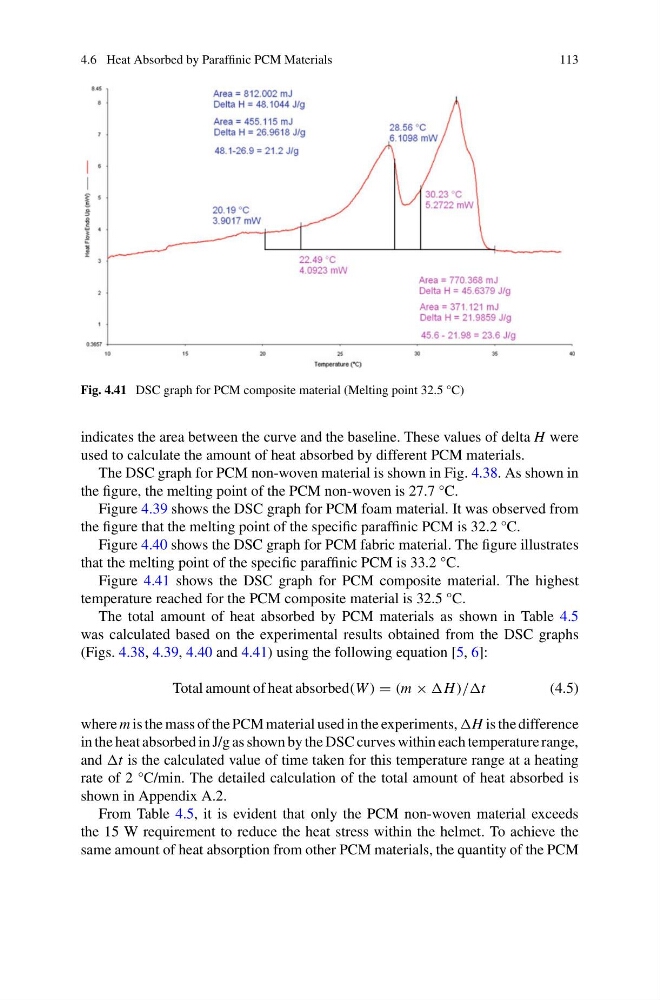
Fig. 4.41 DSC graph for PCM composite material (Melting point 32.5 °C)
indicates the area between the curve and the baseline. These values of delta H were
used to calculate the amount of heat absorbed by different PCM materials.
The DSC graph for PCM non-woven material is shown in Fig. 4.38. As shown in
the figure, the melting point of the PCM non-woven is 27.7 °C.
Figure 4.39 shows the DSC graph for PCM foam material. It was observed from
the figure that the melting point of the specific paraffinic PCM is 32.2 °C.
Figure 4.40 shows the DSC graph for PCM fabric material. The figure illustrates
that the melting point of the specific paraffinic PCM is 33.2 °C.
Figure 4.41 shows the DSC graph for PCM composite material. The highest
temperature reached for the PCM composite material is 32.5 °C.
The total amount of heat absorbed by PCM materials as shown in Table 4.5
was calculated based on the experimental results obtained from the DSC graphs
(Figs. 4.38, 4.39, 4.40 and 4.41) using the following equation [5, 6]:
Total amount of heat absorbed(W ) = (m × H )//t
(4.5)
where m is the mass of the PCM material used in the experiments, H is the difference
in the heat absorbed in J/g as shown by the DSC curves within each temperature range,
and t is the calculated value of time taken for this temperature range at a heating
rate of 2 °C/min. The detailed calculation of the total amount of heat absorbed is
shown in Appendix A.2.
From Table 4.5, it is evident that only the PCM non-woven material exceeds
the 15 W requirement to reduce the heat stress within the helmet. To achieve the
same amount of heat absorption from other PCM materials, the quantity of the PCM
113
Fig. 4.41 DSC graph for PCM composite material (Melting point 32.5 °C)
indicates the area between the curve and the baseline. These values of delta H were
used to calculate the amount of heat absorbed by different PCM materials.
The DSC graph for PCM non-woven material is shown in Fig. 4.38. As shown in
the figure, the melting point of the PCM non-woven is 27.7 °C.
Figure 4.39 shows the DSC graph for PCM foam material. It was observed from
the figure that the melting point of the specific paraffinic PCM is 32.2 °C.
Figure 4.40 shows the DSC graph for PCM fabric material. The figure illustrates
that the melting point of the specific paraffinic PCM is 33.2 °C.
Figure 4.41 shows the DSC graph for PCM composite material. The highest
temperature reached for the PCM composite material is 32.5 °C.
The total amount of heat absorbed by PCM materials as shown in Table 4.5
was calculated based on the experimental results obtained from the DSC graphs
(Figs. 4.38, 4.39, 4.40 and 4.41) using the following equation [5, 6]:
Total amount of heat absorbed(W ) = (m × H )//t
(4.5)
where m is the mass of the PCM material used in the experiments, H is the difference
in the heat absorbed in J/g as shown by the DSC curves within each temperature range,
and t is the calculated value of time taken for this temperature range at a heating
rate of 2 °C/min. The detailed calculation of the total amount of heat absorbed is
shown in Appendix A.2.
From Table 4.5, it is evident that only the PCM non-woven material exceeds
the 15 W requirement to reduce the heat stress within the helmet. To achieve the
same amount of heat absorption from other PCM materials, the quantity of the PCM