

90
6 Cells United
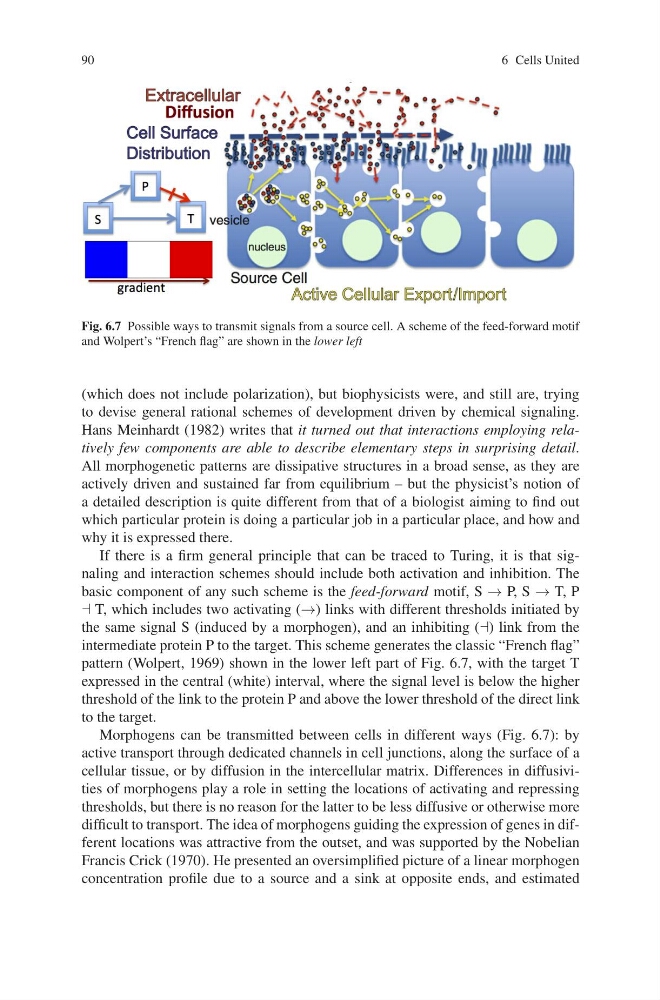
Fig. 6.7 Possible ways to transmit signals from a source cell. A scheme of the feed-forward motif
and Wolpert’s “French flag” are shown in the lower left
(which does not include polarization), but biophysicists were, and still are, trying
to devise general rational schemes of development driven by chemical signaling.
Hans Meinhardt (1982) writes that it turned out that interactions employing relatively few components are able to describe elementary steps in surprising detail.
All morphogenetic patterns are dissipative structures in a broad sense, as they are
actively driven and sustained far from equilibrium – but the physicist’s notion of
a detailed description is quite different from that of a biologist aiming to find out
which particular protein is doing a particular job in a particular place, and how and
why it is expressed there.
If there is a firm general principle that can be traced to Turing, it is that signaling and interaction schemes should include both activation and inhibition. The
basic component of any such scheme is the feed-forward motif, S → P, S → T, P
T, which includes two activating (→) links with different thresholds initiated by
the same signal S (induced by a morphogen), and an inhibiting () link from the
intermediate protein P to the target. This scheme generates the classic “French flag”
pattern (Wolpert, 1969) shown in the lower left part of Fig. 6.7, with the target T
expressed in the central (white) interval, where the signal level is below the higher
threshold of the link to the protein P and above the lower threshold of the direct link
to the target.
Morphogens can be transmitted between cells in different ways (Fig. 6.7): by
active transport through dedicated channels in cell junctions, along the surface of a
cellular tissue, or by diffusion in the intercellular matrix. Differences in diffusivities of morphogens play a role in setting the locations of activating and repressing
thresholds, but there is no reason for the latter to be less diffusive or otherwise more
difficult to transport. The idea of morphogens guiding the expression of genes in different locations was attractive from the outset, and was supported by the Nobelian
Francis Crick (1970). He presented an oversimplified picture of a linear morphogen
concentration profile due to a source and a sink at opposite ends, and estimated
6 Cells United
Fig. 6.7 Possible ways to transmit signals from a source cell. A scheme of the feed-forward motif
and Wolpert’s “French flag” are shown in the lower left
(which does not include polarization), but biophysicists were, and still are, trying
to devise general rational schemes of development driven by chemical signaling.
Hans Meinhardt (1982) writes that it turned out that interactions employing relatively few components are able to describe elementary steps in surprising detail.
All morphogenetic patterns are dissipative structures in a broad sense, as they are
actively driven and sustained far from equilibrium – but the physicist’s notion of
a detailed description is quite different from that of a biologist aiming to find out
which particular protein is doing a particular job in a particular place, and how and
why it is expressed there.
If there is a firm general principle that can be traced to Turing, it is that signaling and interaction schemes should include both activation and inhibition. The
basic component of any such scheme is the feed-forward motif, S → P, S → T, P
T, which includes two activating (→) links with different thresholds initiated by
the same signal S (induced by a morphogen), and an inhibiting () link from the
intermediate protein P to the target. This scheme generates the classic “French flag”
pattern (Wolpert, 1969) shown in the lower left part of Fig. 6.7, with the target T
expressed in the central (white) interval, where the signal level is below the higher
threshold of the link to the protein P and above the lower threshold of the direct link
to the target.
Morphogens can be transmitted between cells in different ways (Fig. 6.7): by
active transport through dedicated channels in cell junctions, along the surface of a
cellular tissue, or by diffusion in the intercellular matrix. Differences in diffusivities of morphogens play a role in setting the locations of activating and repressing
thresholds, but there is no reason for the latter to be less diffusive or otherwise more
difficult to transport. The idea of morphogens guiding the expression of genes in different locations was attractive from the outset, and was supported by the Nobelian
Francis Crick (1970). He presented an oversimplified picture of a linear morphogen
concentration profile due to a source and a sink at opposite ends, and estimated