

7.2 Nerve Networks
107
capillaries
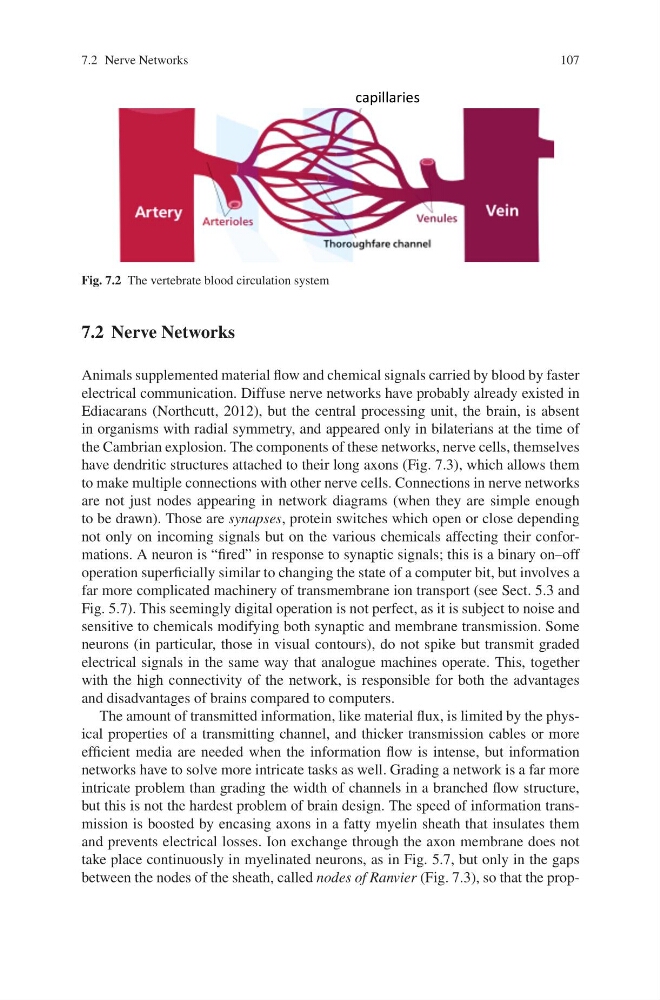
Fig. 7.2 The vertebrate blood circulation system
7.2 Nerve Networks
Animals supplemented material flow and chemical signals carried by blood by faster
electrical communication. Diffuse nerve networks have probably already existed in
Ediacarans (Northcutt, 2012), but the central processing unit, the brain, is absent
in organisms with radial symmetry, and appeared only in bilaterians at the time of
the Cambrian explosion. The components of these networks, nerve cells, themselves
have dendritic structures attached to their long axons (Fig. 7.3), which allows them
to make multiple connections with other nerve cells. Connections in nerve networks
are not just nodes appearing in network diagrams (when they are simple enough
to be drawn). Those are synapses, protein switches which open or close depending
not only on incoming signals but on the various chemicals affecting their conformations. A neuron is “fired” in response to synaptic signals; this is a binary on–off
operation superficially similar to changing the state of a computer bit, but involves a
far more complicated machinery of transmembrane ion transport (see Sect. 5.3 and
Fig. 5.7). This seemingly digital operation is not perfect, as it is subject to noise and
sensitive to chemicals modifying both synaptic and membrane transmission. Some
neurons (in particular, those in visual contours), do not spike but transmit graded
electrical signals in the same way that analogue machines operate. This, together
with the high connectivity of the network, is responsible for both the advantages
and disadvantages of brains compared to computers.
The amount of transmitted information, like material flux, is limited by the physical properties of a transmitting channel, and thicker transmission cables or more
efficient media are needed when the information flow is intense, but information
networks have to solve more intricate tasks as well. Grading a network is a far more
intricate problem than grading the width of channels in a branched flow structure,
but this is not the hardest problem of brain design. The speed of information transmission is boosted by encasing axons in a fatty myelin sheath that insulates them
and prevents electrical losses. Ion exchange through the axon membrane does not
take place continuously in myelinated neurons, as in Fig. 5.7, but only in the gaps
between the nodes of the sheath, called nodes of Ranvier (Fig. 7.3), so that the prop-
107
capillaries
Fig. 7.2 The vertebrate blood circulation system
7.2 Nerve Networks
Animals supplemented material flow and chemical signals carried by blood by faster
electrical communication. Diffuse nerve networks have probably already existed in
Ediacarans (Northcutt, 2012), but the central processing unit, the brain, is absent
in organisms with radial symmetry, and appeared only in bilaterians at the time of
the Cambrian explosion. The components of these networks, nerve cells, themselves
have dendritic structures attached to their long axons (Fig. 7.3), which allows them
to make multiple connections with other nerve cells. Connections in nerve networks
are not just nodes appearing in network diagrams (when they are simple enough
to be drawn). Those are synapses, protein switches which open or close depending
not only on incoming signals but on the various chemicals affecting their conformations. A neuron is “fired” in response to synaptic signals; this is a binary on–off
operation superficially similar to changing the state of a computer bit, but involves a
far more complicated machinery of transmembrane ion transport (see Sect. 5.3 and
Fig. 5.7). This seemingly digital operation is not perfect, as it is subject to noise and
sensitive to chemicals modifying both synaptic and membrane transmission. Some
neurons (in particular, those in visual contours), do not spike but transmit graded
electrical signals in the same way that analogue machines operate. This, together
with the high connectivity of the network, is responsible for both the advantages
and disadvantages of brains compared to computers.
The amount of transmitted information, like material flux, is limited by the physical properties of a transmitting channel, and thicker transmission cables or more
efficient media are needed when the information flow is intense, but information
networks have to solve more intricate tasks as well. Grading a network is a far more
intricate problem than grading the width of channels in a branched flow structure,
but this is not the hardest problem of brain design. The speed of information transmission is boosted by encasing axons in a fatty myelin sheath that insulates them
and prevents electrical losses. Ion exchange through the axon membrane does not
take place continuously in myelinated neurons, as in Fig. 5.7, but only in the gaps
between the nodes of the sheath, called nodes of Ranvier (Fig. 7.3), so that the prop-