

108
7 Communication
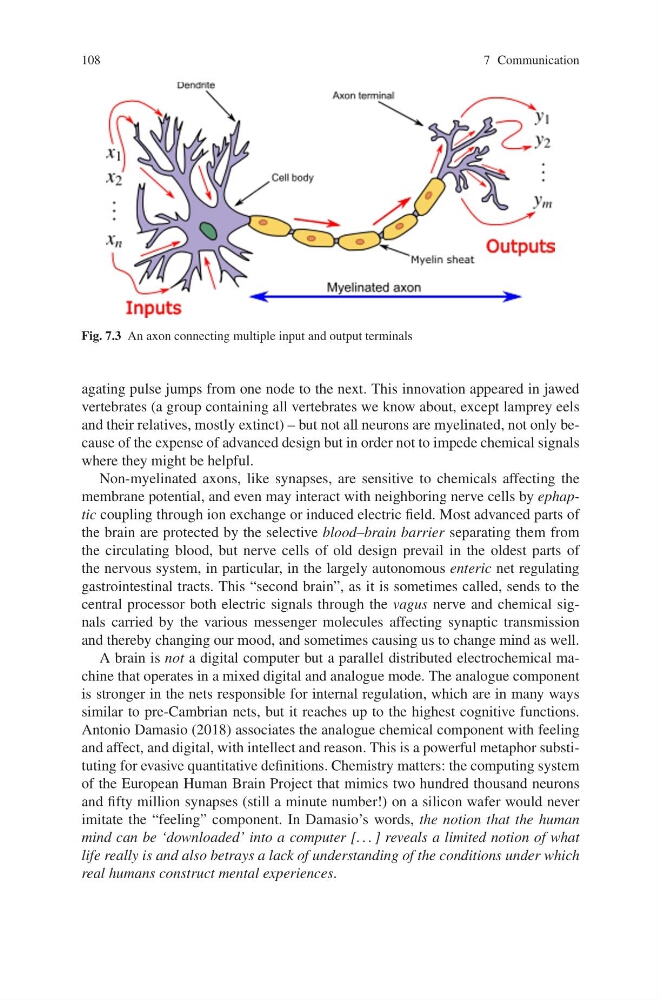
Fig. 7.3 An axon connecting multiple input and output terminals
agating pulse jumps from one node to the next. This innovation appeared in jawed
vertebrates (a group containing all vertebrates we know about, except lamprey eels
and their relatives, mostly extinct) – but not all neurons are myelinated, not only because of the expense of advanced design but in order not to impede chemical signals
where they might be helpful.
Non-myelinated axons, like synapses, are sensitive to chemicals affecting the
membrane potential, and even may interact with neighboring nerve cells by ephaptic coupling through ion exchange or induced electric field. Most advanced parts of
the brain are protected by the selective blood–brain barrier separating them from
the circulating blood, but nerve cells of old design prevail in the oldest parts of
the nervous system, in particular, in the largely autonomous enteric net regulating
gastrointestinal tracts. This “second brain”, as it is sometimes called, sends to the
central processor both electric signals through the vagus nerve and chemical signals carried by the various messenger molecules affecting synaptic transmission
and thereby changing our mood, and sometimes causing us to change mind as well.
A brain is not a digital computer but a parallel distributed electrochemical machine that operates in a mixed digital and analogue mode. The analogue component
is stronger in the nets responsible for internal regulation, which are in many ways
similar to pre-Cambrian nets, but it reaches up to the highest cognitive functions.
Antonio Damasio (2018) associates the analogue chemical component with feeling
and affect, and digital, with intellect and reason. This is a powerful metaphor substituting for evasive quantitative definitions. Chemistry matters: the computing system
of the European Human Brain Project that mimics two hundred thousand neurons
and fifty million synapses (still a minute number!) on a silicon wafer would never
imitate the “feeling” component. In Damasio’s words, the notion that the human
mind can be ‘downloaded’ into a computer [. . . ] reveals a limited notion of what
life really is and also betrays a lack of understanding of the conditions under which
real humans construct mental experiences.
7 Communication
Fig. 7.3 An axon connecting multiple input and output terminals
agating pulse jumps from one node to the next. This innovation appeared in jawed
vertebrates (a group containing all vertebrates we know about, except lamprey eels
and their relatives, mostly extinct) – but not all neurons are myelinated, not only because of the expense of advanced design but in order not to impede chemical signals
where they might be helpful.
Non-myelinated axons, like synapses, are sensitive to chemicals affecting the
membrane potential, and even may interact with neighboring nerve cells by ephaptic coupling through ion exchange or induced electric field. Most advanced parts of
the brain are protected by the selective blood–brain barrier separating them from
the circulating blood, but nerve cells of old design prevail in the oldest parts of
the nervous system, in particular, in the largely autonomous enteric net regulating
gastrointestinal tracts. This “second brain”, as it is sometimes called, sends to the
central processor both electric signals through the vagus nerve and chemical signals carried by the various messenger molecules affecting synaptic transmission
and thereby changing our mood, and sometimes causing us to change mind as well.
A brain is not a digital computer but a parallel distributed electrochemical machine that operates in a mixed digital and analogue mode. The analogue component
is stronger in the nets responsible for internal regulation, which are in many ways
similar to pre-Cambrian nets, but it reaches up to the highest cognitive functions.
Antonio Damasio (2018) associates the analogue chemical component with feeling
and affect, and digital, with intellect and reason. This is a powerful metaphor substituting for evasive quantitative definitions. Chemistry matters: the computing system
of the European Human Brain Project that mimics two hundred thousand neurons
and fifty million synapses (still a minute number!) on a silicon wafer would never
imitate the “feeling” component. In Damasio’s words, the notion that the human
mind can be ‘downloaded’ into a computer [. . . ] reveals a limited notion of what
life really is and also betrays a lack of understanding of the conditions under which
real humans construct mental experiences.