

12.3.4 Conclusions
(1) Hydraulic–pneumatic composite hammering technology can realize the impact
capacity of piles with acceleration of more than 1 g. The strike energy is
related to hammer mass, strike acceleration, gas pressure in nitrogen chamber
of hydraulic cylinder, maximum height of hammer and resistance of return
pipeline. A series of pile hammers with various strike energies can be realized
by proper design.
(2) In the rising stage of hammer body, high-pressure accumulator and hydraulic
pump supply oil to the hydraulic cylinder at the same time. The hammer body
accelerates to rise, which shortens the rising time of hammer body and
increases the strike frequency. When the hammer body rises to its maximum
stroke, the volume compression of gas in the nitrogen chamber is the largest
and the pressure is the largest. When switching solenoid valve at the maximum
stroke, proper design can ensure that the hammer speed is close to zero during
switching, and can reduce the impact of hammer on nitrogen chamber.
(3) The average acceleration of hammer can be 2 g in the process of falling. Under
the condition of the same stroke and hammer weight, the hydraulic–pneumatic
composite hammer can achieve greater strike energy and frequency.
12.4 Rapid Piling Process of High-Speed Pneumatic–
Hydraulic Composite Hammer
The return oil pipeline of pneumatic–hydraulic hammer is generally over 50 m
long. The pressure loss of the pipeline is large and the return oil pressure is high. In
the process of hydraulic–pneumatic hammer dropping, the pipeline directly affects
the speed of hydraulic hammer dropping, and then affects the strike energy of the
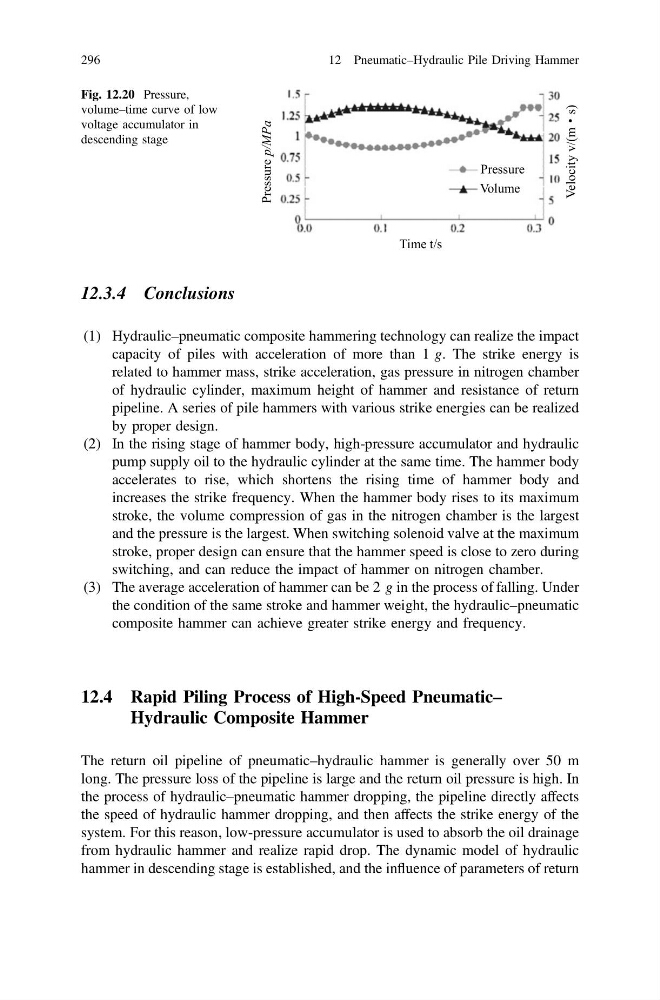
system. For this reason, low-pressure accumulator is used to absorb the oil drainage
from hydraulic hammer and realize rapid drop. The dynamic model of hydraulic
hammer in descending stage is established, and the influence of parameters of return
Time t/s
Pressure p/MPa
Velocity v/(m s)
Volume
Pressure
Fig. 12.20 Pressure,
volume–time curve of low
voltage accumulator in
descending stage
296
12 Pneumatic–Hydraulic Pile Driving Hammer
(1) Hydraulic–pneumatic composite hammering technology can realize the impact
capacity of piles with acceleration of more than 1 g. The strike energy is
related to hammer mass, strike acceleration, gas pressure in nitrogen chamber
of hydraulic cylinder, maximum height of hammer and resistance of return
pipeline. A series of pile hammers with various strike energies can be realized
by proper design.
(2) In the rising stage of hammer body, high-pressure accumulator and hydraulic
pump supply oil to the hydraulic cylinder at the same time. The hammer body
accelerates to rise, which shortens the rising time of hammer body and
increases the strike frequency. When the hammer body rises to its maximum
stroke, the volume compression of gas in the nitrogen chamber is the largest
and the pressure is the largest. When switching solenoid valve at the maximum
stroke, proper design can ensure that the hammer speed is close to zero during
switching, and can reduce the impact of hammer on nitrogen chamber.
(3) The average acceleration of hammer can be 2 g in the process of falling. Under
the condition of the same stroke and hammer weight, the hydraulic–pneumatic
composite hammer can achieve greater strike energy and frequency.
12.4 Rapid Piling Process of High-Speed Pneumatic–
Hydraulic Composite Hammer
The return oil pipeline of pneumatic–hydraulic hammer is generally over 50 m
long. The pressure loss of the pipeline is large and the return oil pressure is high. In
the process of hydraulic–pneumatic hammer dropping, the pipeline directly affects
the speed of hydraulic hammer dropping, and then affects the strike energy of the
system. For this reason, low-pressure accumulator is used to absorb the oil drainage
from hydraulic hammer and realize rapid drop. The dynamic model of hydraulic
hammer in descending stage is established, and the influence of parameters of return
Time t/s
Pressure p/MPa
Velocity v/(m s)
Volume
Pressure
Fig. 12.20 Pressure,
volume–time curve of low
voltage accumulator in
descending stage
296
12 Pneumatic–Hydraulic Pile Driving Hammer