

The essence of friction between layers of gases is caused by the irregular thermal
motion of gaseous molecules, which causes the mass exchange of gases in different
flow layers. The molecular momentum of two adjacent layers of gas varies with the
different velocities of airflow in each layer. Mass exchange between adjacent layers
brings momentum exchange.
The thickness of the boundary layer is generally defined as the vertical distance
from the mainstream velocity of 99% in the boundary layer to the wall. Because the
main flow velocity in Laval nozzle is increasing, the boundary layer of Laval nozzle
is getting thicker and thicker.
(2) Distribution of Pressure Field
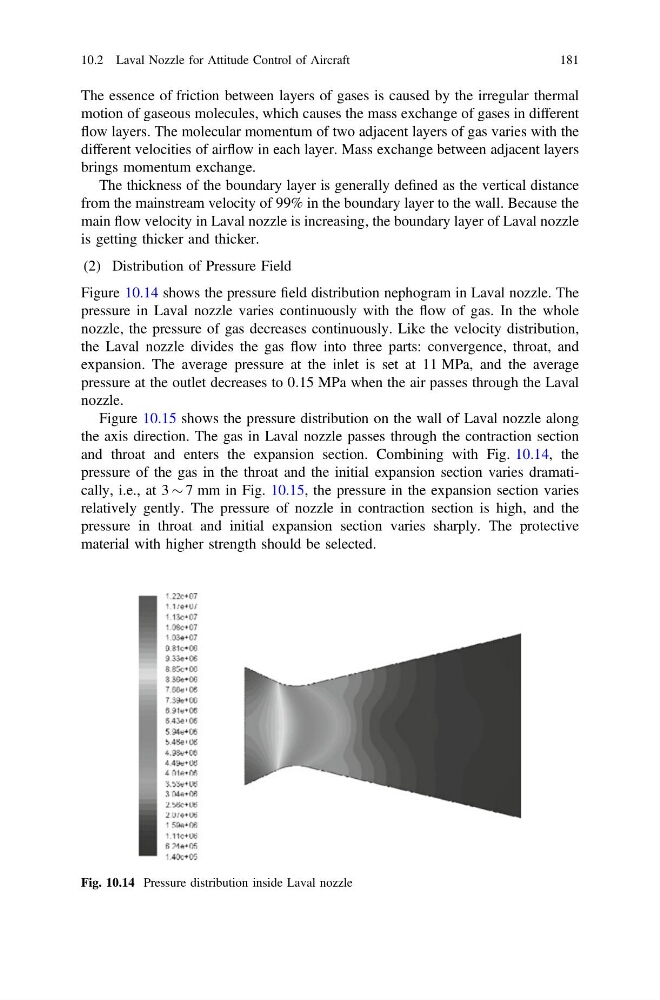
Figure 10.14 shows the pressure field distribution nephogram in Laval nozzle. The
pressure in Laval nozzle varies continuously with the flow of gas. In the whole
nozzle, the pressure of gas decreases continuously. Like the velocity distribution,
the Laval nozzle divides the gas flow into three parts: convergence, throat, and
expansion. The average pressure at the inlet is set at 11 MPa, and the average
pressure at the outlet decreases to 0:15 MPa when the air passes through the Laval
nozzle.
Figure 10.15 shows the pressure distribution on the wall of Laval nozzle along
the axis direction. The gas in Laval nozzle passes through the contraction section
and throat and enters the expansion section. Combining with Fig. 10.14, the
pressure of the gas in the throat and the initial expansion section varies dramatically, i.e., at 3 $ 7 mm in Fig. 10.15, the pressure in the expansion section varies
relatively gently. The pressure of nozzle in contraction section is high, and the
pressure in throat and initial expansion section varies sharply. The protective
material with higher strength should be selected.
Fig. 10.14 Pressure distribution inside Laval nozzle
10.2 Laval Nozzle for Attitude Control of Aircraft
181
motion of gaseous molecules, which causes the mass exchange of gases in different
flow layers. The molecular momentum of two adjacent layers of gas varies with the
different velocities of airflow in each layer. Mass exchange between adjacent layers
brings momentum exchange.
The thickness of the boundary layer is generally defined as the vertical distance
from the mainstream velocity of 99% in the boundary layer to the wall. Because the
main flow velocity in Laval nozzle is increasing, the boundary layer of Laval nozzle
is getting thicker and thicker.
(2) Distribution of Pressure Field
Figure 10.14 shows the pressure field distribution nephogram in Laval nozzle. The
pressure in Laval nozzle varies continuously with the flow of gas. In the whole
nozzle, the pressure of gas decreases continuously. Like the velocity distribution,
the Laval nozzle divides the gas flow into three parts: convergence, throat, and
expansion. The average pressure at the inlet is set at 11 MPa, and the average
pressure at the outlet decreases to 0:15 MPa when the air passes through the Laval
nozzle.
Figure 10.15 shows the pressure distribution on the wall of Laval nozzle along
the axis direction. The gas in Laval nozzle passes through the contraction section
and throat and enters the expansion section. Combining with Fig. 10.14, the
pressure of the gas in the throat and the initial expansion section varies dramatically, i.e., at 3 $ 7 mm in Fig. 10.15, the pressure in the expansion section varies
relatively gently. The pressure of nozzle in contraction section is high, and the
pressure in throat and initial expansion section varies sharply. The protective
material with higher strength should be selected.
Fig. 10.14 Pressure distribution inside Laval nozzle
10.2 Laval Nozzle for Attitude Control of Aircraft
181