

the boundary layer becomes thicker. Because of the gas viscosity, a layer of gas
close to the wall is appressed to the wall, and its velocity is 0. Because of the
friction between the gas layers, the slightly outer gas layer is restrained by the gas
layer close to the wall with the velocity of 0. The velocity decreases to nearly 0, but
there is still a velocity. The effect of friction and mutual restraint between gases is
spreading out layer by layer. The closer the gas is to the wall, the greater the pulling
effect is, the farther away it is from the wall, and the smaller the pulling effect is.
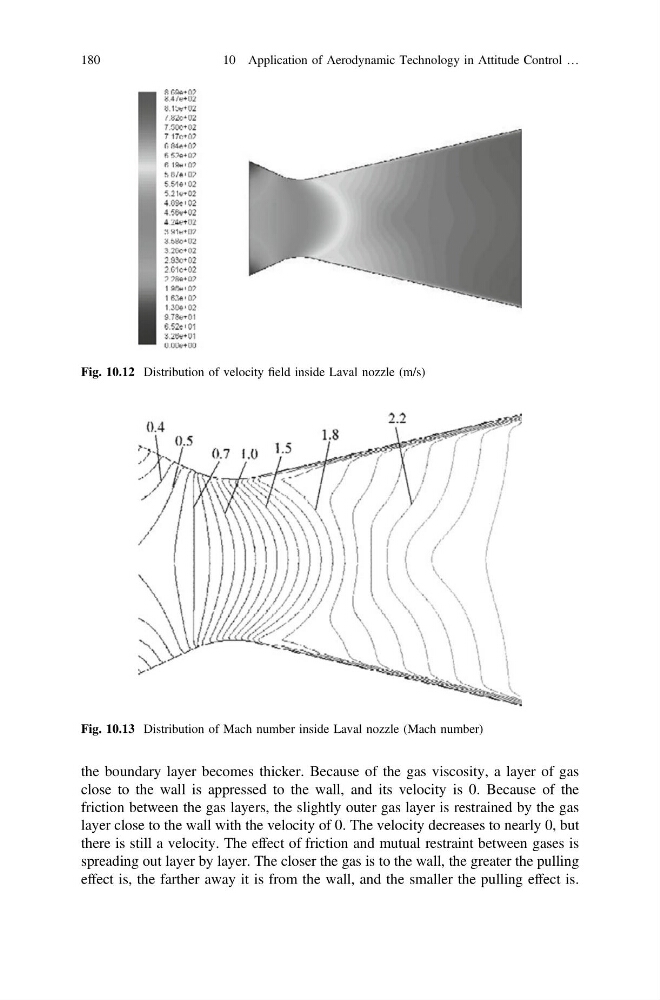
Fig. 10.12 Distribution of velocity field inside Laval nozzle (m/s)
Fig. 10.13 Distribution of Mach number inside Laval nozzle (Mach number)
180
10 Application of Aerodynamic Technology in Attitude Control …
close to the wall is appressed to the wall, and its velocity is 0. Because of the
friction between the gas layers, the slightly outer gas layer is restrained by the gas
layer close to the wall with the velocity of 0. The velocity decreases to nearly 0, but
there is still a velocity. The effect of friction and mutual restraint between gases is
spreading out layer by layer. The closer the gas is to the wall, the greater the pulling
effect is, the farther away it is from the wall, and the smaller the pulling effect is.
Fig. 10.12 Distribution of velocity field inside Laval nozzle (m/s)
Fig. 10.13 Distribution of Mach number inside Laval nozzle (Mach number)
180
10 Application of Aerodynamic Technology in Attitude Control …