

9.2.2 Optimal Matching of Output Characteristics and Load
Trajectories of Servo Mechanism
(1) Energy Work Pressure
Usually the installation space of hydraulic steering system is very limited.
Therefore, higher working pressure should be chosen as far as possible.
Because the higher the pressure, the smaller the piston area when overcoming
the same load force, the smaller the flow required by the servo valve at this
time, so the volume and weight of hydraulic energy and power mechanism will
be greatly reduced. However, with the increase of pressure, the strength
requirement of hydraulic components increases, and in turn, the volume and
weight of components increase. On the other hand, the increase in pressure will
increase leakage and flow noise, and oil temperature will also increase. At
present, the commonly used working pressure specifications are 32, 21, 14 and
7 MPa. The working pressure of hydraulic steering system can be determined
according to the requirements of volume, weight, noise, and other comprehensive factors.
(2) Optimal Power Matching Design
According to the load trajectory and the pressure of the hydraulic energy
system, the no-load flow of the servo valve and the effective area of the actuator
piston under the optimal matching design conditions can be obtained. The
output characteristics of power control elements are compatible with the load
trajectory characteristics to achieve load matching. On the one hand, the output
characteristics of power control elements fully envelop the load characteristics
to meet the requirements of fully dragging load. On the other hand, it means
that the output characteristics and load characteristics of power control elements
match each other at the maximum power position, that is, to achieve the optimal
power matching design, improve power utilization, reduce energy
Load speed/(
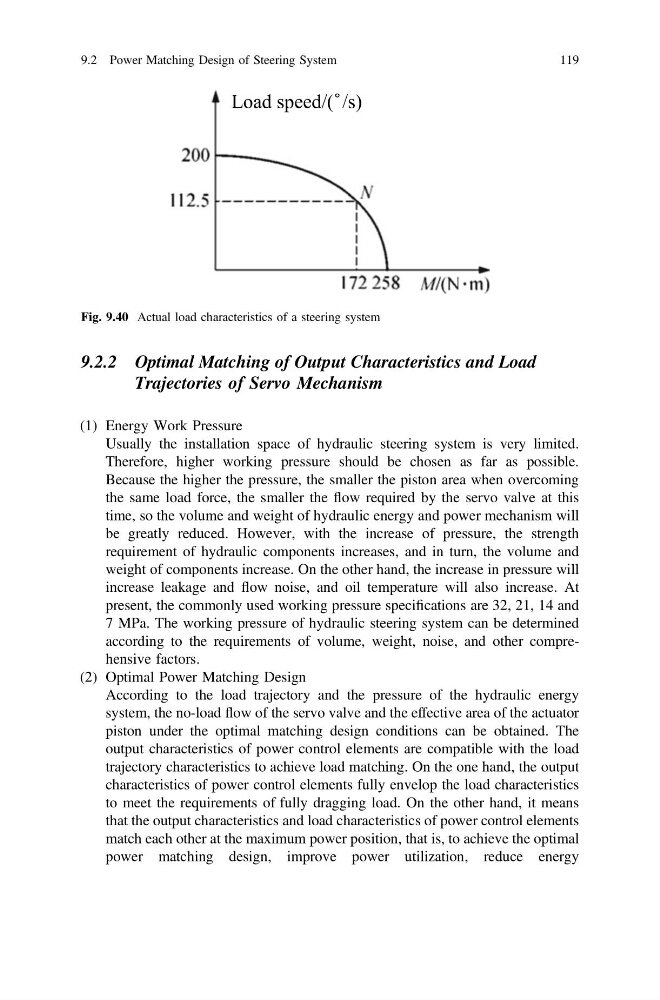
Fig. 9.40 Actual load characteristics of a steering system
9.2 Power Matching Design of Steering System
119
Trajectories of Servo Mechanism
(1) Energy Work Pressure
Usually the installation space of hydraulic steering system is very limited.
Therefore, higher working pressure should be chosen as far as possible.
Because the higher the pressure, the smaller the piston area when overcoming
the same load force, the smaller the flow required by the servo valve at this
time, so the volume and weight of hydraulic energy and power mechanism will
be greatly reduced. However, with the increase of pressure, the strength
requirement of hydraulic components increases, and in turn, the volume and
weight of components increase. On the other hand, the increase in pressure will
increase leakage and flow noise, and oil temperature will also increase. At
present, the commonly used working pressure specifications are 32, 21, 14 and
7 MPa. The working pressure of hydraulic steering system can be determined
according to the requirements of volume, weight, noise, and other comprehensive factors.
(2) Optimal Power Matching Design
According to the load trajectory and the pressure of the hydraulic energy
system, the no-load flow of the servo valve and the effective area of the actuator
piston under the optimal matching design conditions can be obtained. The
output characteristics of power control elements are compatible with the load
trajectory characteristics to achieve load matching. On the one hand, the output
characteristics of power control elements fully envelop the load characteristics
to meet the requirements of fully dragging load. On the other hand, it means
that the output characteristics and load characteristics of power control elements
match each other at the maximum power position, that is, to achieve the optimal
power matching design, improve power utilization, reduce energy
Load speed/(
Fig. 9.40 Actual load characteristics of a steering system
9.2 Power Matching Design of Steering System
119