

Biomass + Air
Gasification
Synthesis gas
(CO + H 2 )
Fuel synthesis
FT diesel Bio-DME
Biohydrogen
Alcohols
400
Alternative Fuels for Transportation
13.5.1 gasification
Biomass gasification is one of the biomass conversion technologies developed in order to produce a combustible gas mixture (called producer gas)
using agroresidues. Gasification is the process of converting biomass into a
gaseous fuel by means of partial oxidation at high temperature. Gasification
involves the devolatilization and conversion of biomass in an atmosphere
of steam and/or air to produce a medium or low calorific value gas. The
ratio of oxygen to biomass used is typically around 0.3. Gasification is a
form of pyrolysis, carried out at high temperatures in order to optimize
gas production. The producer gas is a mixture of carbon monoxide, hydrogen, and methane, together with carbon dioxide and nitrogen. It is one of
the important conversion technologies that can be effectively utilized for
decentralized power generation and thermal applications. The major portion of agricultural wastes undergoes natural decomposition resulting in
production of various greenhouse gases and other environmental problems (Wagner 2007). The gasification process is suitable for a wide range of
biomass resources ranging from agricultural crops, biomass residues, and
organic wastes.
The major classification of gasifiers include a fixed bed, a fluidized bed,
and an entrained bed. These gasifiers differ in size, type of feedstock, feed,
production rate, residence time, and reaction temperature.
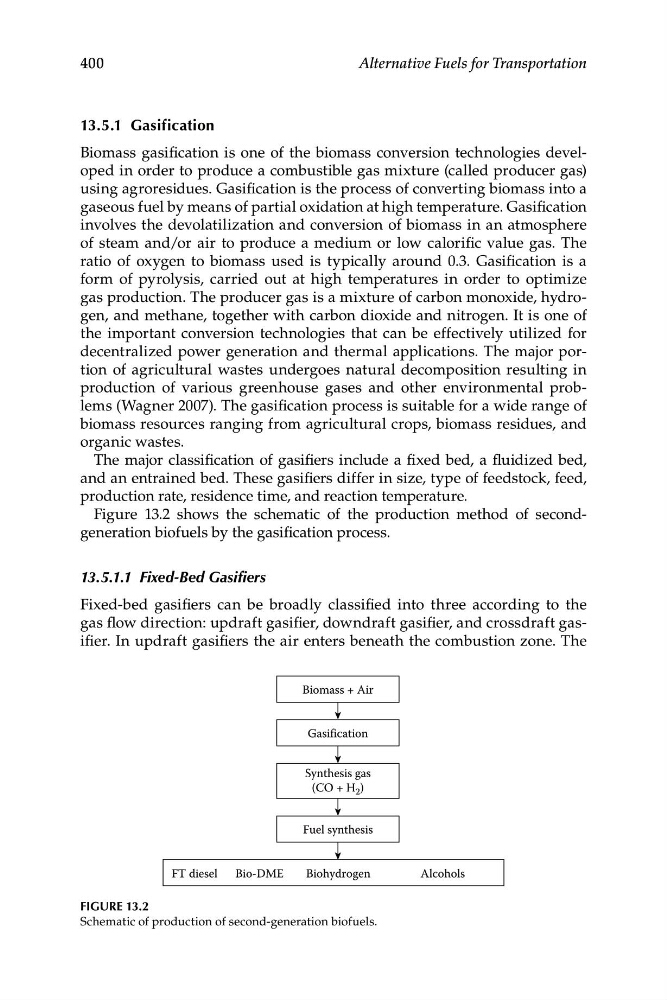
Figure 13.2 shows the schematic of the production method of secondgeneration biofuels by the gasification process.
13.5.1.1 Fixed-Bed Gasifiers
Fixed-bed gasifiers can be broadly classified into three according to the
gas flow direction: updraft gasifier, downdraft gasifier, and crossdraft gasifier. In updraft gasifiers the air enters beneath the combustion zone. The
Figure 13.2
Schematic of production of second-generation biofuels.
Gasification
Synthesis gas
(CO + H 2 )
Fuel synthesis
FT diesel Bio-DME
Biohydrogen
Alcohols
400
Alternative Fuels for Transportation
13.5.1 gasification
Biomass gasification is one of the biomass conversion technologies developed in order to produce a combustible gas mixture (called producer gas)
using agroresidues. Gasification is the process of converting biomass into a
gaseous fuel by means of partial oxidation at high temperature. Gasification
involves the devolatilization and conversion of biomass in an atmosphere
of steam and/or air to produce a medium or low calorific value gas. The
ratio of oxygen to biomass used is typically around 0.3. Gasification is a
form of pyrolysis, carried out at high temperatures in order to optimize
gas production. The producer gas is a mixture of carbon monoxide, hydrogen, and methane, together with carbon dioxide and nitrogen. It is one of
the important conversion technologies that can be effectively utilized for
decentralized power generation and thermal applications. The major portion of agricultural wastes undergoes natural decomposition resulting in
production of various greenhouse gases and other environmental problems (Wagner 2007). The gasification process is suitable for a wide range of
biomass resources ranging from agricultural crops, biomass residues, and
organic wastes.
The major classification of gasifiers include a fixed bed, a fluidized bed,
and an entrained bed. These gasifiers differ in size, type of feedstock, feed,
production rate, residence time, and reaction temperature.
Figure 13.2 shows the schematic of the production method of secondgeneration biofuels by the gasification process.
13.5.1.1 Fixed-Bed Gasifiers
Fixed-bed gasifiers can be broadly classified into three according to the
gas flow direction: updraft gasifier, downdraft gasifier, and crossdraft gasifier. In updraft gasifiers the air enters beneath the combustion zone. The
Figure 13.2
Schematic of production of second-generation biofuels.