

Biomass
Acid
Pretreatment
Enzymatic
hydrolysis
Fermentation
Distillation
Bioethanol
Enzymes
398
Alternative Fuels for Transportation
and pressure for few minutes in a continuous reactor provides a yield of
about 50%. The concentrated acid hydrolysis process uses relatively mild
temperatures and pressures. This process has a much longer reaction time
than the diluted acid hydrolysis process. This process provides high sugar
recovery and is cost effective as it recovers acid during recycling. However,
acid hydrolysis results in the formation of by-products such as formic acid
that have adverse effects on yeast growth during fermentation.
13.4.1.2 Enzymatic Hydrolysis
Biomass is cooked at higher temperatures and large amounts of amylolytic
enzymes are added to hydrolyze the starchy/celluliosic biomass prior to
fermentation. Different kinds of celluloses are used to break the cellulose
and hemicelluloses. These enzymes attack the cellulose chains to produce
polysaccharides of shorter length. Enzymes commonly used are endoglucanases, exoglucanases, and cellobiohydrolases. The pretreatment process
is necessary for enzymatic hydrolysis; that is, pretreatment processes
remove hemicellulose and breaks down the crystalline structure of cellulose or removes the lignin to expose hemicellulose and cellulose molecules.
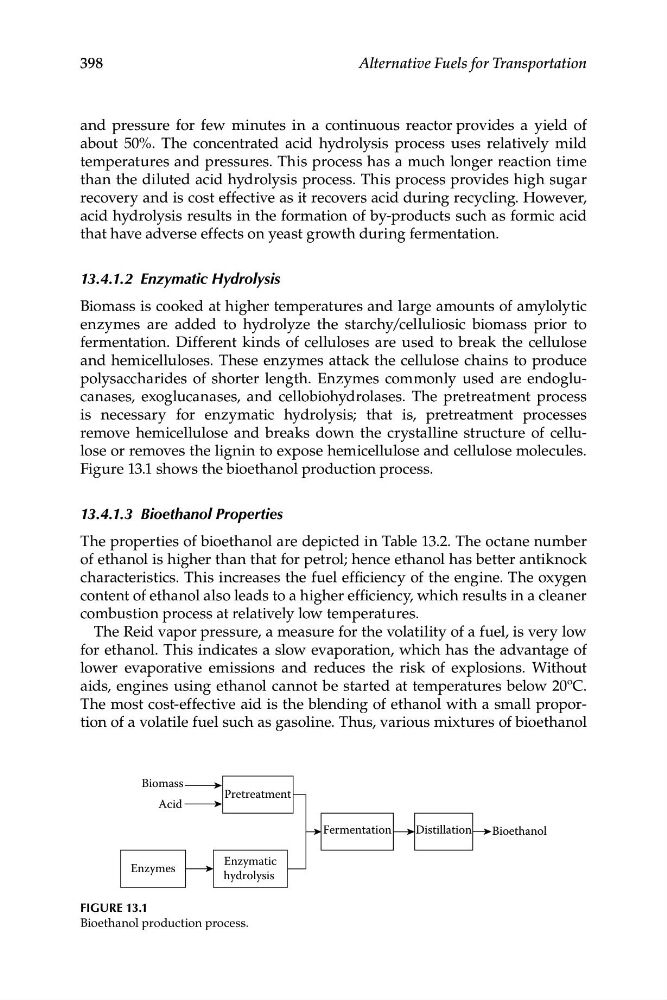
Figure 13.1 shows the bioethanol production process.
13.4.1.3 Bioethanol Properties
The properties of bioethanol are depicted in Table 13.2. The octane number
of ethanol is higher than that for petrol; hence ethanol has better antiknock
characteristics. This increases the fuel efficiency of the engine. The oxygen
content of ethanol also leads to a higher efficiency, which results in a cleaner
combustion process at relatively low temperatures.
The Reid vapor pressure, a measure for the volatility of a fuel, is very low
for ethanol. This indicates a slow evaporation, which has the advantage of
lower evaporative emissions and reduces the risk of explosions. Without
aids, engines using ethanol cannot be started at temperatures below 20ºC.
The most cost-effective aid is the blending of ethanol with a small proportion of a volatile fuel such as gasoline. Thus, various mixtures of bioethanol
Figure 13.1
Bioethanol production process.
Acid
Pretreatment
Enzymatic
hydrolysis
Fermentation
Distillation
Bioethanol
Enzymes
398
Alternative Fuels for Transportation
and pressure for few minutes in a continuous reactor provides a yield of
about 50%. The concentrated acid hydrolysis process uses relatively mild
temperatures and pressures. This process has a much longer reaction time
than the diluted acid hydrolysis process. This process provides high sugar
recovery and is cost effective as it recovers acid during recycling. However,
acid hydrolysis results in the formation of by-products such as formic acid
that have adverse effects on yeast growth during fermentation.
13.4.1.2 Enzymatic Hydrolysis
Biomass is cooked at higher temperatures and large amounts of amylolytic
enzymes are added to hydrolyze the starchy/celluliosic biomass prior to
fermentation. Different kinds of celluloses are used to break the cellulose
and hemicelluloses. These enzymes attack the cellulose chains to produce
polysaccharides of shorter length. Enzymes commonly used are endoglucanases, exoglucanases, and cellobiohydrolases. The pretreatment process
is necessary for enzymatic hydrolysis; that is, pretreatment processes
remove hemicellulose and breaks down the crystalline structure of cellulose or removes the lignin to expose hemicellulose and cellulose molecules.
Figure 13.1 shows the bioethanol production process.
13.4.1.3 Bioethanol Properties
The properties of bioethanol are depicted in Table 13.2. The octane number
of ethanol is higher than that for petrol; hence ethanol has better antiknock
characteristics. This increases the fuel efficiency of the engine. The oxygen
content of ethanol also leads to a higher efficiency, which results in a cleaner
combustion process at relatively low temperatures.
The Reid vapor pressure, a measure for the volatility of a fuel, is very low
for ethanol. This indicates a slow evaporation, which has the advantage of
lower evaporative emissions and reduces the risk of explosions. Without
aids, engines using ethanol cannot be started at temperatures below 20ºC.
The most cost-effective aid is the blending of ethanol with a small proportion of a volatile fuel such as gasoline. Thus, various mixtures of bioethanol
Figure 13.1
Bioethanol production process.