

Future Fuels
397
octane fuel. It can be blended with gasoline to improve the octane number
and also improve the fuel properties of gasoline. Ethanol blended gasoline
improves the engine power and emission characteristics. In India, 5% ethanol blending with gasoline is permitted. In some countries, flexi-fuel vehicles
(FFV) fueled with E85 (85% ethanol and 15% gasoline) are available.
First generation ethanol is produced by fermentation of sugar to ethanol,
which is similar to the wine-making process. Ethanol can also be produced
from starch, sucrose, and lignocellulosic biomass. The cost of feedstock plays
a major role in production of ethanol. Lignocellulosic materials such as agriresidue and wood are attractive materials for ethanol fuel production as it is
abundantly available.
Lignocellulose materials comprising of lignin, hemicellulose, and cellulose. These are complex carbohydrates (molecules based on sugar). Secondgeneration ethanols are derived from organic plant materials (such as wood,
grasses, corn stover, wheat straw, etc.). The composition of various types of
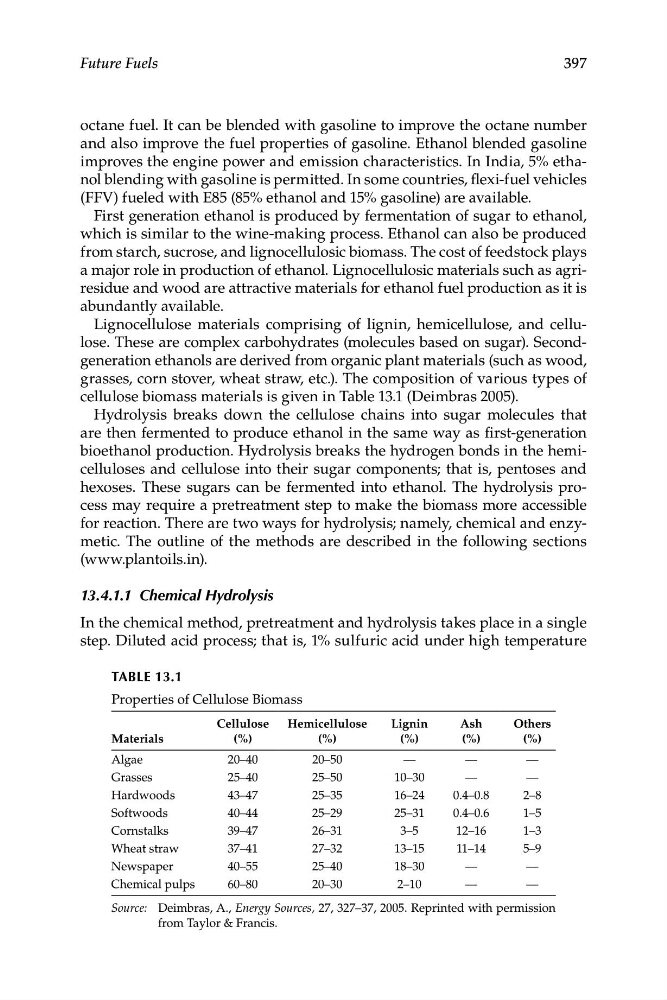
cellulose biomass materials is given in Table 13.1 (Deimbras 2005).
Hydrolysis breaks down the cellulose chains into sugar molecules that
are then fermented to produce ethanol in the same way as first-generation
bioethanol production. Hydrolysis breaks the hydrogen bonds in the hemicelluloses and cellulose into their sugar components; that is, pentoses and
hexoses. These sugars can be fermented into ethanol. The hydrolysis process may require a pretreatment step to make the biomass more accessible
for reaction. There are two ways for hydrolysis; namely, chemical and enzymetic. The outline of the methods are described in the following sections
(www.plantoils.in).
13.4.1.1 Chemical Hydrolysis
In the chemical method, pretreatment and hydrolysis takes place in a single
step. Diluted acid process; that is, 1% sulfuric acid under high temperature
TABLe 13.1
Properties of Cellulose Biomass
Cellulose
Hemicellulose
Lignin
Ash
Others
Materials
(%)
(%)
(%)
(%)
(%)
Algae
20–40
20–50
—
—
—
Grasses
25–40
25–50
10–30
—
—
Hardwoods
43–47
25–35
16–24
0.4–0.8
2–8
Softwoods
40–44
25–29
25–31
0.4–0.6
1–5
Cornstalks
39–47
26–31
3–5
12–16
1–3
Wheat straw
37–41
27–32
13–15
11–14
5–9
Newspaper
40–55
25–40
18–30
—
—
Chemical pulps
60–80
20–30
2–10
—
—
Source: Deimbras, A., Energy Sources, 27, 327–37, 2005. Reprinted with permission
from Taylor & Francis.
397
octane fuel. It can be blended with gasoline to improve the octane number
and also improve the fuel properties of gasoline. Ethanol blended gasoline
improves the engine power and emission characteristics. In India, 5% ethanol blending with gasoline is permitted. In some countries, flexi-fuel vehicles
(FFV) fueled with E85 (85% ethanol and 15% gasoline) are available.
First generation ethanol is produced by fermentation of sugar to ethanol,
which is similar to the wine-making process. Ethanol can also be produced
from starch, sucrose, and lignocellulosic biomass. The cost of feedstock plays
a major role in production of ethanol. Lignocellulosic materials such as agriresidue and wood are attractive materials for ethanol fuel production as it is
abundantly available.
Lignocellulose materials comprising of lignin, hemicellulose, and cellulose. These are complex carbohydrates (molecules based on sugar). Secondgeneration ethanols are derived from organic plant materials (such as wood,
grasses, corn stover, wheat straw, etc.). The composition of various types of
cellulose biomass materials is given in Table 13.1 (Deimbras 2005).
Hydrolysis breaks down the cellulose chains into sugar molecules that
are then fermented to produce ethanol in the same way as first-generation
bioethanol production. Hydrolysis breaks the hydrogen bonds in the hemicelluloses and cellulose into their sugar components; that is, pentoses and
hexoses. These sugars can be fermented into ethanol. The hydrolysis process may require a pretreatment step to make the biomass more accessible
for reaction. There are two ways for hydrolysis; namely, chemical and enzymetic. The outline of the methods are described in the following sections
(www.plantoils.in).
13.4.1.1 Chemical Hydrolysis
In the chemical method, pretreatment and hydrolysis takes place in a single
step. Diluted acid process; that is, 1% sulfuric acid under high temperature
TABLe 13.1
Properties of Cellulose Biomass
Cellulose
Hemicellulose
Lignin
Ash
Others
Materials
(%)
(%)
(%)
(%)
(%)
Algae
20–40
20–50
—
—
—
Grasses
25–40
25–50
10–30
—
—
Hardwoods
43–47
25–35
16–24
0.4–0.8
2–8
Softwoods
40–44
25–29
25–31
0.4–0.6
1–5
Cornstalks
39–47
26–31
3–5
12–16
1–3
Wheat straw
37–41
27–32
13–15
11–14
5–9
Newspaper
40–55
25–40
18–30
—
—
Chemical pulps
60–80
20–30
2–10
—
—
Source: Deimbras, A., Energy Sources, 27, 327–37, 2005. Reprinted with permission
from Taylor & Francis.