

Fuel Cells
351
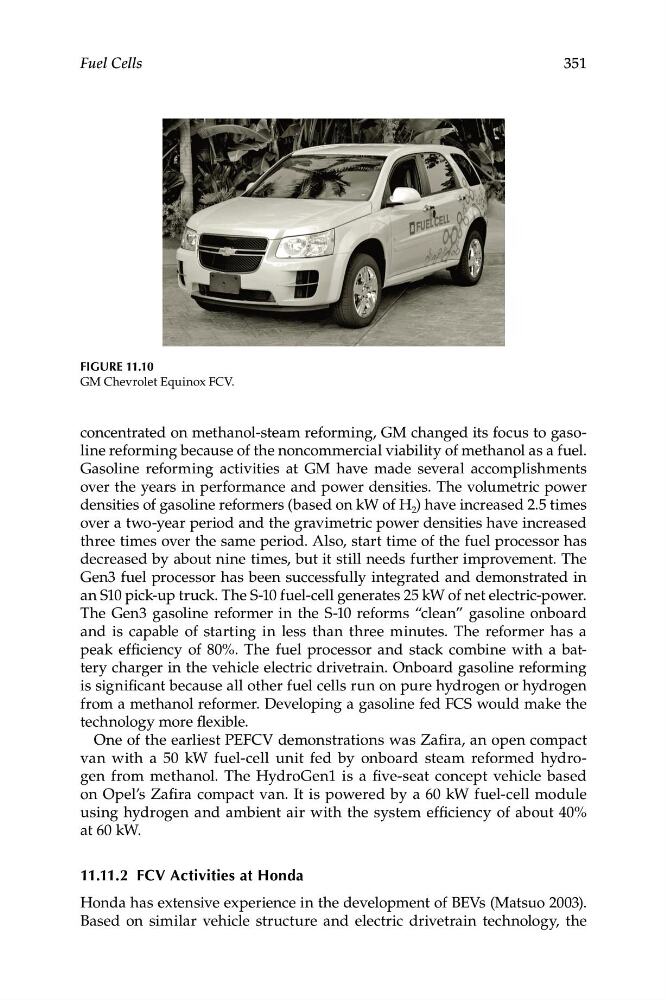
Figure 11.10
GM Chevrolet Equinox FCV.
concentrated on methanol-steam reforming, GM changed its focus to gasoline reforming because of the noncommercial viability of methanol as a fuel.
Gasoline reforming activities at GM have made several accomplishments
over the years in performance and power densities. The volumetric power
densities of gasoline reformers (based on kW of H 2 ) have increased 2.5 times
over a two-year period and the gravimetric power densities have increased
three times over the same period. Also, start time of the fuel processor has
decreased by about nine times, but it still needs further improvement. The
Gen3 fuel processor has been successfully integrated and demonstrated in
an S10 pick-up truck. The S-10 fuel-cell generates 25 kW of net electric-power.
The Gen3 gasoline reformer in the S-10 reforms “clean” gasoline onboard
and is capable of starting in less than three minutes. The reformer has a
peak efficiency of 80%. The fuel processor and stack combine with a battery charger in the vehicle electric drivetrain. Onboard gasoline reforming
is significant because all other fuel cells run on pure hydrogen or hydrogen
from a methanol reformer. Developing a gasoline fed FCS would make the
technology more flexible.
One of the earliest PEFCV demonstrations was Zafira, an open compact
van with a 50 kW fuel-cell unit fed by onboard steam reformed hydrogen from methanol. The HydroGen1 is a five-seat concept vehicle based
on Opel’s Zafira compact van. It is powered by a 60 kW fuel-cell module
using hydrogen and ambient air with the system efficiency of about 40%
at 60 kW.
11.11.2 FCV Activities at Honda
Honda has extensive experience in the development of BEVs (Matsuo 2003).
Based on similar vehicle structure and electric drivetrain technology, the
351
Figure 11.10
GM Chevrolet Equinox FCV.
concentrated on methanol-steam reforming, GM changed its focus to gasoline reforming because of the noncommercial viability of methanol as a fuel.
Gasoline reforming activities at GM have made several accomplishments
over the years in performance and power densities. The volumetric power
densities of gasoline reformers (based on kW of H 2 ) have increased 2.5 times
over a two-year period and the gravimetric power densities have increased
three times over the same period. Also, start time of the fuel processor has
decreased by about nine times, but it still needs further improvement. The
Gen3 fuel processor has been successfully integrated and demonstrated in
an S10 pick-up truck. The S-10 fuel-cell generates 25 kW of net electric-power.
The Gen3 gasoline reformer in the S-10 reforms “clean” gasoline onboard
and is capable of starting in less than three minutes. The reformer has a
peak efficiency of 80%. The fuel processor and stack combine with a battery charger in the vehicle electric drivetrain. Onboard gasoline reforming
is significant because all other fuel cells run on pure hydrogen or hydrogen
from a methanol reformer. Developing a gasoline fed FCS would make the
technology more flexible.
One of the earliest PEFCV demonstrations was Zafira, an open compact
van with a 50 kW fuel-cell unit fed by onboard steam reformed hydrogen from methanol. The HydroGen1 is a five-seat concept vehicle based
on Opel’s Zafira compact van. It is powered by a 60 kW fuel-cell module
using hydrogen and ambient air with the system efficiency of about 40%
at 60 kW.
11.11.2 FCV Activities at Honda
Honda has extensive experience in the development of BEVs (Matsuo 2003).
Based on similar vehicle structure and electric drivetrain technology, the