

305
Electric Vehicles
7. Ability to accept fast recharge
8. Ability to withstand overcharge and over discharge
9. Reliable in operation
10. Maintenance free
11. Rugged and resistant to abuse
12. Safe both in use and accident conditions
13. Made of readily available and inexpensive materials with environmental friendliness
14. Efficient reclamation of materials at the end of service life
10.3.2.2 Electric Vehicle Batteries
A battery is composed of several cells stacked together in a single container.
A cell is an independent and complete unit that possesses all the electrochemical properties. Depending on the requirement of battery voltage, the
number of cells will be decided and connected in series to get the desired
voltage.
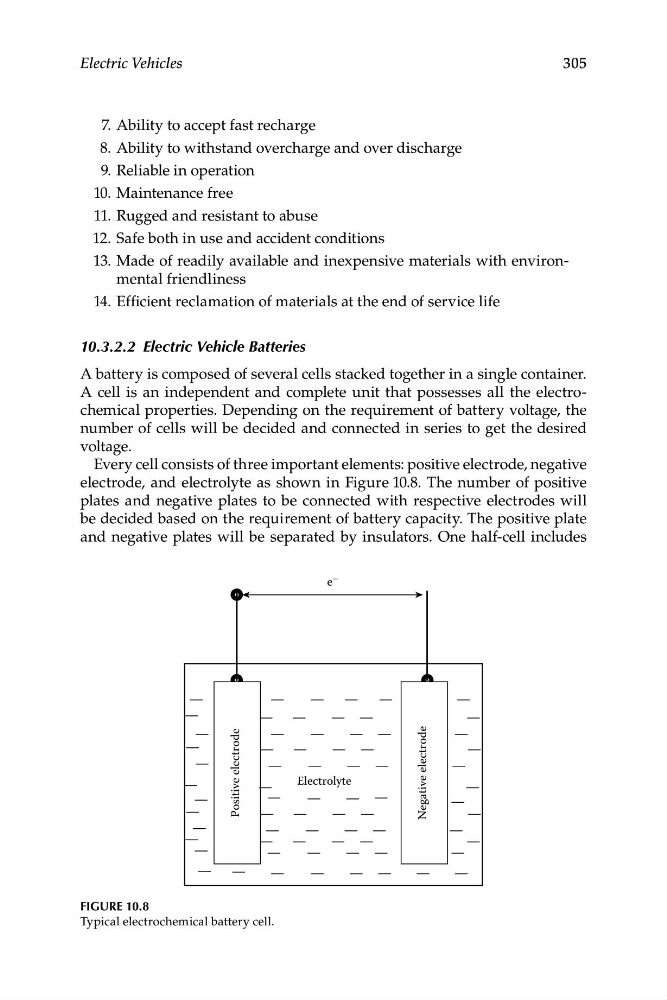
Every cell consists of three important elements: positive electrode, negative
electrode, and electrolyte as shown in Figure 10.8. The number of positive
plates and negative plates to be connected with respective electrodes will
be decided based on the requirement of battery capacity. The positive plate
and negative plates will be separated by insulators. One half-cell includes
e
–
Electrolyte
Positive electrode
Negative electrode
Figure 10.8
Typical electrochemical battery cell.
Electric Vehicles
7. Ability to accept fast recharge
8. Ability to withstand overcharge and over discharge
9. Reliable in operation
10. Maintenance free
11. Rugged and resistant to abuse
12. Safe both in use and accident conditions
13. Made of readily available and inexpensive materials with environmental friendliness
14. Efficient reclamation of materials at the end of service life
10.3.2.2 Electric Vehicle Batteries
A battery is composed of several cells stacked together in a single container.
A cell is an independent and complete unit that possesses all the electrochemical properties. Depending on the requirement of battery voltage, the
number of cells will be decided and connected in series to get the desired
voltage.
Every cell consists of three important elements: positive electrode, negative
electrode, and electrolyte as shown in Figure 10.8. The number of positive
plates and negative plates to be connected with respective electrodes will
be decided based on the requirement of battery capacity. The positive plate
and negative plates will be separated by insulators. One half-cell includes
e
–
Electrolyte
Positive electrode
Negative electrode
Figure 10.8
Typical electrochemical battery cell.