

164
X. Bi et al.
Overall delamination
Delamination between layers
Cohesive layer 1
Cohesive layer 2
Cohesive layer 3
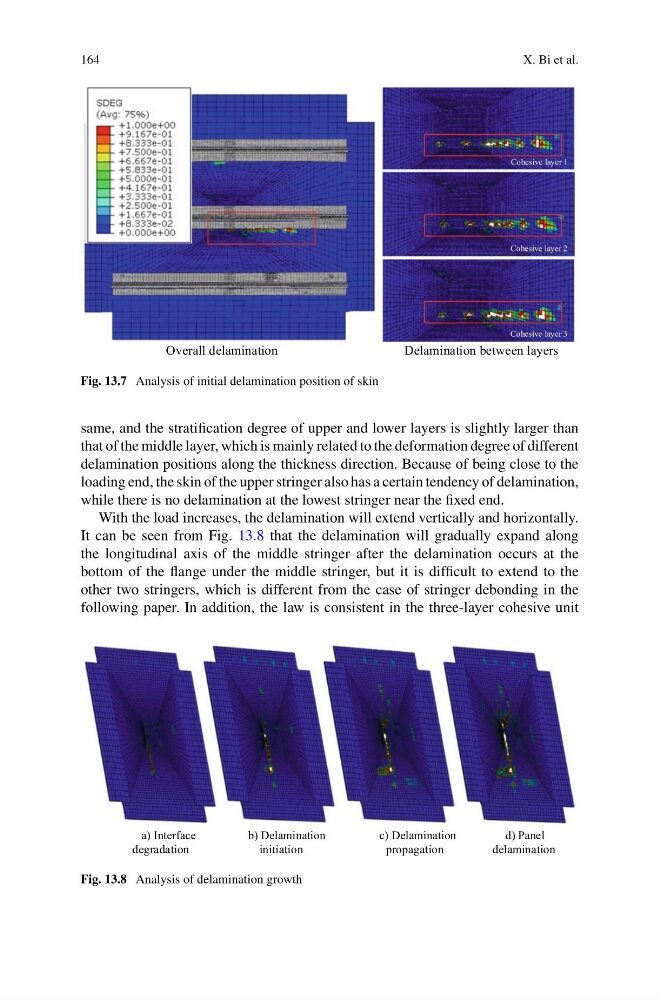
Fig. 13.7 Analysis of initial delamination position of skin
same, and the stratification degree of upper and lower layers is slightly larger than
that of the middle layer, which is mainly related to the deformation degree of different
delamination positions along the thickness direction. Because of being close to the
loading end, the skin of the upper stringer also has a certain tendency of delamination,
while there is no delamination at the lowest stringer near the fixed end.
With the load increases, the delamination will extend vertically and horizontally.
It can be seen from Fig. 13.8 that the delamination will gradually expand along
the longitudinal axis of the middle stringer after the delamination occurs at the
bottom of the flange under the middle stringer, but it is difficult to extend to the
other two stringers, which is different from the case of stringer debonding in the
following paper. In addition, the law is consistent in the three-layer cohesive unit
a) Interface
degradation
b) Delamination
initiation
c) Delamination
propagation
d) Panel
delamination
Fig. 13.8 Analysis of delamination growth
X. Bi et al.
Overall delamination
Delamination between layers
Cohesive layer 1
Cohesive layer 2
Cohesive layer 3
Fig. 13.7 Analysis of initial delamination position of skin
same, and the stratification degree of upper and lower layers is slightly larger than
that of the middle layer, which is mainly related to the deformation degree of different
delamination positions along the thickness direction. Because of being close to the
loading end, the skin of the upper stringer also has a certain tendency of delamination,
while there is no delamination at the lowest stringer near the fixed end.
With the load increases, the delamination will extend vertically and horizontally.
It can be seen from Fig. 13.8 that the delamination will gradually expand along
the longitudinal axis of the middle stringer after the delamination occurs at the
bottom of the flange under the middle stringer, but it is difficult to extend to the
other two stringers, which is different from the case of stringer debonding in the
following paper. In addition, the law is consistent in the three-layer cohesive unit
a) Interface
degradation
b) Delamination
initiation
c) Delamination
propagation
d) Panel
delamination
Fig. 13.8 Analysis of delamination growth