

110
M. Feng et al.
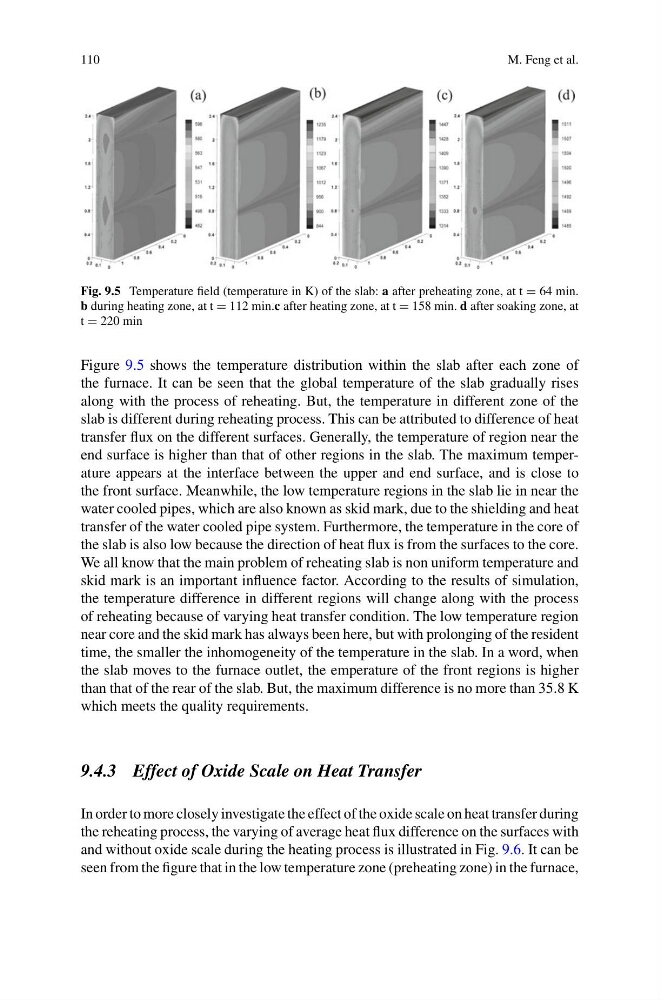
Fig. 9.5 Temperature field (temperature in K) of the slab: a after preheating zone, at t = 64 min.
b during heating zone, at t = 112 min.c after heating zone, at t = 158 min. d after soaking zone, at
t = 220 min
Figure 9.5 shows the temperature distribution within the slab after each zone of
the furnace. It can be seen that the global temperature of the slab gradually rises
along with the process of reheating. But, the temperature in different zone of the
slab is different during reheating process. This can be attributed to difference of heat
transfer flux on the different surfaces. Generally, the temperature of region near the
end surface is higher than that of other regions in the slab. The maximum temperature appears at the interface between the upper and end surface, and is close to
the front surface. Meanwhile, the low temperature regions in the slab lie in near the
water cooled pipes, which are also known as skid mark, due to the shielding and heat
transfer of the water cooled pipe system. Furthermore, the temperature in the core of
the slab is also low because the direction of heat flux is from the surfaces to the core.
We all know that the main problem of reheating slab is non uniform temperature and
skid mark is an important influence factor. According to the results of simulation,
the temperature difference in different regions will change along with the process
of reheating because of varying heat transfer condition. The low temperature region
near core and the skid mark has always been here, but with prolonging of the resident
time, the smaller the inhomogeneity of the temperature in the slab. In a word, when
the slab moves to the furnace outlet, the emperature of the front regions is higher
than that of the rear of the slab. But, the maximum difference is no more than 35.8 K
which meets the quality requirements.
9.4.3 Effect of Oxide Scale on Heat Transfer
In order to more closely investigate the effect of the oxide scale on heat transfer during
the reheating process, the varying of average heat flux difference on the surfaces with
and without oxide scale during the heating process is illustrated in Fig. 9.6. It can be
seen from the figure that in the low temperature zone (preheating zone) in the furnace,
M. Feng et al.
Fig. 9.5 Temperature field (temperature in K) of the slab: a after preheating zone, at t = 64 min.
b during heating zone, at t = 112 min.c after heating zone, at t = 158 min. d after soaking zone, at
t = 220 min
Figure 9.5 shows the temperature distribution within the slab after each zone of
the furnace. It can be seen that the global temperature of the slab gradually rises
along with the process of reheating. But, the temperature in different zone of the
slab is different during reheating process. This can be attributed to difference of heat
transfer flux on the different surfaces. Generally, the temperature of region near the
end surface is higher than that of other regions in the slab. The maximum temperature appears at the interface between the upper and end surface, and is close to
the front surface. Meanwhile, the low temperature regions in the slab lie in near the
water cooled pipes, which are also known as skid mark, due to the shielding and heat
transfer of the water cooled pipe system. Furthermore, the temperature in the core of
the slab is also low because the direction of heat flux is from the surfaces to the core.
We all know that the main problem of reheating slab is non uniform temperature and
skid mark is an important influence factor. According to the results of simulation,
the temperature difference in different regions will change along with the process
of reheating because of varying heat transfer condition. The low temperature region
near core and the skid mark has always been here, but with prolonging of the resident
time, the smaller the inhomogeneity of the temperature in the slab. In a word, when
the slab moves to the furnace outlet, the emperature of the front regions is higher
than that of the rear of the slab. But, the maximum difference is no more than 35.8 K
which meets the quality requirements.
9.4.3 Effect of Oxide Scale on Heat Transfer
In order to more closely investigate the effect of the oxide scale on heat transfer during
the reheating process, the varying of average heat flux difference on the surfaces with
and without oxide scale during the heating process is illustrated in Fig. 9.6. It can be
seen from the figure that in the low temperature zone (preheating zone) in the furnace,