

168
5 Modeling of Mechanical Oscillatory Systems …
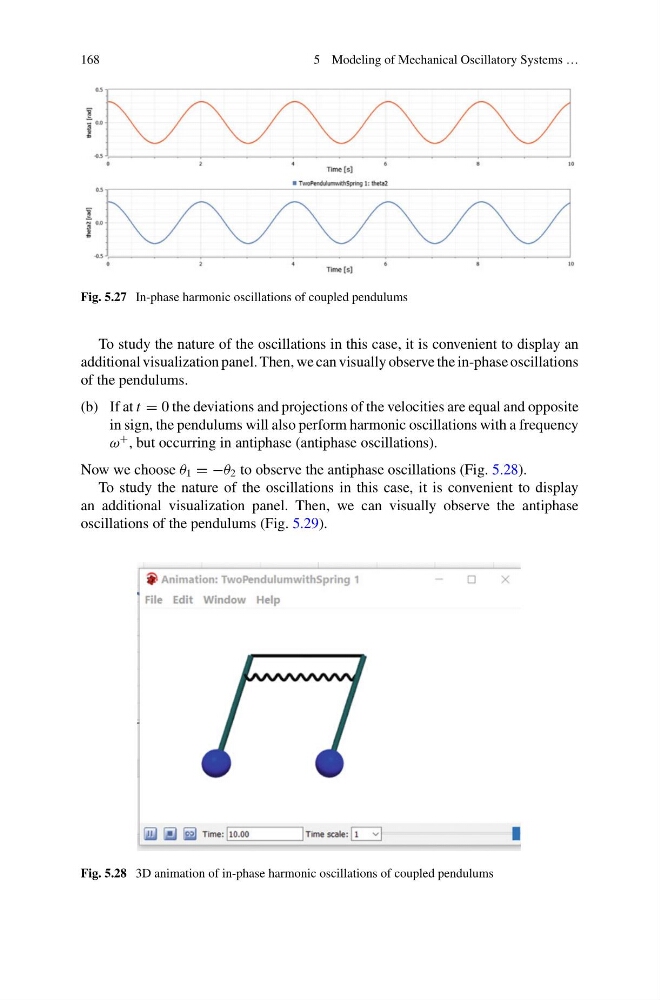
Fig. 5.27 In-phase harmonic oscillations of coupled pendulums
To study the nature of the oscillations in this case, it is convenient to display an
additional visualization panel. Then, we can visually observe the in-phase oscillations
of the pendulums.
(b) If at t = 0 the deviations and projections of the velocities are equal and opposite
in sign, the pendulums will also perform harmonic oscillations with a frequency
ω
+ , but occurring in antiphase (antiphase oscillations).
Now we choose θ 1 = −θ 2 to observe the antiphase oscillations (Fig. 5.28).
To study the nature of the oscillations in this case, it is convenient to display
an additional visualization panel. Then, we can visually observe the antiphase
oscillations of the pendulums (Fig. 5.29).
Fig. 5.28 3D animation of in-phase harmonic oscillations of coupled pendulums
5 Modeling of Mechanical Oscillatory Systems …
Fig. 5.27 In-phase harmonic oscillations of coupled pendulums
To study the nature of the oscillations in this case, it is convenient to display an
additional visualization panel. Then, we can visually observe the in-phase oscillations
of the pendulums.
(b) If at t = 0 the deviations and projections of the velocities are equal and opposite
in sign, the pendulums will also perform harmonic oscillations with a frequency
ω
+ , but occurring in antiphase (antiphase oscillations).
Now we choose θ 1 = −θ 2 to observe the antiphase oscillations (Fig. 5.28).
To study the nature of the oscillations in this case, it is convenient to display
an additional visualization panel. Then, we can visually observe the antiphase
oscillations of the pendulums (Fig. 5.29).
Fig. 5.28 3D animation of in-phase harmonic oscillations of coupled pendulums