

6.5 Lithium-Sulfur Battery
177
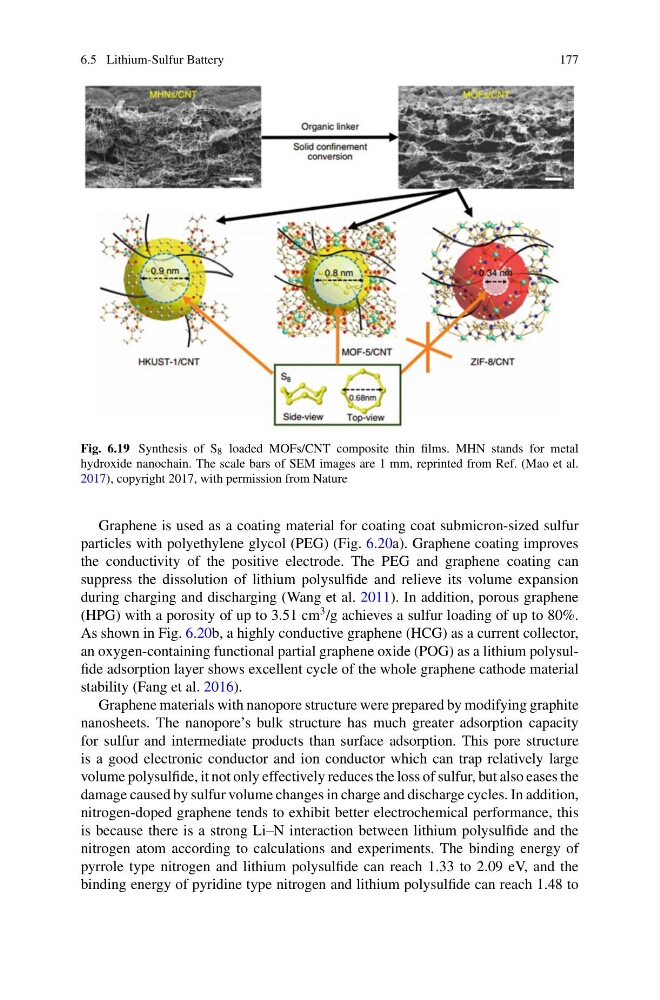
Fig. 6.19 Synthesis of S 8 loaded MOFs/CNT composite thin films. MHN stands for metal
hydroxide nanochain. The scale bars of SEM images are 1 mm, reprinted from Ref. (Mao et al.
2017), copyright 2017, with permission from Nature
Graphene is used as a coating material for coating coat submicron-sized sulfur
particles with polyethylene glycol (PEG) (Fig. 6.20a). Graphene coating improves
the conductivity of the positive electrode. The PEG and graphene coating can
suppress the dissolution of lithium polysulfide and relieve its volume expansion
during charging and discharging (Wang et al. 2011). In addition, porous graphene
(HPG) with a porosity of up to 3.51 cm
3 /g achieves a sulfur loading of up to 80%.
As shown in Fig. 6.20b, a highly conductive graphene (HCG) as a current collector,
an oxygen-containing functional partial graphene oxide (POG) as a lithium polysulfide adsorption layer shows excellent cycle of the whole graphene cathode material
stability (Fang et al. 2016).
Graphene materials with nanopore structure were prepared by modifying graphite
nanosheets. The nanopore’s bulk structure has much greater adsorption capacity
for sulfur and intermediate products than surface adsorption. This pore structure
is a good electronic conductor and ion conductor which can trap relatively large
volume polysulfide, it not only effectively reduces the loss of sulfur, but also eases the
damage caused by sulfur volume changes in charge and discharge cycles. In addition,
nitrogen-doped graphene tends to exhibit better electrochemical performance, this
is because there is a strong Li–N interaction between lithium polysulfide and the
nitrogen atom according to calculations and experiments. The binding energy of
pyrrole type nitrogen and lithium polysulfide can reach 1.33 to 2.09 eV, and the
binding energy of pyridine type nitrogen and lithium polysulfide can reach 1.48 to
177
Fig. 6.19 Synthesis of S 8 loaded MOFs/CNT composite thin films. MHN stands for metal
hydroxide nanochain. The scale bars of SEM images are 1 mm, reprinted from Ref. (Mao et al.
2017), copyright 2017, with permission from Nature
Graphene is used as a coating material for coating coat submicron-sized sulfur
particles with polyethylene glycol (PEG) (Fig. 6.20a). Graphene coating improves
the conductivity of the positive electrode. The PEG and graphene coating can
suppress the dissolution of lithium polysulfide and relieve its volume expansion
during charging and discharging (Wang et al. 2011). In addition, porous graphene
(HPG) with a porosity of up to 3.51 cm
3 /g achieves a sulfur loading of up to 80%.
As shown in Fig. 6.20b, a highly conductive graphene (HCG) as a current collector,
an oxygen-containing functional partial graphene oxide (POG) as a lithium polysulfide adsorption layer shows excellent cycle of the whole graphene cathode material
stability (Fang et al. 2016).
Graphene materials with nanopore structure were prepared by modifying graphite
nanosheets. The nanopore’s bulk structure has much greater adsorption capacity
for sulfur and intermediate products than surface adsorption. This pore structure
is a good electronic conductor and ion conductor which can trap relatively large
volume polysulfide, it not only effectively reduces the loss of sulfur, but also eases the
damage caused by sulfur volume changes in charge and discharge cycles. In addition,
nitrogen-doped graphene tends to exhibit better electrochemical performance, this
is because there is a strong Li–N interaction between lithium polysulfide and the
nitrogen atom according to calculations and experiments. The binding energy of
pyrrole type nitrogen and lithium polysulfide can reach 1.33 to 2.09 eV, and the
binding energy of pyridine type nitrogen and lithium polysulfide can reach 1.48 to