

178
6 Nanomaterials for Batteries
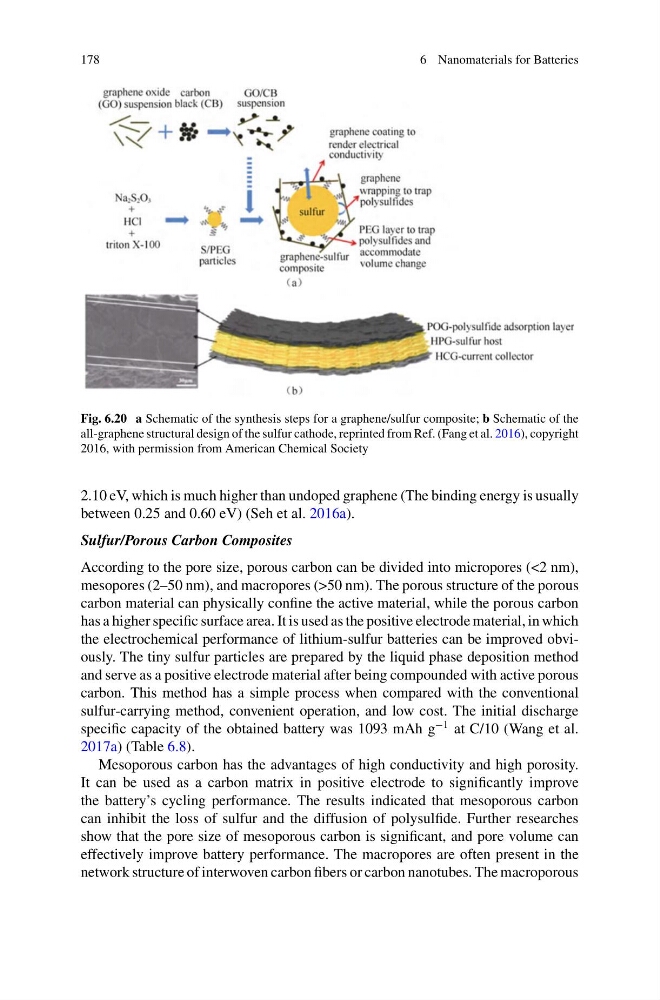
Fig. 6.20 a Schematic of the synthesis steps for a graphene/sulfur composite; b Schematic of the
all-graphene structural design of the sulfur cathode, reprinted from Ref. (Fang et al. 2016), copyright
2016, with permission from American Chemical Society
2.10 eV, which is much higher than undoped graphene (The binding energy is usually
between 0.25 and 0.60 eV) (Seh et al. 2016a).
Sulfur/Porous Carbon Composites
According to the pore size, porous carbon can be divided into micropores (<2 nm),
mesopores (2–50 nm), and macropores (>50 nm). The porous structure of the porous
carbon material can physically confine the active material, while the porous carbon
has a higher specific surface area. It is used as the positive electrode material, in which
the electrochemical performance of lithium-sulfur batteries can be improved obviously. The tiny sulfur particles are prepared by the liquid phase deposition method
and serve as a positive electrode material after being compounded with active porous
carbon. This method has a simple process when compared with the conventional
sulfur-carrying method, convenient operation, and low cost. The initial discharge
specific capacity of the obtained battery was 1093 mAh g
−1 at C/10 (Wang et al.
2017a) (Table 6.8).
Mesoporous carbon has the advantages of high conductivity and high porosity.
It can be used as a carbon matrix in positive electrode to significantly improve
the battery’s cycling performance. The results indicated that mesoporous carbon
can inhibit the loss of sulfur and the diffusion of polysulfide. Further researches
show that the pore size of mesoporous carbon is significant, and pore volume can
effectively improve battery performance. The macropores are often present in the
network structure of interwoven carbon fibers or carbon nanotubes. The macroporous
6 Nanomaterials for Batteries
Fig. 6.20 a Schematic of the synthesis steps for a graphene/sulfur composite; b Schematic of the
all-graphene structural design of the sulfur cathode, reprinted from Ref. (Fang et al. 2016), copyright
2016, with permission from American Chemical Society
2.10 eV, which is much higher than undoped graphene (The binding energy is usually
between 0.25 and 0.60 eV) (Seh et al. 2016a).
Sulfur/Porous Carbon Composites
According to the pore size, porous carbon can be divided into micropores (<2 nm),
mesopores (2–50 nm), and macropores (>50 nm). The porous structure of the porous
carbon material can physically confine the active material, while the porous carbon
has a higher specific surface area. It is used as the positive electrode material, in which
the electrochemical performance of lithium-sulfur batteries can be improved obviously. The tiny sulfur particles are prepared by the liquid phase deposition method
and serve as a positive electrode material after being compounded with active porous
carbon. This method has a simple process when compared with the conventional
sulfur-carrying method, convenient operation, and low cost. The initial discharge
specific capacity of the obtained battery was 1093 mAh g
−1 at C/10 (Wang et al.
2017a) (Table 6.8).
Mesoporous carbon has the advantages of high conductivity and high porosity.
It can be used as a carbon matrix in positive electrode to significantly improve
the battery’s cycling performance. The results indicated that mesoporous carbon
can inhibit the loss of sulfur and the diffusion of polysulfide. Further researches
show that the pore size of mesoporous carbon is significant, and pore volume can
effectively improve battery performance. The macropores are often present in the
network structure of interwoven carbon fibers or carbon nanotubes. The macroporous