

164
7 Bioeconomy in the Oil Palm Republic of Indonesia
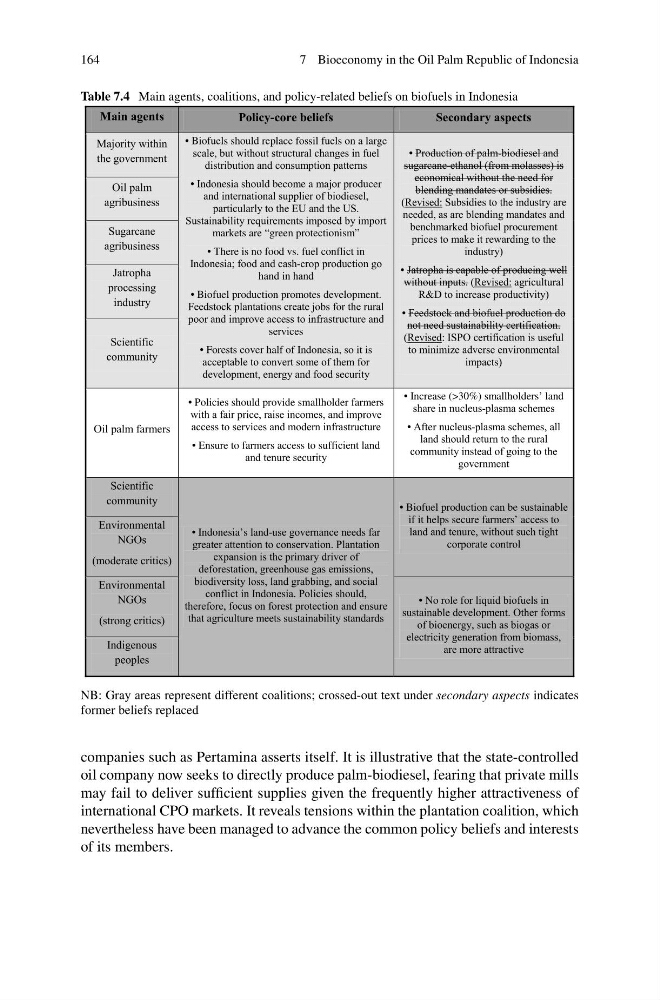
Table 7.4 Main agents, coalitions, and policy-related beliefs on biofuels in Indonesia
Main agents
Policy-core beliefs
Secondary aspects
Majority within
the government
• Biofuels should replace fossil fuels on a large
scale, but without structural changes in fuel
distribution and consumption patterns
• Indonesia should become a major producer
and international supplier of biodiesel,
particularly to the EU and the US.
Sustainability requirements imposed by import
markets are “green protectionism”
• There is no food vs. fuel conflict in
Indonesia; food and cash-crop production go
hand in hand
• Biofuel production promotes development.
Feedstock plantations create jobs for the rural
poor and improve access to infrastructure and
services
• Forests cover half of Indonesia, so it is
acceptable to convert some of them for
development, energy and food security
• Production of palm-biodiesel and
sugarcane-ethanol (from molasses) is
economical without the need for
blending mandates or subsidies.
(Revised: Subsidies to the industry are
needed, as are blending mandates and
benchmarked biofuel procurement
prices to make it rewarding to the
industry)
• Jatropha is capable of producing well
without inputs. (Revised: agricultural
R&D to increase productivity)
• Feedstock and biofuel production do
not need sustainability certification.
(Revised: ISPO certification is useful
to minimize adverse environmental
impacts)
Oil palm
agribusiness
Sugarcane
agribusiness
Jatropha
processing
industry
Scientific
community
Oil palm farmers
• Policies should provide smallholder farmers
with a fair price, raise incomes, and improve
access to services and modern infrastructure
• Ensure to farmers access to sufficient land
and tenure security
• Increase (>30%) smallholders’ land
share in nucleus-plasma schemes
• After nucleus-plasma schemes, all
land should return to the rural
community instead of going to the
government
Scientific
community
• Indonesia’s land-use governance needs far
greater attention to conservation. Plantation
expansion is the primary driver of
deforestation, greenhouse gas emissions,
biodiversity loss, land grabbing, and social
conflict in Indonesia. Policies should,
therefore, focus on forest protection and ensure
that agriculture meets sustainability standards
• Biofuel production can be sustainable
if it helps secure farmers’ access to
land and tenure, without such tight
corporate control
Environmental
NGOs
(moderate critics)
Environmental
NGOs
(strong critics)
• No role for liquid biofuels in
sustainable development. Other forms
of bioenergy, such as biogas or
electricity generation from biomass,
are more attractive
Indigenous
peoples
NB: Gray areas represent different coalitions; crossed-out text under secondary aspects indicates
former beliefs replaced
companies such as Pertamina asserts itself. It is illustrative that the state-controlled
oil company now seeks to directly produce palm-biodiesel, fearing that private mills
may fail to deliver sufficient supplies given the frequently higher attractiveness of
international CPO markets. It reveals tensions within the plantation coalition, which
nevertheless have been managed to advance the common policy beliefs and interests
of its members.
7 Bioeconomy in the Oil Palm Republic of Indonesia
Table 7.4 Main agents, coalitions, and policy-related beliefs on biofuels in Indonesia
Main agents
Policy-core beliefs
Secondary aspects
Majority within
the government
• Biofuels should replace fossil fuels on a large
scale, but without structural changes in fuel
distribution and consumption patterns
• Indonesia should become a major producer
and international supplier of biodiesel,
particularly to the EU and the US.
Sustainability requirements imposed by import
markets are “green protectionism”
• There is no food vs. fuel conflict in
Indonesia; food and cash-crop production go
hand in hand
• Biofuel production promotes development.
Feedstock plantations create jobs for the rural
poor and improve access to infrastructure and
services
• Forests cover half of Indonesia, so it is
acceptable to convert some of them for
development, energy and food security
• Production of palm-biodiesel and
sugarcane-ethanol (from molasses) is
economical without the need for
blending mandates or subsidies.
(Revised: Subsidies to the industry are
needed, as are blending mandates and
benchmarked biofuel procurement
prices to make it rewarding to the
industry)
• Jatropha is capable of producing well
without inputs. (Revised: agricultural
R&D to increase productivity)
• Feedstock and biofuel production do
not need sustainability certification.
(Revised: ISPO certification is useful
to minimize adverse environmental
impacts)
Oil palm
agribusiness
Sugarcane
agribusiness
Jatropha
processing
industry
Scientific
community
Oil palm farmers
• Policies should provide smallholder farmers
with a fair price, raise incomes, and improve
access to services and modern infrastructure
• Ensure to farmers access to sufficient land
and tenure security
• Increase (>30%) smallholders’ land
share in nucleus-plasma schemes
• After nucleus-plasma schemes, all
land should return to the rural
community instead of going to the
government
Scientific
community
• Indonesia’s land-use governance needs far
greater attention to conservation. Plantation
expansion is the primary driver of
deforestation, greenhouse gas emissions,
biodiversity loss, land grabbing, and social
conflict in Indonesia. Policies should,
therefore, focus on forest protection and ensure
that agriculture meets sustainability standards
• Biofuel production can be sustainable
if it helps secure farmers’ access to
land and tenure, without such tight
corporate control
Environmental
NGOs
(moderate critics)
Environmental
NGOs
(strong critics)
• No role for liquid biofuels in
sustainable development. Other forms
of bioenergy, such as biogas or
electricity generation from biomass,
are more attractive
Indigenous
peoples
NB: Gray areas represent different coalitions; crossed-out text under secondary aspects indicates
former beliefs replaced
companies such as Pertamina asserts itself. It is illustrative that the state-controlled
oil company now seeks to directly produce palm-biodiesel, fearing that private mills
may fail to deliver sufficient supplies given the frequently higher attractiveness of
international CPO markets. It reveals tensions within the plantation coalition, which
nevertheless have been managed to advance the common policy beliefs and interests
of its members.