

Metallic removal studies in D. alaskensis strain 6SR showed that the bacterium is
a strong candidate for the development of metallic removal processes of
contaminated wastewater. Desulfovibrio alaskensis strain 6SR showed that there is
no inhibition of biomass growth or sulfate reduction in the presence of high
concentrations of Cd(II), Pb (II) and Zn(II) (150 mg/L), contrary to other SRB
capable of growing in concentrations below 100 mg/L of metal ions. But even
more, the metallic removal observed in D. alaskensis strain 6SR cultures was almost
100%, in the particular case of cadmium; the removal was very similar to
concentrations higher than 150 mg/L Cd(II), (López-Pérez et al. 2015), the removal
efficiency of 5 and 18 mg/L Cr(VI) was around 80% to both concentrations
(Fig. 13.8b). Studies on the harmful effects of these heavy metals have revealed
that cadmium and divalent metals are able to replace the essential ions to cell,
provoking a build-up on cellular structure and block functional groups of
macromolecules, promoting damage to the integrity of the cellular membrane and
inactivation of cellular enzymes (Hossain et al. 2012); likewise, zinc at 40 mg/L
initial concentration and above inhibits the cellular growth (Sani et al. 2001).
However, the molecular studies showed that D. alaskensis 6SR has a resistance
mechanism relationship to ATPase type P1B system, which responds to cadmium,
lead and zinc (Morón-Vázquez 2015). The main mechanisms of metal resistance
studied in Gram-negative bacteria are related to the transporters of the membrane
0
500
1000
1500
2000
2500
3000
3500
4000
4500
5000
0
50
100
150
200
250
SO
4
2(mg/L)
Time (h)
0
500
1000
1500
2000
2500
3000
3500
4000
4500
5000
0
50
100
150
200
250
SO
4
2)
L
/
g
m
(
Time(h)
0
50
100
150
200
250
300
350
0
50
100
150
200
250
H
2 S
)
L
/
g
m
(
Time (h)
0
1
2
3
4
5
6
0
50
100
150
200
250
300
Cr(VI) (mg/L)
Time(h)
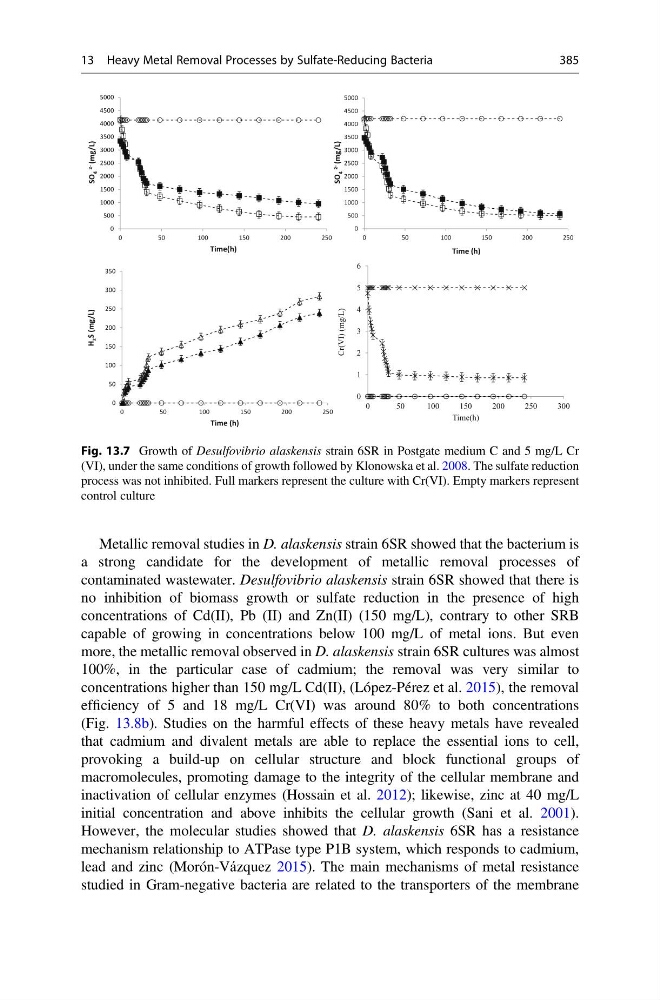
Fig. 13.7 Growth of Desulfovibrio alaskensis strain 6SR in Postgate medium C and 5 mg/L Cr
(VI), under the same conditions of growth followed by Klonowska et al. 2008. The sulfate reduction
process was not inhibited. Full markers represent the culture with Cr(VI). Empty markers represent
control culture
13 Heavy Metal Removal Processes by Sulfate-Reducing Bacteria
385
a strong candidate for the development of metallic removal processes of
contaminated wastewater. Desulfovibrio alaskensis strain 6SR showed that there is
no inhibition of biomass growth or sulfate reduction in the presence of high
concentrations of Cd(II), Pb (II) and Zn(II) (150 mg/L), contrary to other SRB
capable of growing in concentrations below 100 mg/L of metal ions. But even
more, the metallic removal observed in D. alaskensis strain 6SR cultures was almost
100%, in the particular case of cadmium; the removal was very similar to
concentrations higher than 150 mg/L Cd(II), (López-Pérez et al. 2015), the removal
efficiency of 5 and 18 mg/L Cr(VI) was around 80% to both concentrations
(Fig. 13.8b). Studies on the harmful effects of these heavy metals have revealed
that cadmium and divalent metals are able to replace the essential ions to cell,
provoking a build-up on cellular structure and block functional groups of
macromolecules, promoting damage to the integrity of the cellular membrane and
inactivation of cellular enzymes (Hossain et al. 2012); likewise, zinc at 40 mg/L
initial concentration and above inhibits the cellular growth (Sani et al. 2001).
However, the molecular studies showed that D. alaskensis 6SR has a resistance
mechanism relationship to ATPase type P1B system, which responds to cadmium,
lead and zinc (Morón-Vázquez 2015). The main mechanisms of metal resistance
studied in Gram-negative bacteria are related to the transporters of the membrane
0
500
1000
1500
2000
2500
3000
3500
4000
4500
5000
0
50
100
150
200
250
SO
4
2(mg/L)
Time (h)
0
500
1000
1500
2000
2500
3000
3500
4000
4500
5000
0
50
100
150
200
250
SO
4
2)
L
/
g
m
(
Time(h)
0
50
100
150
200
250
300
350
0
50
100
150
200
250
H
2 S
)
L
/
g
m
(
Time (h)
0
1
2
3
4
5
6
0
50
100
150
200
250
300
Cr(VI) (mg/L)
Time(h)
Fig. 13.7 Growth of Desulfovibrio alaskensis strain 6SR in Postgate medium C and 5 mg/L Cr
(VI), under the same conditions of growth followed by Klonowska et al. 2008. The sulfate reduction
process was not inhibited. Full markers represent the culture with Cr(VI). Empty markers represent
control culture
13 Heavy Metal Removal Processes by Sulfate-Reducing Bacteria
385