

9.5
Recent Remediation Strategies
All the ecological units are presently polluted with these synthetic polymer particles
along with other harmful pollutants (Das et al. 2015; Das and Singh 2011; Ghosh
et al. 2017). However, due to the scarcity of uniform, successful, and rapid sampling
methods, very less research can be carried out to know about the geographical
distribution in various habitats required to evaluate organism exposures. For illustration, there is no standard filter, aperture dimension leading to different sizes of
microfabric particles for investigation. A variety of detection methodologies are the
vital requirement for the ever-increasing pollution of synthetic microfleeces. Sophisticated optical, microscopic, and spectroscopic techniques are being successfully
developed for quick detection of MF particles. The techniques that are frequently
employed for the detection and characterization of micro-sized fabric are optical and
stereomicroscope, FTIR, and Raman spectroscopy (Bradley et al. 2017). Almost up
to 75% of the small MF particles, which are detected after visual characterization as
particles, are usually confirmed as synthetic polymer by spectroscopic techniques.
Spectroscopic technique like FTIR and Raman are strongly suggested against visual
inspection for the detection of the chemical composition of the polymer sample
(Mishra et al. 2019; Yang et al. 2011; Mohanty et al. 2018). Some currently
developed methods for identification and characterization of microplastic particles
are represented in Table 9.4.
To remove the little amount of these tiny microplastic particles from the sediment
and ocean water samples, the most frequently described procedure is density separation and filtration. This process of separation of particles according to their
densities was employed in most of studies scrutinized. This removal method normally included the following steps such as employment of aqueous solvent having
different densities and agitating for a long period of time. The density partition was
employed to separate the micropolymer particles of different densities. Filtration
technique also can be used for separation process. The most common filtration
techniques that are used for filtration are sieving and vacuum filtration. Visual
categorization followed by sieving can be used prior to the density separation
technique to lessen and divide them according to their magnitudes.
Around 80% of MPs were distinguished in effluent water emitted from wastewater treatment plant as compared to unprocessed water samples (Mintenig et al. 2019;
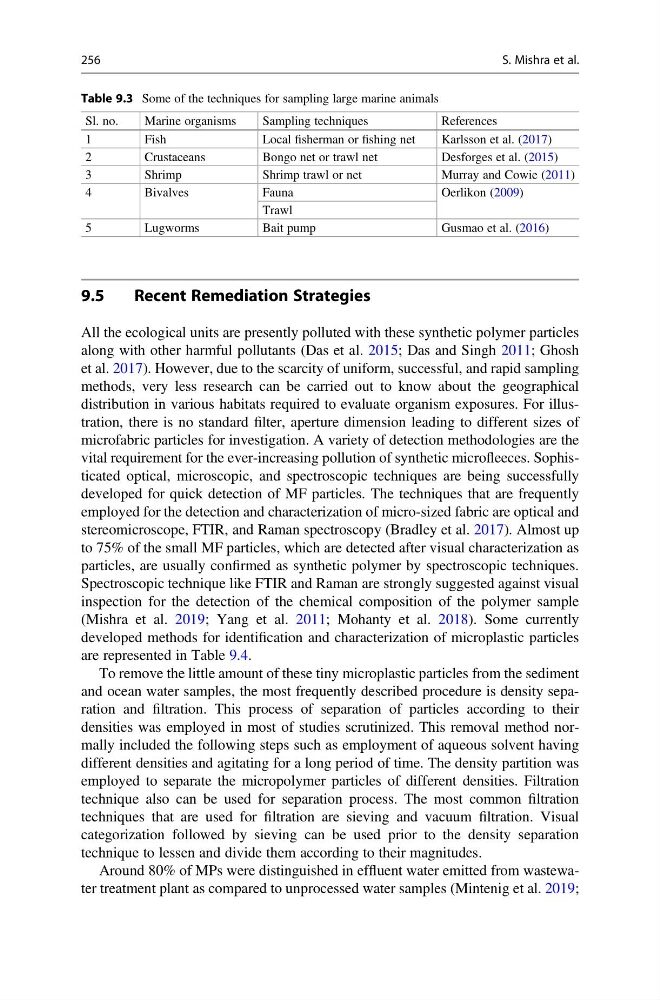
Table 9.3 Some of the techniques for sampling large marine animals
Sl. no.
Marine organisms
Sampling techniques
References
1
Fish
Local fisherman or fishing net
Karlsson et al. (2017)
2
Crustaceans
Bongo net or trawl net
Desforges et al. (2015)
3
Shrimp
Shrimp trawl or net
Murray and Cowie (2011)
4
Bivalves
Fauna
Oerlikon (2009)
Trawl
5
Lugworms
Bait pump
Gusmao et al. (2016)
256
S. Mishra et al.
Recent Remediation Strategies
All the ecological units are presently polluted with these synthetic polymer particles
along with other harmful pollutants (Das et al. 2015; Das and Singh 2011; Ghosh
et al. 2017). However, due to the scarcity of uniform, successful, and rapid sampling
methods, very less research can be carried out to know about the geographical
distribution in various habitats required to evaluate organism exposures. For illustration, there is no standard filter, aperture dimension leading to different sizes of
microfabric particles for investigation. A variety of detection methodologies are the
vital requirement for the ever-increasing pollution of synthetic microfleeces. Sophisticated optical, microscopic, and spectroscopic techniques are being successfully
developed for quick detection of MF particles. The techniques that are frequently
employed for the detection and characterization of micro-sized fabric are optical and
stereomicroscope, FTIR, and Raman spectroscopy (Bradley et al. 2017). Almost up
to 75% of the small MF particles, which are detected after visual characterization as
particles, are usually confirmed as synthetic polymer by spectroscopic techniques.
Spectroscopic technique like FTIR and Raman are strongly suggested against visual
inspection for the detection of the chemical composition of the polymer sample
(Mishra et al. 2019; Yang et al. 2011; Mohanty et al. 2018). Some currently
developed methods for identification and characterization of microplastic particles
are represented in Table 9.4.
To remove the little amount of these tiny microplastic particles from the sediment
and ocean water samples, the most frequently described procedure is density separation and filtration. This process of separation of particles according to their
densities was employed in most of studies scrutinized. This removal method normally included the following steps such as employment of aqueous solvent having
different densities and agitating for a long period of time. The density partition was
employed to separate the micropolymer particles of different densities. Filtration
technique also can be used for separation process. The most common filtration
techniques that are used for filtration are sieving and vacuum filtration. Visual
categorization followed by sieving can be used prior to the density separation
technique to lessen and divide them according to their magnitudes.
Around 80% of MPs were distinguished in effluent water emitted from wastewater treatment plant as compared to unprocessed water samples (Mintenig et al. 2019;
Table 9.3 Some of the techniques for sampling large marine animals
Sl. no.
Marine organisms
Sampling techniques
References
1
Fish
Local fisherman or fishing net
Karlsson et al. (2017)
2
Crustaceans
Bongo net or trawl net
Desforges et al. (2015)
3
Shrimp
Shrimp trawl or net
Murray and Cowie (2011)
4
Bivalves
Fauna
Oerlikon (2009)
Trawl
5
Lugworms
Bait pump
Gusmao et al. (2016)
256
S. Mishra et al.