

Membranes Fabrication Methods
A method of polymeric membrane manufacture depends on polymer forms and ideal
membrane structure. The most widely used methods for polymeric membrane
synthesis are phase inversion, interfacial polymerization, stretching, electrospinning
and track etching.
Phase Inversion
Phase inversion is a method of the regulated transformation of polymers from liquid
to solid phase (shown in Fig. 6.4). Polymer powder dissolve in solution. Polymer
solution added to the required support plate. Dip the casting support layer or tray into
a non-solvent. Solid polymeric membrane synthesis occur. Several solvents can use
as polymer casting solutions such as dimethylformamide (DMF), dimethyl sulfoxide
(DMSO), N-methyl-2-pyrrolidnone (NMP). The membrane formed by DMF had a
wider pore size and smaller surface area (Adamczak et al. 2019). Non-solvent can be
water and other liquid solvents (Drioli and Giorno 2009). Solvent evaporate from
polymeric solution during phase inversion process to synthesis dry and porus
membrane. Non-solvent diffusion occurs into casting film. As a result porous
membrane is synthesized from this vapour phase precipitation method (Boussu
et al. 2006). Immersion precipitation method is a widely used method for polymeric
membrane for water treatment process. Polymer used in this method is shown in
Table 6.3. In this method polymer must be soluble into solvent. Solvent and
non-solvent exchange occurs into each other and precipitation occurs. Solvent
evaporates due to volatile nature. Polymeric solution precipitation and membrane
synthesis occur. Polymer amount and types of solvent and non-solvent are also
important factors for synthesis of membrane via immersion precipitation (Saljoughi
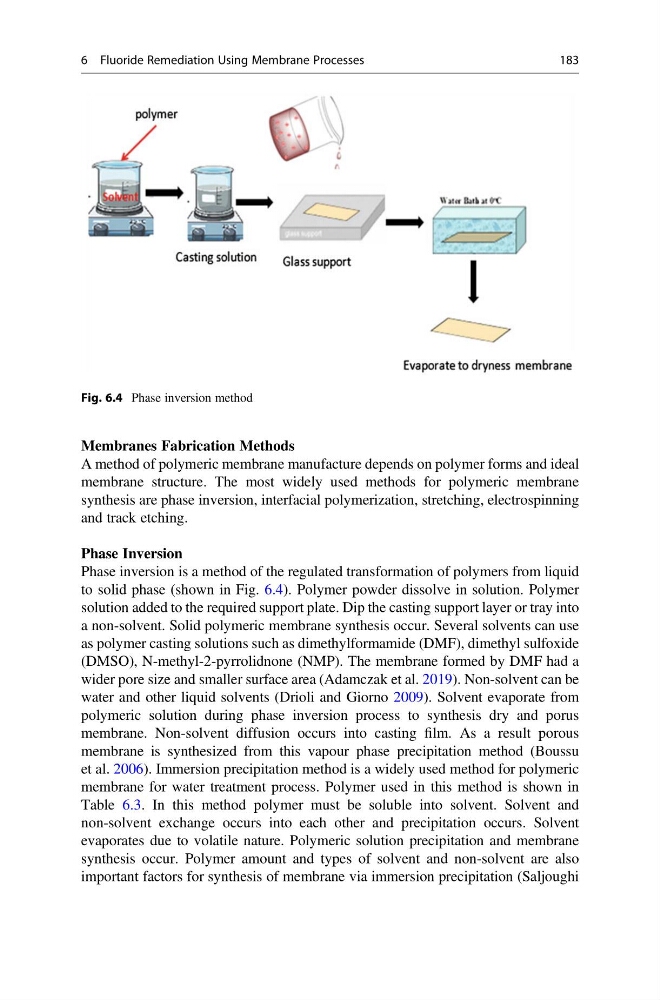
Fig. 6.4 Phase inversion method
6 Fluoride Remediation Using Membrane Processes
183
A method of polymeric membrane manufacture depends on polymer forms and ideal
membrane structure. The most widely used methods for polymeric membrane
synthesis are phase inversion, interfacial polymerization, stretching, electrospinning
and track etching.
Phase Inversion
Phase inversion is a method of the regulated transformation of polymers from liquid
to solid phase (shown in Fig. 6.4). Polymer powder dissolve in solution. Polymer
solution added to the required support plate. Dip the casting support layer or tray into
a non-solvent. Solid polymeric membrane synthesis occur. Several solvents can use
as polymer casting solutions such as dimethylformamide (DMF), dimethyl sulfoxide
(DMSO), N-methyl-2-pyrrolidnone (NMP). The membrane formed by DMF had a
wider pore size and smaller surface area (Adamczak et al. 2019). Non-solvent can be
water and other liquid solvents (Drioli and Giorno 2009). Solvent evaporate from
polymeric solution during phase inversion process to synthesis dry and porus
membrane. Non-solvent diffusion occurs into casting film. As a result porous
membrane is synthesized from this vapour phase precipitation method (Boussu
et al. 2006). Immersion precipitation method is a widely used method for polymeric
membrane for water treatment process. Polymer used in this method is shown in
Table 6.3. In this method polymer must be soluble into solvent. Solvent and
non-solvent exchange occurs into each other and precipitation occurs. Solvent
evaporates due to volatile nature. Polymeric solution precipitation and membrane
synthesis occur. Polymer amount and types of solvent and non-solvent are also
important factors for synthesis of membrane via immersion precipitation (Saljoughi
Fig. 6.4 Phase inversion method
6 Fluoride Remediation Using Membrane Processes
183