

and Mousavi 2012) reported polymer concentration effect on membrane water flux
rate.
Interfacial Polymerization (IP)
Formation of thin composite membrane interfacial polymerization is a general
method. Interfacial polymerization processed membrane used in RO and NF
which are commercially available. For synthesis of inorganic membrane or hybrid
membrane interfacial polymerization method can also be used. Interfacial polymerization includes soaking a microporous polysulfone polymer into polymeric amine
solution and then transferring casting film into di-isocyanate with hexane solution.
Prepared TFC polyurea membrane has better salt rejection and high water flux (Lalia
et al. 2013). Polyamide polymer coated on a teflon support sheet, mainly polymeric
membrane synthesised by this process used in the RO and NF processes. MPD
(m-Phenylenediamine), trimesoyl chloride, piperazine, triethylenetetramine,
N-N-diaminopiperazine, poly(ethyleneimine) and N-(2-aminoethyl)-piperazine
monomer are used for TFC (thin film composite) PA (polyamide) membrane
synthesis via interfacial polymerization fabrication method. Liu et al. reported a
functional RO composite membrane prepared from 5-isocyanatoisophthaloyl chloride and MPD. Several membranes can be synthesized from interfacial polymerization method, i.e. TFC polyester and polyesteramide developed from this method.
Oxidation resistance of membrane increases with incorporation of ester linkage;
resistance against chlorine attack of membrane is increased (Tang et al. 2008).
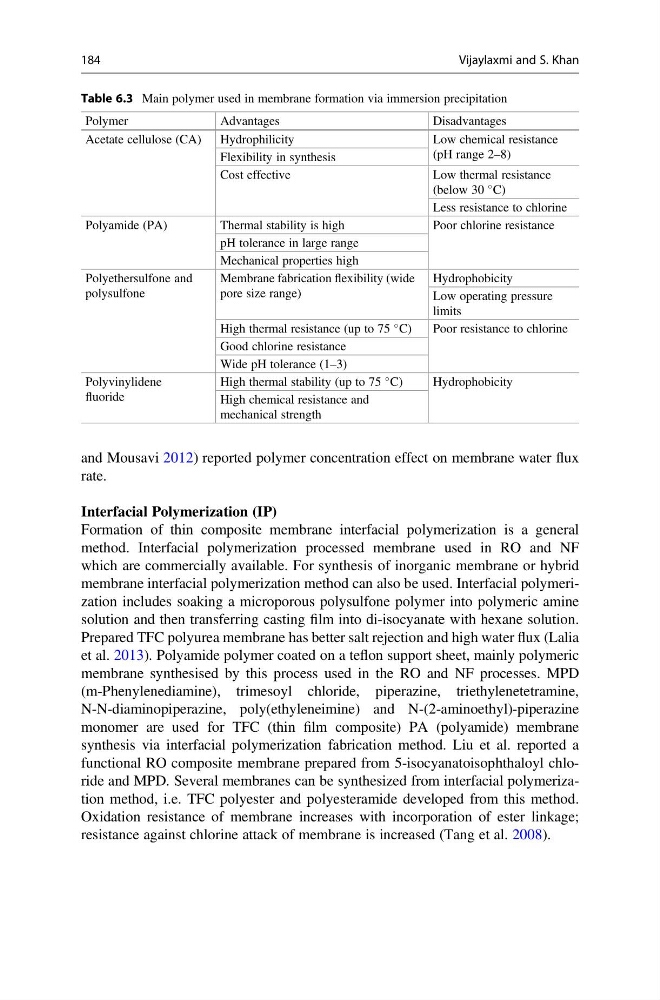
Table 6.3 Main polymer used in membrane formation via immersion precipitation
Polymer
Advantages
Disadvantages
Acetate cellulose (CA) Hydrophilicity
Low chemical resistance
(pH range 2–8)
Flexibility in synthesis
Cost effective
Low thermal resistance
(below 30
C)
Less resistance to chlorine
Polyamide (PA)
Thermal stability is high
Poor chlorine resistance
pH tolerance in large range
Mechanical properties high
Polyethersulfone and
polysulfone
Membrane fabrication flexibility (wide
pore size range)
Hydrophobicity
Low operating pressure
limits
Poor resistance to chlorine
High thermal resistance (up to 75
C)
Good chlorine resistance
Wide pH tolerance (1–3)
Polyvinylidene
fluoride
High thermal stability (up to 75
C)
Hydrophobicity
High chemical resistance and
mechanical strength
184
Vijaylaxmi and S. Khan
rate.
Interfacial Polymerization (IP)
Formation of thin composite membrane interfacial polymerization is a general
method. Interfacial polymerization processed membrane used in RO and NF
which are commercially available. For synthesis of inorganic membrane or hybrid
membrane interfacial polymerization method can also be used. Interfacial polymerization includes soaking a microporous polysulfone polymer into polymeric amine
solution and then transferring casting film into di-isocyanate with hexane solution.
Prepared TFC polyurea membrane has better salt rejection and high water flux (Lalia
et al. 2013). Polyamide polymer coated on a teflon support sheet, mainly polymeric
membrane synthesised by this process used in the RO and NF processes. MPD
(m-Phenylenediamine), trimesoyl chloride, piperazine, triethylenetetramine,
N-N-diaminopiperazine, poly(ethyleneimine) and N-(2-aminoethyl)-piperazine
monomer are used for TFC (thin film composite) PA (polyamide) membrane
synthesis via interfacial polymerization fabrication method. Liu et al. reported a
functional RO composite membrane prepared from 5-isocyanatoisophthaloyl chloride and MPD. Several membranes can be synthesized from interfacial polymerization method, i.e. TFC polyester and polyesteramide developed from this method.
Oxidation resistance of membrane increases with incorporation of ester linkage;
resistance against chlorine attack of membrane is increased (Tang et al. 2008).
Table 6.3 Main polymer used in membrane formation via immersion precipitation
Polymer
Advantages
Disadvantages
Acetate cellulose (CA) Hydrophilicity
Low chemical resistance
(pH range 2–8)
Flexibility in synthesis
Cost effective
Low thermal resistance
(below 30
C)
Less resistance to chlorine
Polyamide (PA)
Thermal stability is high
Poor chlorine resistance
pH tolerance in large range
Mechanical properties high
Polyethersulfone and
polysulfone
Membrane fabrication flexibility (wide
pore size range)
Hydrophobicity
Low operating pressure
limits
Poor resistance to chlorine
High thermal resistance (up to 75
C)
Good chlorine resistance
Wide pH tolerance (1–3)
Polyvinylidene
fluoride
High thermal stability (up to 75
C)
Hydrophobicity
High chemical resistance and
mechanical strength
184
Vijaylaxmi and S. Khan