

different oils more than 13 times its weight. The recovered sponges still kept high
sorption capacity.
Aerogels
Aerogels are produced with a gel base, where the liquid is replaced in the gel
structure by air. The result is a solid three-dimensional structure, large specific
surface area, high floatability, large open pores, extremely low density, and high
porosity. Based on these ideal characteristics, aerogels have potential as good
sorbents to sorb large amounts of spilled oil. Various materials can be used for
aerogels production like carbon, silica, polymer material, metal oxide, and natural
material. The conventional aerogels are modified by silane and derived by a sol-gel
process. The modified aerogels, which are used in oil removal process, are
superhydrophobic materials and possess high oilsorption capacity.
Liu et al. (2016) reviewed green and low-cost aerogels based on nanocellulose
and presented their fabrication methods, structures, and oilsorption behavior.
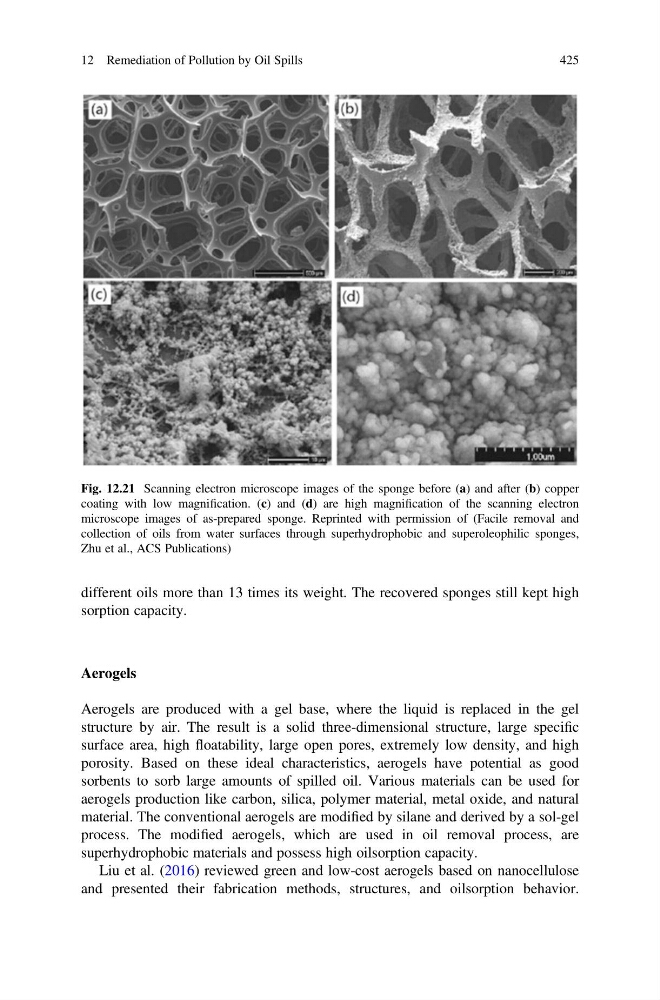
Fig. 12.21 Scanning electron microscope images of the sponge before (a) and after (b) copper
coating with low magnification. (c) and (d) are high magnification of the scanning electron
microscope images of as-prepared sponge. Reprinted with permission of (Facile removal and
collection of oils from water surfaces through superhydrophobic and superoleophilic sponges,
Zhu et al., ACS Publications)
12 Remediation of Pollution by Oil Spills
425
sorption capacity.
Aerogels
Aerogels are produced with a gel base, where the liquid is replaced in the gel
structure by air. The result is a solid three-dimensional structure, large specific
surface area, high floatability, large open pores, extremely low density, and high
porosity. Based on these ideal characteristics, aerogels have potential as good
sorbents to sorb large amounts of spilled oil. Various materials can be used for
aerogels production like carbon, silica, polymer material, metal oxide, and natural
material. The conventional aerogels are modified by silane and derived by a sol-gel
process. The modified aerogels, which are used in oil removal process, are
superhydrophobic materials and possess high oilsorption capacity.
Liu et al. (2016) reviewed green and low-cost aerogels based on nanocellulose
and presented their fabrication methods, structures, and oilsorption behavior.
Fig. 12.21 Scanning electron microscope images of the sponge before (a) and after (b) copper
coating with low magnification. (c) and (d) are high magnification of the scanning electron
microscope images of as-prepared sponge. Reprinted with permission of (Facile removal and
collection of oils from water surfaces through superhydrophobic and superoleophilic sponges,
Zhu et al., ACS Publications)
12 Remediation of Pollution by Oil Spills
425