

Figure 12.21 illustrates the scanning electron microscope images with low and high
magnifications of original and copper-coated sponge.
Figure 12.21 (a) and (b) reveal that the copper film changed the smooth structure
of the original sponge. The results of contact angle confirmed that the improved
sponge is superhydrophobic and superoleophilic and the water contact angle was
higher than 170
. The as-prepared sponge floated in water bath while original sponge
sank. When the improved sponge was immersed in water, it did not uptake water and
immediately floated after releasing the force.
The oilsorption capacities of the as-prepared sponges are shown in Fig. 12.22 for
lubricating oil, octane, decane, and dodecane after 1, 5, and 9 recycles. From the
obtained results, it is revealed that the as-prepared sponge is capable of sorbing
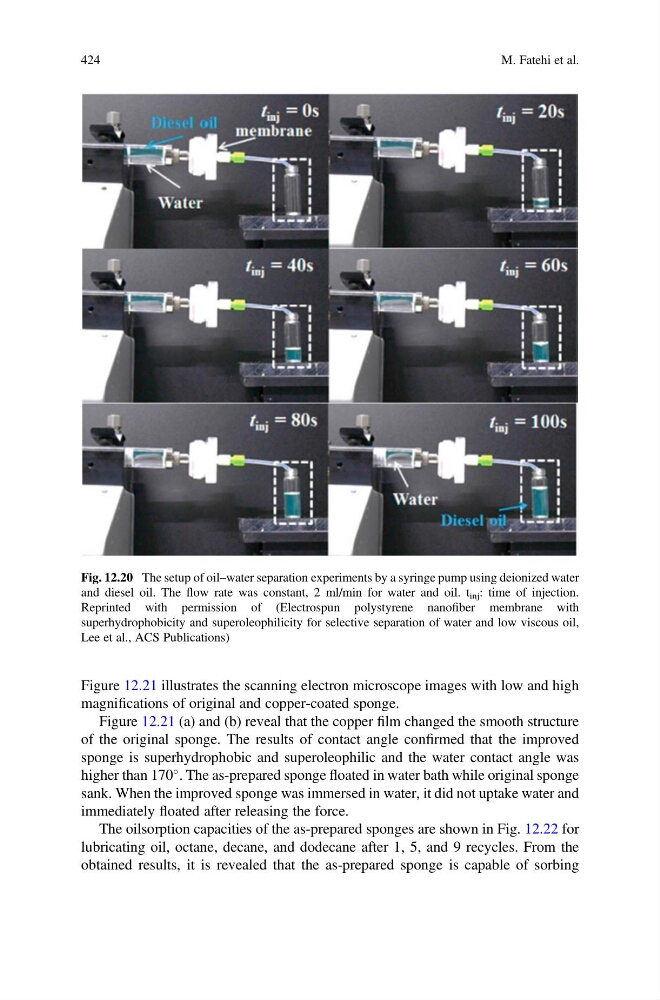
Fig. 12.20 The setup of oil–water separation experiments by a syringe pump using deionized water
and diesel oil. The flow rate was constant, 2 ml/min for water and oil. t inj : time of injection.
Reprinted with permission of (Electrospun polystyrene nanofiber membrane with
superhydrophobicity and superoleophilicity for selective separation of water and low viscous oil,
Lee et al., ACS Publications)
424
M. Fatehi et al.
magnifications of original and copper-coated sponge.
Figure 12.21 (a) and (b) reveal that the copper film changed the smooth structure
of the original sponge. The results of contact angle confirmed that the improved
sponge is superhydrophobic and superoleophilic and the water contact angle was
higher than 170
. The as-prepared sponge floated in water bath while original sponge
sank. When the improved sponge was immersed in water, it did not uptake water and
immediately floated after releasing the force.
The oilsorption capacities of the as-prepared sponges are shown in Fig. 12.22 for
lubricating oil, octane, decane, and dodecane after 1, 5, and 9 recycles. From the
obtained results, it is revealed that the as-prepared sponge is capable of sorbing
Fig. 12.20 The setup of oil–water separation experiments by a syringe pump using deionized water
and diesel oil. The flow rate was constant, 2 ml/min for water and oil. t inj : time of injection.
Reprinted with permission of (Electrospun polystyrene nanofiber membrane with
superhydrophobicity and superoleophilicity for selective separation of water and low viscous oil,
Lee et al., ACS Publications)
424
M. Fatehi et al.