

and easy fabrication, sponges are considered an alternative choice for oil removal.
Despite all these specifications, the sponges are hydrophilic and simultaneously sorb
oil and water, which makes them inoperative for oilsorption process. Hence,
researchers have reported several methods to develop them into high- or
superhydrophobic surfaces with high oil removal efficiency. Rapid deformation by
mechanical squeezing is another disadvantage of original sponge, which needs to be
improved in order to be used in oilsorption process.
Zhu et al. (2011) fabricated a superhydrophobic and -oleophilic surface with
polyurethane sponge for sorption of various oils and organic solvents from the water
surface. Electroless deposition method was applied to coat the sponge with a film of
copper and then it was modified using solution-immersion process. The improved
sponges sorbed the oils very quickly while repelling water completely. The sponges
showed good stability in reuse process for many cycles and in corrosive conditions.
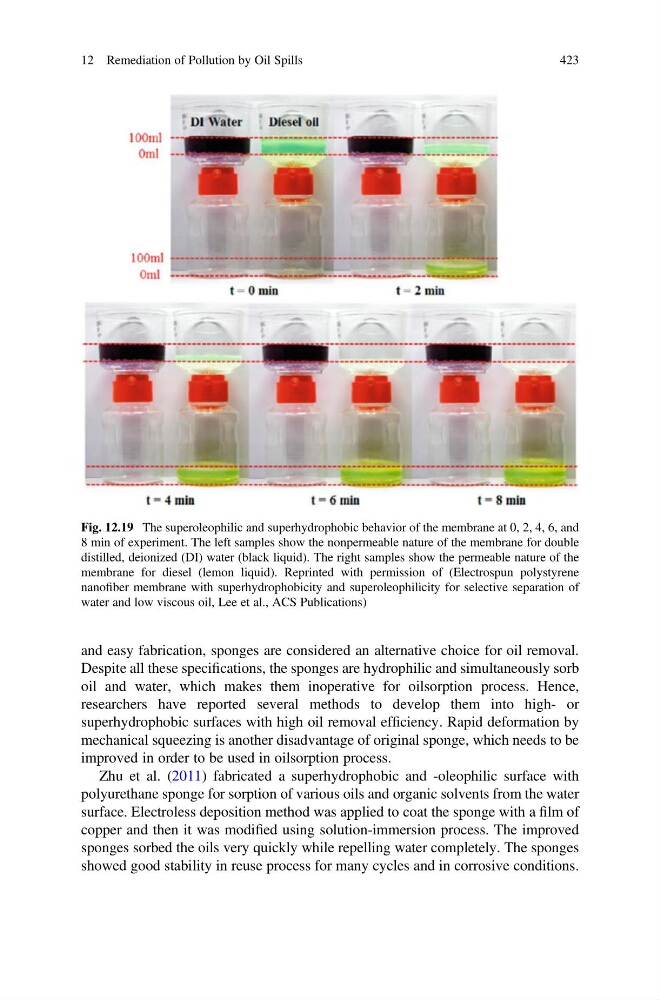
Fig. 12.19 The superoleophilic and superhydrophobic behavior of the membrane at 0, 2, 4, 6, and
8 min of experiment. The left samples show the nonpermeable nature of the membrane for double
distilled, deionized (DI) water (black liquid). The right samples show the permeable nature of the
membrane for diesel (lemon liquid). Reprinted with permission of (Electrospun polystyrene
nanofiber membrane with superhydrophobicity and superoleophilicity for selective separation of
water and low viscous oil, Lee et al., ACS Publications)
12 Remediation of Pollution by Oil Spills
423
Despite all these specifications, the sponges are hydrophilic and simultaneously sorb
oil and water, which makes them inoperative for oilsorption process. Hence,
researchers have reported several methods to develop them into high- or
superhydrophobic surfaces with high oil removal efficiency. Rapid deformation by
mechanical squeezing is another disadvantage of original sponge, which needs to be
improved in order to be used in oilsorption process.
Zhu et al. (2011) fabricated a superhydrophobic and -oleophilic surface with
polyurethane sponge for sorption of various oils and organic solvents from the water
surface. Electroless deposition method was applied to coat the sponge with a film of
copper and then it was modified using solution-immersion process. The improved
sponges sorbed the oils very quickly while repelling water completely. The sponges
showed good stability in reuse process for many cycles and in corrosive conditions.
Fig. 12.19 The superoleophilic and superhydrophobic behavior of the membrane at 0, 2, 4, 6, and
8 min of experiment. The left samples show the nonpermeable nature of the membrane for double
distilled, deionized (DI) water (black liquid). The right samples show the permeable nature of the
membrane for diesel (lemon liquid). Reprinted with permission of (Electrospun polystyrene
nanofiber membrane with superhydrophobicity and superoleophilicity for selective separation of
water and low viscous oil, Lee et al., ACS Publications)
12 Remediation of Pollution by Oil Spills
423