

steel mesh, which shows superoleophilicity. The results of experiments in Fig. 12.19
confirmed the superhydrophobicity and superoelophilicity properties. As one can
see, low water adhesion of the membrane prevents water permeation.
The results of oil-water separation showed that the membrane had approximately
100% separation efficiency in nonsevere conditions. Application of membrane under
severe conditions was investigated by the injection pressure of 3 ml water and 5 mL
oil, which passed through the membrane. The setup of oil–water separation experiments with diesel oil is illustrated in Fig. 12.20.
According to the results, the oil permeated through the membrane due to its
superoleophilicity and accumulated in the box until t inj ¼ 100 s, while water did not
permeate the membrane. However, there is a serious problem with the pressure of
water, which deformed the membrane in t inj ! 20 s. They also studied the effect of
different thicknesses of the PS nanofibers membrane on the separation capability and
concluded that the thicknesses did not affect the separation.
Sponges
A sponge has a porous structure and can be made of polyester, polyurethane, or
vegetal cellulose. Owing to the low density, high sorption capacity, good elasticity,
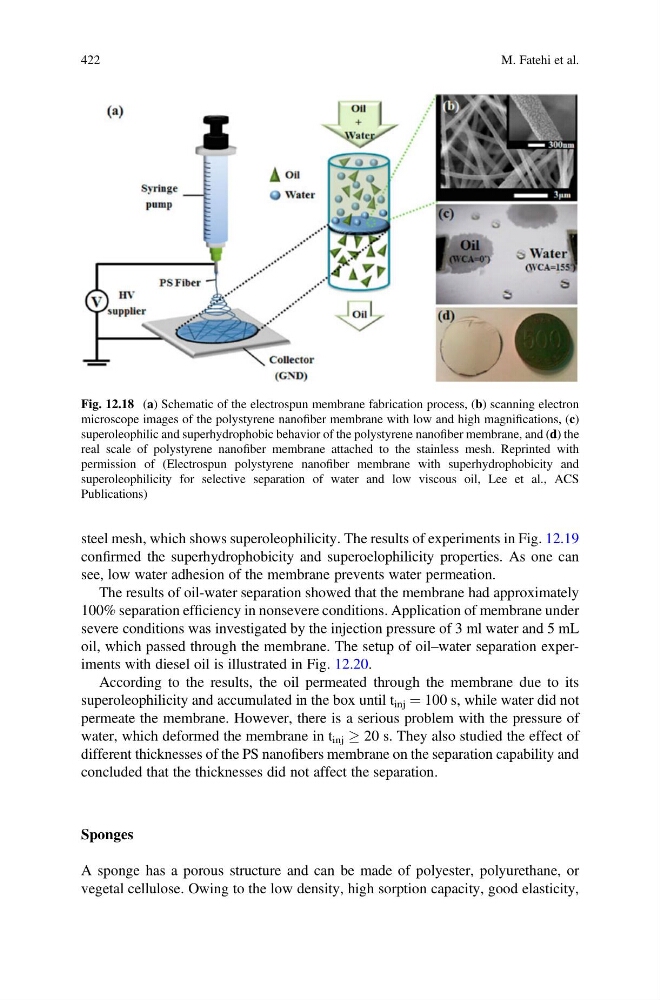
Fig. 12.18 (a) Schematic of the electrospun membrane fabrication process, (b) scanning electron
microscope images of the polystyrene nanofiber membrane with low and high magnifications, (c)
superoleophilic and superhydrophobic behavior of the polystyrene nanofiber membrane, and (d) the
real scale of polystyrene nanofiber membrane attached to the stainless mesh. Reprinted with
permission of (Electrospun polystyrene nanofiber membrane with superhydrophobicity and
superoleophilicity for selective separation of water and low viscous oil, Lee et al., ACS
Publications)
422
M. Fatehi et al.
confirmed the superhydrophobicity and superoelophilicity properties. As one can
see, low water adhesion of the membrane prevents water permeation.
The results of oil-water separation showed that the membrane had approximately
100% separation efficiency in nonsevere conditions. Application of membrane under
severe conditions was investigated by the injection pressure of 3 ml water and 5 mL
oil, which passed through the membrane. The setup of oil–water separation experiments with diesel oil is illustrated in Fig. 12.20.
According to the results, the oil permeated through the membrane due to its
superoleophilicity and accumulated in the box until t inj ¼ 100 s, while water did not
permeate the membrane. However, there is a serious problem with the pressure of
water, which deformed the membrane in t inj ! 20 s. They also studied the effect of
different thicknesses of the PS nanofibers membrane on the separation capability and
concluded that the thicknesses did not affect the separation.
Sponges
A sponge has a porous structure and can be made of polyester, polyurethane, or
vegetal cellulose. Owing to the low density, high sorption capacity, good elasticity,
Fig. 12.18 (a) Schematic of the electrospun membrane fabrication process, (b) scanning electron
microscope images of the polystyrene nanofiber membrane with low and high magnifications, (c)
superoleophilic and superhydrophobic behavior of the polystyrene nanofiber membrane, and (d) the
real scale of polystyrene nanofiber membrane attached to the stainless mesh. Reprinted with
permission of (Electrospun polystyrene nanofiber membrane with superhydrophobicity and
superoleophilicity for selective separation of water and low viscous oil, Lee et al., ACS
Publications)
422
M. Fatehi et al.