

PS onto it by electrospinning. Ability of the polystyrene nanofibers for oil–water
separation was investigated for low viscosity oil, namely, diesel, gasoline, and
mineral oil. Figure 12.18 shows the detailed information on fabrication process of
polystyrene nanofibers, the scanning electron microscope pictures of the polystyrene
nanofiber with low and high magnifications, oil and water contact angles, and the
real scale of the stainless mesh.
The superhydrophobicity and superoleophilicity depend on the porous structure
of polystyrene nanofibers. The results of wetting behavior of porous and nonporous
structures indicated that the water contact angle decreased in the absence of the
pores. The uncovered stainless steel was soaked by oil and water unlike nanofiber
membrane. The nanofiber was wetted by diesel oil faster than uncovered stainless
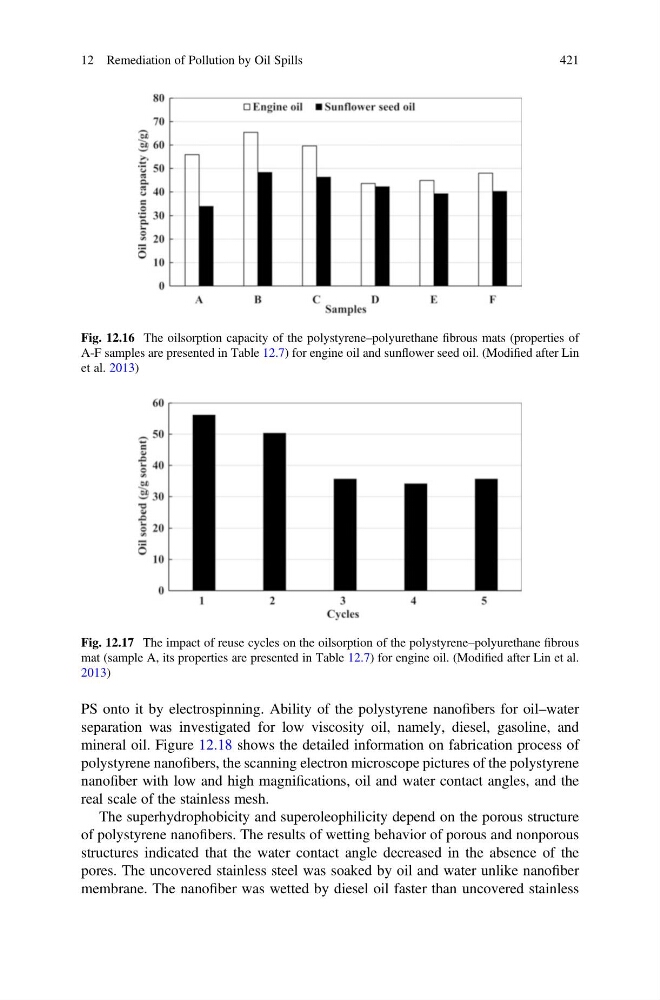
Fig. 12.16 The oilsorption capacity of the polystyrene–polyurethane fibrous mats (properties of
A-F samples are presented in Table 12.7) for engine oil and sunflower seed oil. (Modified after Lin
et al. 2013)
Fig. 12.17 The impact of reuse cycles on the oilsorption of the polystyrene–polyurethane fibrous
mat (sample A, its properties are presented in Table 12.7) for engine oil. (Modified after Lin et al.
2013)
12 Remediation of Pollution by Oil Spills
421
separation was investigated for low viscosity oil, namely, diesel, gasoline, and
mineral oil. Figure 12.18 shows the detailed information on fabrication process of
polystyrene nanofibers, the scanning electron microscope pictures of the polystyrene
nanofiber with low and high magnifications, oil and water contact angles, and the
real scale of the stainless mesh.
The superhydrophobicity and superoleophilicity depend on the porous structure
of polystyrene nanofibers. The results of wetting behavior of porous and nonporous
structures indicated that the water contact angle decreased in the absence of the
pores. The uncovered stainless steel was soaked by oil and water unlike nanofiber
membrane. The nanofiber was wetted by diesel oil faster than uncovered stainless
Fig. 12.16 The oilsorption capacity of the polystyrene–polyurethane fibrous mats (properties of
A-F samples are presented in Table 12.7) for engine oil and sunflower seed oil. (Modified after Lin
et al. 2013)
Fig. 12.17 The impact of reuse cycles on the oilsorption of the polystyrene–polyurethane fibrous
mat (sample A, its properties are presented in Table 12.7) for engine oil. (Modified after Lin et al.
2013)
12 Remediation of Pollution by Oil Spills
421