

hydrophobicity characteristic. The polystyrene nanofiber membrane has excellent
durability and flexibility at pressure lower than 10 kPa.
Lin et al. (2013) represented an improved electrospun fiber that had oil sorption
capacity more than that of conventional polypropylene fibers. Strength and resilience
of electrosun fibres are reduced during oil sorption process and their recovery. This
problem was fixed by the core–shell configuration of fibers via coaxial
electrospinning to provide improved sorbent.
They used polystyrene and polyurethane as the shell and core solution, respectively. The oilsorption ability of polystyrene–polyurethane fiber was investigated by
use of engine oil and sunflower seed oil. The spinning voltages, solvent compounds,
and core solution concentrations influenced fiber morphology and its structure.
Moreover, the effects of the specific surface area and structure of as-prepared fiber
on the oilsorption capacity, the oil retention, reusability, and resiliency were
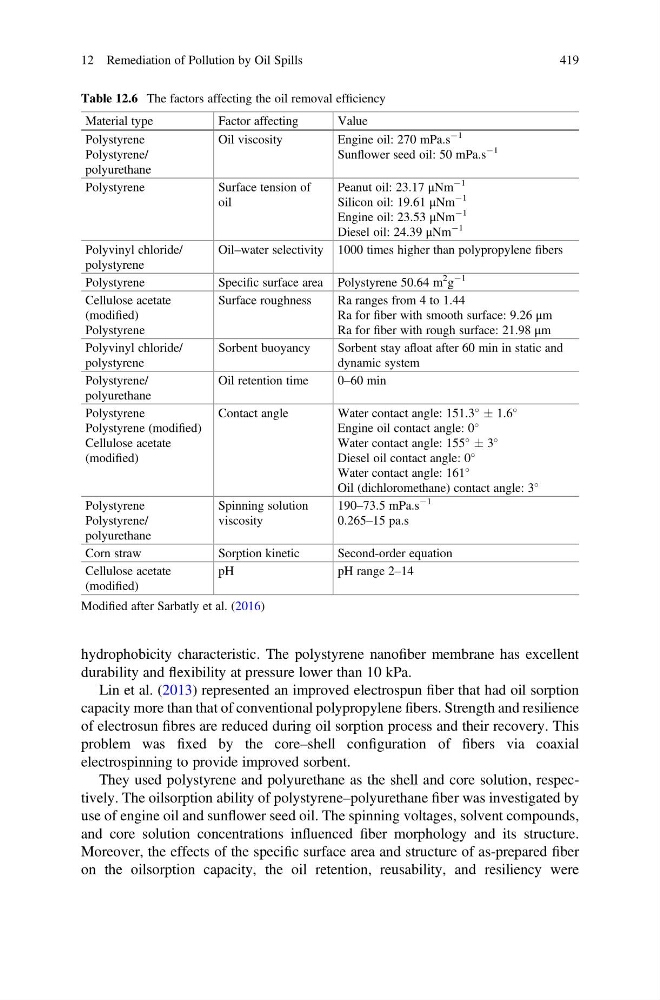
Table 12.6 The factors affecting the oil removal efficiency
Material type
Factor affecting
Value
Polystyrene
Polystyrene/
polyurethane
Oil viscosity
Engine oil: 270 mPa.s
À1
Sunflower seed oil: 50 mPa.s
À1
Polystyrene
Surface tension of
oil
Peanut oil: 23.17 μNm
À1
Silicon oil: 19.61 μNm
À1
Engine oil: 23.53 μNm
À1
Diesel oil: 24.39 μNm
À1
Polyvinyl chloride/
polystyrene
Oil–water selectivity 1000 times higher than polypropylene fibers
Polystyrene
Specific surface area Polystyrene 50.64 m
2
g
À1
Cellulose acetate
(modified)
Polystyrene
Surface roughness
Ra ranges from 4 to 1.44
Ra for fiber with smooth surface: 9.26 μm
Ra for fiber with rough surface: 21.98 μm
Polyvinyl chloride/
polystyrene
Sorbent buoyancy
Sorbent stay afloat after 60 min in static and
dynamic system
Polystyrene/
polyurethane
Oil retention time
0–60 min
Polystyrene
Polystyrene (modified)
Cellulose acetate
(modified)
Contact angle
Water contact angle: 151.3
Æ 1.6
Engine oil contact angle: 0
Water contact angle: 155
Æ 3
Diesel oil contact angle: 0
Water contact angle: 161
Oil (dichloromethane) contact angle: 3
Polystyrene
Polystyrene/
polyurethane
Spinning solution
viscosity
190–73.5 mPa.s
À1
0.265–15 pa.s
Corn straw
Sorption kinetic
Second-order equation
Cellulose acetate
(modified)
pH
pH range 2–14
Modified after Sarbatly et al. (2016)
12 Remediation of Pollution by Oil Spills
419
durability and flexibility at pressure lower than 10 kPa.
Lin et al. (2013) represented an improved electrospun fiber that had oil sorption
capacity more than that of conventional polypropylene fibers. Strength and resilience
of electrosun fibres are reduced during oil sorption process and their recovery. This
problem was fixed by the core–shell configuration of fibers via coaxial
electrospinning to provide improved sorbent.
They used polystyrene and polyurethane as the shell and core solution, respectively. The oilsorption ability of polystyrene–polyurethane fiber was investigated by
use of engine oil and sunflower seed oil. The spinning voltages, solvent compounds,
and core solution concentrations influenced fiber morphology and its structure.
Moreover, the effects of the specific surface area and structure of as-prepared fiber
on the oilsorption capacity, the oil retention, reusability, and resiliency were
Table 12.6 The factors affecting the oil removal efficiency
Material type
Factor affecting
Value
Polystyrene
Polystyrene/
polyurethane
Oil viscosity
Engine oil: 270 mPa.s
À1
Sunflower seed oil: 50 mPa.s
À1
Polystyrene
Surface tension of
oil
Peanut oil: 23.17 μNm
À1
Silicon oil: 19.61 μNm
À1
Engine oil: 23.53 μNm
À1
Diesel oil: 24.39 μNm
À1
Polyvinyl chloride/
polystyrene
Oil–water selectivity 1000 times higher than polypropylene fibers
Polystyrene
Specific surface area Polystyrene 50.64 m
2
g
À1
Cellulose acetate
(modified)
Polystyrene
Surface roughness
Ra ranges from 4 to 1.44
Ra for fiber with smooth surface: 9.26 μm
Ra for fiber with rough surface: 21.98 μm
Polyvinyl chloride/
polystyrene
Sorbent buoyancy
Sorbent stay afloat after 60 min in static and
dynamic system
Polystyrene/
polyurethane
Oil retention time
0–60 min
Polystyrene
Polystyrene (modified)
Cellulose acetate
(modified)
Contact angle
Water contact angle: 151.3
Æ 1.6
Engine oil contact angle: 0
Water contact angle: 155
Æ 3
Diesel oil contact angle: 0
Water contact angle: 161
Oil (dichloromethane) contact angle: 3
Polystyrene
Polystyrene/
polyurethane
Spinning solution
viscosity
190–73.5 mPa.s
À1
0.265–15 pa.s
Corn straw
Sorption kinetic
Second-order equation
Cellulose acetate
(modified)
pH
pH range 2–14
Modified after Sarbatly et al. (2016)
12 Remediation of Pollution by Oil Spills
419