

these are the most plastic waste generated and, consequently, the main composition
of microplastics. However, the vast majority of microplastic fibers are composed by
polyamide or polyester, since they come from the synthetic clothing that people use
(Cesa et al. 2017). For example, chlorinated polyethylene, polyamide, and polypropylene predominate (76%) in Arctic sediments (Bergmann et al. 2017). Polyester
and acrylic fibers are the most abundant polymers in sediments from the North
Atlantic, Mediterranean, and southern Indian Ocean (Woodall et al. 2014). Polyethylene and polypropylene are the predominant polymers in the northern Pacific Ocean
(Pan et al. 2019).
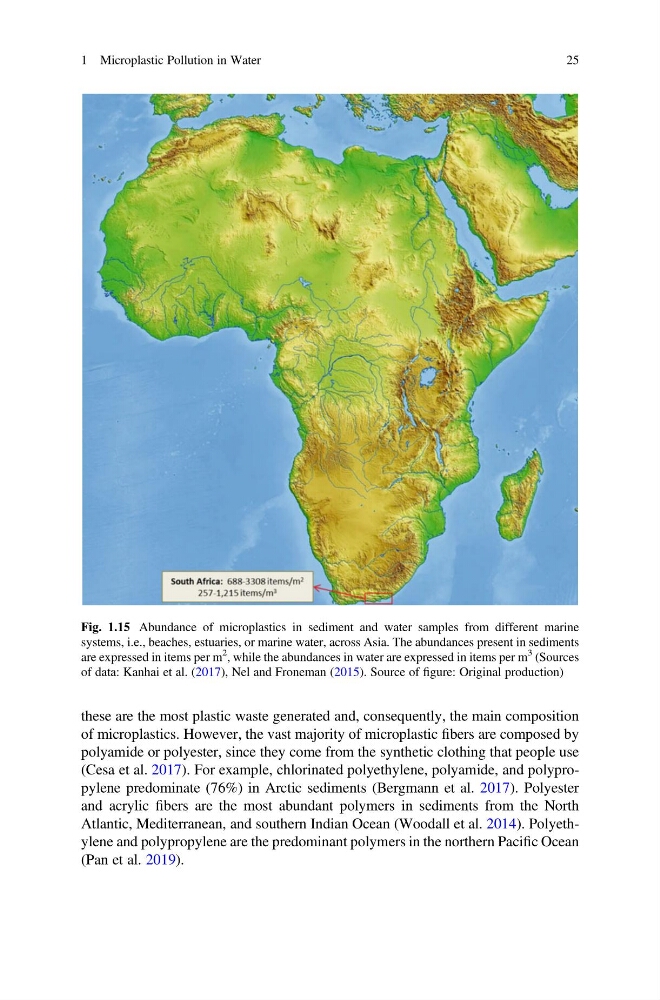
Fig. 1.15 Abundance of microplastics in sediment and water samples from different marine
systems, i.e., beaches, estuaries, or marine water, across Asia. The abundances present in sediments
are expressed in items per m
2
, while the abundances in water are expressed in items per m
3 (Sources
of data: Kanhai et al. (2017), Nel and Froneman (2015). Source of figure: Original production)
1 Microplastic Pollution in Water
25
of microplastics. However, the vast majority of microplastic fibers are composed by
polyamide or polyester, since they come from the synthetic clothing that people use
(Cesa et al. 2017). For example, chlorinated polyethylene, polyamide, and polypropylene predominate (76%) in Arctic sediments (Bergmann et al. 2017). Polyester
and acrylic fibers are the most abundant polymers in sediments from the North
Atlantic, Mediterranean, and southern Indian Ocean (Woodall et al. 2014). Polyethylene and polypropylene are the predominant polymers in the northern Pacific Ocean
(Pan et al. 2019).
Fig. 1.15 Abundance of microplastics in sediment and water samples from different marine
systems, i.e., beaches, estuaries, or marine water, across Asia. The abundances present in sediments
are expressed in items per m
2
, while the abundances in water are expressed in items per m
3 (Sources
of data: Kanhai et al. (2017), Nel and Froneman (2015). Source of figure: Original production)
1 Microplastic Pollution in Water
25