

and spillage. The main water pollutants are spent solvents, caustic solution, adhesives, paints sludge, heavy metals, etc. The wastes and paint spills are washed with
xylene and water (Subhasmini 2019). The wastewaters of paint industries also have
high biochemical oxygen demand, high chemical oxygen demand, high total
suspended solids, high pH, organometallic compounds and high concentration of
ethyl benzene, di-(2-ethylhexyl) phthalate, tetra-chloro-ethylene and toluene. The
wastewater from stiff and water-based paint industries contain oil-grease mixture,
suspended solids and phenolics. Thus, the wastewater generated is quite toxic and
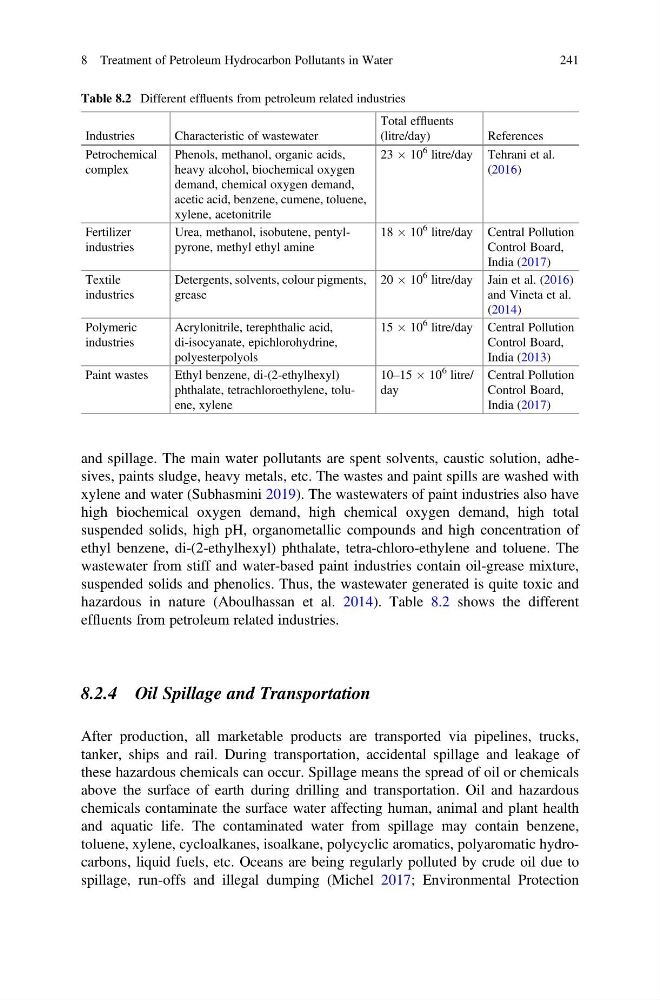
hazardous in nature (Aboulhassan et al. 2014). Table 8.2 shows the different
effluents from petroleum related industries.
8.2.4 Oil Spillage and Transportation
After production, all marketable products are transported via pipelines, trucks,
tanker, ships and rail. During transportation, accidental spillage and leakage of
these hazardous chemicals can occur. Spillage means the spread of oil or chemicals
above the surface of earth during drilling and transportation. Oil and hazardous
chemicals contaminate the surface water affecting human, animal and plant health
and aquatic life. The contaminated water from spillage may contain benzene,
toluene, xylene, cycloalkanes, isoalkane, polycyclic aromatics, polyaromatic hydrocarbons, liquid fuels, etc. Oceans are being regularly polluted by crude oil due to
spillage, run-offs and illegal dumping (Michel 2017; Environmental Protection
Table 8.2 Different effluents from petroleum related industries
Industries
Characteristic of wastewater
Total effluents
(litre/day)
References
Petrochemical
complex
Phenols, methanol, organic acids,
heavy alcohol, biochemical oxygen
demand, chemical oxygen demand,
acetic acid, benzene, cumene, toluene,
xylene, acetonitrile
23 Â 10
6 litre/day Tehrani et al.
(2016)
Fertilizer
industries
Urea, methanol, isobutene, pentylpyrone, methyl ethyl amine
18 Â 10
6 litre/day Central Pollution
Control Board,
India (2017)
Textile
industries
Detergents, solvents, colour pigments,
grease
20 Â 10
6 litre/day Jain et al. (2016)
and Vineta et al.
(2014)
Polymeric
industries
Acrylonitrile, terephthalic acid,
di-isocyanate, epichlorohydrine,
polyesterpolyols
15 Â 10
6 litre/day Central Pollution
Control Board,
India (2013)
Paint wastes
Ethyl benzene, di-(2-ethylhexyl)
phthalate, tetrachloroethylene, toluene, xylene
10–15 Â 10
6 litre/
day
Central Pollution
Control Board,
India (2017)
8 Treatment of Petroleum Hydrocarbon Pollutants in Water
241
xylene and water (Subhasmini 2019). The wastewaters of paint industries also have
high biochemical oxygen demand, high chemical oxygen demand, high total
suspended solids, high pH, organometallic compounds and high concentration of
ethyl benzene, di-(2-ethylhexyl) phthalate, tetra-chloro-ethylene and toluene. The
wastewater from stiff and water-based paint industries contain oil-grease mixture,
suspended solids and phenolics. Thus, the wastewater generated is quite toxic and
hazardous in nature (Aboulhassan et al. 2014). Table 8.2 shows the different
effluents from petroleum related industries.
8.2.4 Oil Spillage and Transportation
After production, all marketable products are transported via pipelines, trucks,
tanker, ships and rail. During transportation, accidental spillage and leakage of
these hazardous chemicals can occur. Spillage means the spread of oil or chemicals
above the surface of earth during drilling and transportation. Oil and hazardous
chemicals contaminate the surface water affecting human, animal and plant health
and aquatic life. The contaminated water from spillage may contain benzene,
toluene, xylene, cycloalkanes, isoalkane, polycyclic aromatics, polyaromatic hydrocarbons, liquid fuels, etc. Oceans are being regularly polluted by crude oil due to
spillage, run-offs and illegal dumping (Michel 2017; Environmental Protection
Table 8.2 Different effluents from petroleum related industries
Industries
Characteristic of wastewater
Total effluents
(litre/day)
References
Petrochemical
complex
Phenols, methanol, organic acids,
heavy alcohol, biochemical oxygen
demand, chemical oxygen demand,
acetic acid, benzene, cumene, toluene,
xylene, acetonitrile
23 Â 10
6 litre/day Tehrani et al.
(2016)
Fertilizer
industries
Urea, methanol, isobutene, pentylpyrone, methyl ethyl amine
18 Â 10
6 litre/day Central Pollution
Control Board,
India (2017)
Textile
industries
Detergents, solvents, colour pigments,
grease
20 Â 10
6 litre/day Jain et al. (2016)
and Vineta et al.
(2014)
Polymeric
industries
Acrylonitrile, terephthalic acid,
di-isocyanate, epichlorohydrine,
polyesterpolyols
15 Â 10
6 litre/day Central Pollution
Control Board,
India (2013)
Paint wastes
Ethyl benzene, di-(2-ethylhexyl)
phthalate, tetrachloroethylene, toluene, xylene
10–15 Â 10
6 litre/
day
Central Pollution
Control Board,
India (2017)
8 Treatment of Petroleum Hydrocarbon Pollutants in Water
241