

Nanocomposite having higher specific area and narrower band gap degraded 90.2%
within 240 min (Xia et al. 2015). The mineralization of polycyclic aromatic hydrocarbons was also confirmed in various studies through total organic carbon analysis.
Rachna et al. (2019) showed around 60% of total organic carbon loss of high
molecular weight polycyclic aromatic hydrocarbons within 24 h of reaction under
sunlight. Whereas, one of the four ring-membered polycyclic aromatic hydrocarbons
lost around 60% and 40% of organic content in reaction mixture after 5 and 24 h
(Rachna and Shanker 2019b). Degradation of polycyclic aromatic hydrocarbons
with various nanomaterials has been listed in Table 5.4.
5.6.4 Mechanism of Degradation
Functionalized nanomaterials have various tempting properties that benefit the
degradation of polycyclic aromatic hydrocarbons. Herein, extensive investigation
OH
COOH
H 3 C
OH
OH
O
OH
HO
OH
O
OH
OH
HO
HO
Benzo[a]pyrene
m/z=252
CO 2 + H 2 O
+
OH
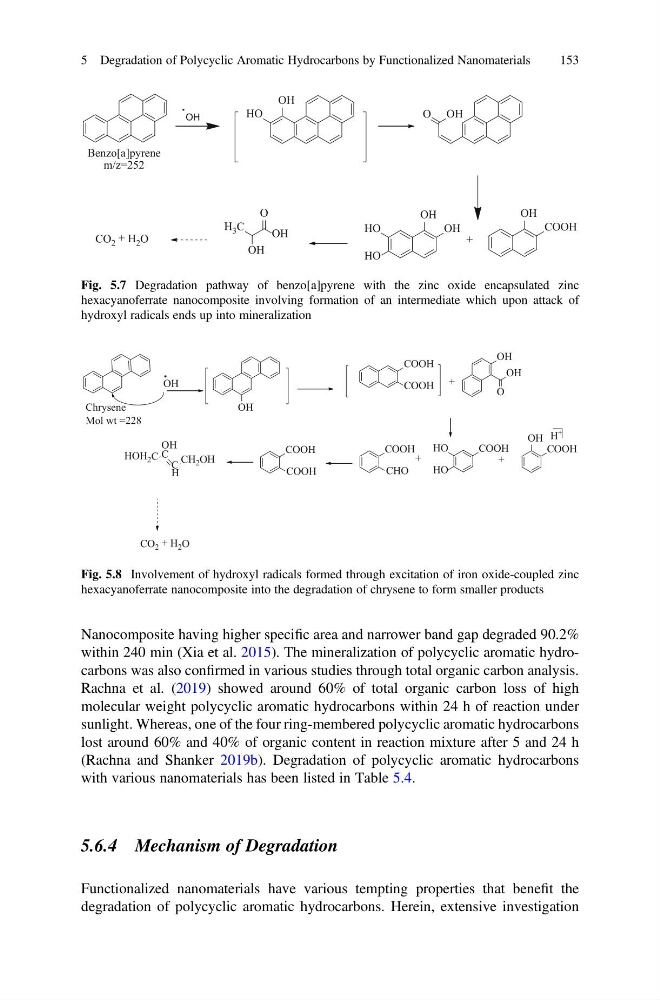
Fig. 5.7 Degradation pathway of benzo[a]pyrene with the zinc oxide encapsulated zinc
hexacyanoferrate nanocomposite involving formation of an intermediate which upon attack of
hydroxyl radicals ends up into mineralization
OH
COOH
COOH
COOH
OH
OH
O
COOH
COOH
COOH
HO
HO
Chrysene
Mol wt =228
H +
OH
COOH
CHO
OH
C
H
CH 2 OH
OH
C
HOH 2 C
CO 2 + H 2 O
+
+
+
Fig. 5.8 Involvement of hydroxyl radicals formed through excitation of iron oxide-coupled zinc
hexacyanoferrate nanocomposite into the degradation of chrysene to form smaller products
5 Degradation of Polycyclic Aromatic Hydrocarbons by Functionalized Nanomaterials
153
within 240 min (Xia et al. 2015). The mineralization of polycyclic aromatic hydrocarbons was also confirmed in various studies through total organic carbon analysis.
Rachna et al. (2019) showed around 60% of total organic carbon loss of high
molecular weight polycyclic aromatic hydrocarbons within 24 h of reaction under
sunlight. Whereas, one of the four ring-membered polycyclic aromatic hydrocarbons
lost around 60% and 40% of organic content in reaction mixture after 5 and 24 h
(Rachna and Shanker 2019b). Degradation of polycyclic aromatic hydrocarbons
with various nanomaterials has been listed in Table 5.4.
5.6.4 Mechanism of Degradation
Functionalized nanomaterials have various tempting properties that benefit the
degradation of polycyclic aromatic hydrocarbons. Herein, extensive investigation
OH
COOH
H 3 C
OH
OH
O
OH
HO
OH
O
OH
OH
HO
HO
Benzo[a]pyrene
m/z=252
CO 2 + H 2 O
+
OH
Fig. 5.7 Degradation pathway of benzo[a]pyrene with the zinc oxide encapsulated zinc
hexacyanoferrate nanocomposite involving formation of an intermediate which upon attack of
hydroxyl radicals ends up into mineralization
OH
COOH
COOH
COOH
OH
OH
O
COOH
COOH
COOH
HO
HO
Chrysene
Mol wt =228
H +
OH
COOH
CHO
OH
C
H
CH 2 OH
OH
C
HOH 2 C
CO 2 + H 2 O
+
+
+
Fig. 5.8 Involvement of hydroxyl radicals formed through excitation of iron oxide-coupled zinc
hexacyanoferrate nanocomposite into the degradation of chrysene to form smaller products
5 Degradation of Polycyclic Aromatic Hydrocarbons by Functionalized Nanomaterials
153