

80
T. A. Aragaw and B. A. Mekonnen
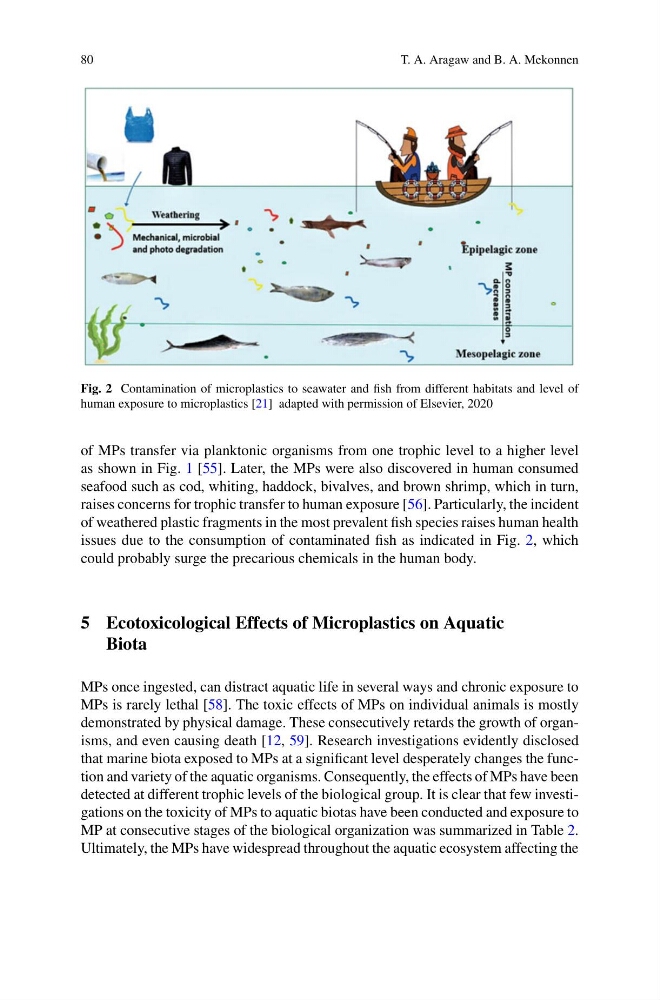
Fig. 2 Contamination of microplastics to seawater and fish from different habitats and level of
human exposure to microplastics [21] adapted with permission of Elsevier, 2020
of MPs transfer via planktonic organisms from one trophic level to a higher level
as shown in Fig. 1 [55]. Later, the MPs were also discovered in human consumed
seafood such as cod, whiting, haddock, bivalves, and brown shrimp, which in turn,
raises concerns for trophic transfer to human exposure [56]. Particularly, the incident
of weathered plastic fragments in the most prevalent fish species raises human health
issues due to the consumption of contaminated fish as indicated in Fig. 2, which
could probably surge the precarious chemicals in the human body.
5 Ecotoxicological Effects of Microplastics on Aquatic
Biota
MPs once ingested, can distract aquatic life in several ways and chronic exposure to
MPs is rarely lethal [58]. The toxic effects of MPs on individual animals is mostly
demonstrated by physical damage. These consecutively retards the growth of organisms, and even causing death [12, 59]. Research investigations evidently disclosed
that marine biota exposed to MPs at a significant level desperately changes the function and variety of the aquatic organisms. Consequently, the effects of MPs have been
detected at different trophic levels of the biological group. It is clear that few investigations on the toxicity of MPs to aquatic biotas have been conducted and exposure to
MP at consecutive stages of the biological organization was summarized in Table 2.
Ultimately, the MPs have widespread throughout the aquatic ecosystem affecting the
T. A. Aragaw and B. A. Mekonnen
Fig. 2 Contamination of microplastics to seawater and fish from different habitats and level of
human exposure to microplastics [21] adapted with permission of Elsevier, 2020
of MPs transfer via planktonic organisms from one trophic level to a higher level
as shown in Fig. 1 [55]. Later, the MPs were also discovered in human consumed
seafood such as cod, whiting, haddock, bivalves, and brown shrimp, which in turn,
raises concerns for trophic transfer to human exposure [56]. Particularly, the incident
of weathered plastic fragments in the most prevalent fish species raises human health
issues due to the consumption of contaminated fish as indicated in Fig. 2, which
could probably surge the precarious chemicals in the human body.
5 Ecotoxicological Effects of Microplastics on Aquatic
Biota
MPs once ingested, can distract aquatic life in several ways and chronic exposure to
MPs is rarely lethal [58]. The toxic effects of MPs on individual animals is mostly
demonstrated by physical damage. These consecutively retards the growth of organisms, and even causing death [12, 59]. Research investigations evidently disclosed
that marine biota exposed to MPs at a significant level desperately changes the function and variety of the aquatic organisms. Consequently, the effects of MPs have been
detected at different trophic levels of the biological group. It is clear that few investigations on the toxicity of MPs to aquatic biotas have been conducted and exposure to
MP at consecutive stages of the biological organization was summarized in Table 2.
Ultimately, the MPs have widespread throughout the aquatic ecosystem affecting the