

183
KEY ROLES OF
SUPERHYDROPHOBIC
MEMBRANE
No Wetting
Anti-sticking property
Self-cleaning property
Less scaling effect
Higher evaporation
efficiency
Higher vapor flux
Stable MD performance
Fabrication of
Superhydrphobic MD
membrane
Contact angle ³ 150°
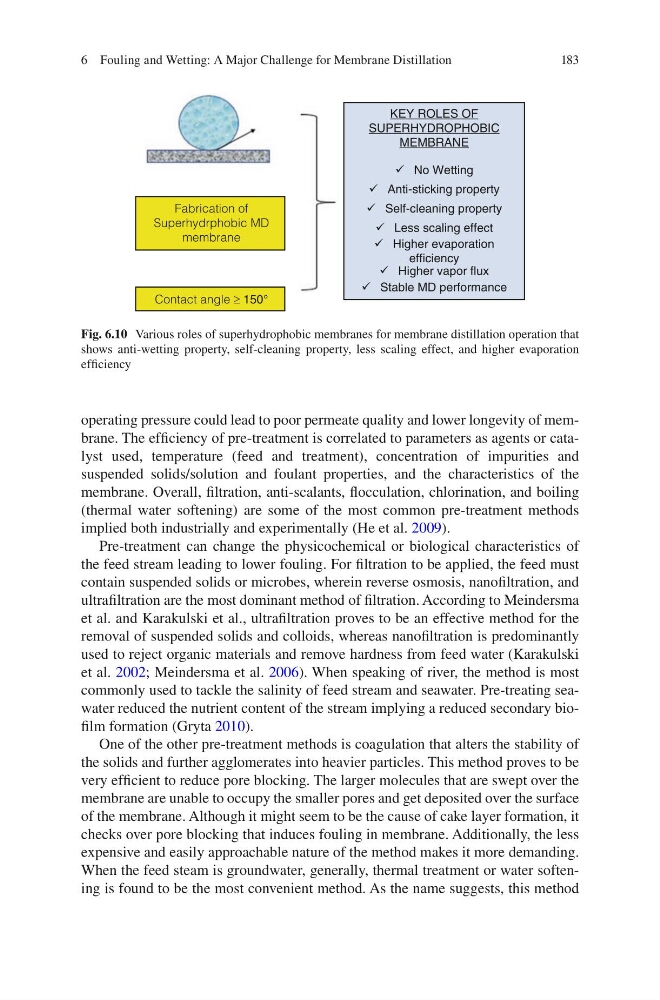
Fig. 6.10 Various roles of superhydrophobic membranes for membrane distillation operation that
shows anti-wetting property, self-cleaning property, less scaling effect, and higher evaporation
efficiency
operating pressure could lead to poor permeate quality and lower longevity of membrane. The efficiency of pre-treatment is correlated to parameters as agents or catalyst used, temperature (feed and treatment), concentration of impurities and
suspended solids/solution and foulant properties, and the characteristics of the
membrane. Overall, filtration, anti-scalants, flocculation, chlorination, and boiling
(thermal water softening) are some of the most common pre-treatment methods
implied both industrially and experimentally (He et al. 2009).
Pre-treatment can change the physicochemical or biological characteristics of
the feed stream leading to lower fouling. For filtration to be applied, the feed must
contain suspended solids or microbes, wherein reverse osmosis, nanofiltration, and
ultrafiltration are the most dominant method of filtration. According to Meindersma
et al. and Karakulski et al., ultrafiltration proves to be an effective method for the
removal of suspended solids and colloids, whereas nanofiltration is predominantly
used to reject organic materials and remove hardness from feed water (Karakulski
et al. 2002; Meindersma et al. 2006). When speaking of river, the method is most
commonly used to tackle the salinity of feed stream and seawater. Pre-treating seawater reduced the nutrient content of the stream implying a reduced secondary biofilm formation (Gryta 2010).
One of the other pre-treatment methods is coagulation that alters the stability of
the solids and further agglomerates into heavier particles. This method proves to be
very efficient to reduce pore blocking. The larger molecules that are swept over the
membrane are unable to occupy the smaller pores and get deposited over the surface
of the membrane. Although it might seem to be the cause of cake layer formation, it
checks over pore blocking that induces fouling in membrane. Additionally, the less
expensive and easily approachable nature of the method makes it more demanding.
When the feed steam is groundwater, generally, thermal treatment or water softening is found to be the most convenient method. As the name suggests, this method
6 Fouling and Wetting: A Major Challenge for Membrane Distillation
KEY ROLES OF
SUPERHYDROPHOBIC
MEMBRANE
No Wetting
Anti-sticking property
Self-cleaning property
Less scaling effect
Higher evaporation
efficiency
Higher vapor flux
Stable MD performance
Fabrication of
Superhydrphobic MD
membrane
Contact angle ³ 150°
Fig. 6.10 Various roles of superhydrophobic membranes for membrane distillation operation that
shows anti-wetting property, self-cleaning property, less scaling effect, and higher evaporation
efficiency
operating pressure could lead to poor permeate quality and lower longevity of membrane. The efficiency of pre-treatment is correlated to parameters as agents or catalyst used, temperature (feed and treatment), concentration of impurities and
suspended solids/solution and foulant properties, and the characteristics of the
membrane. Overall, filtration, anti-scalants, flocculation, chlorination, and boiling
(thermal water softening) are some of the most common pre-treatment methods
implied both industrially and experimentally (He et al. 2009).
Pre-treatment can change the physicochemical or biological characteristics of
the feed stream leading to lower fouling. For filtration to be applied, the feed must
contain suspended solids or microbes, wherein reverse osmosis, nanofiltration, and
ultrafiltration are the most dominant method of filtration. According to Meindersma
et al. and Karakulski et al., ultrafiltration proves to be an effective method for the
removal of suspended solids and colloids, whereas nanofiltration is predominantly
used to reject organic materials and remove hardness from feed water (Karakulski
et al. 2002; Meindersma et al. 2006). When speaking of river, the method is most
commonly used to tackle the salinity of feed stream and seawater. Pre-treating seawater reduced the nutrient content of the stream implying a reduced secondary biofilm formation (Gryta 2010).
One of the other pre-treatment methods is coagulation that alters the stability of
the solids and further agglomerates into heavier particles. This method proves to be
very efficient to reduce pore blocking. The larger molecules that are swept over the
membrane are unable to occupy the smaller pores and get deposited over the surface
of the membrane. Although it might seem to be the cause of cake layer formation, it
checks over pore blocking that induces fouling in membrane. Additionally, the less
expensive and easily approachable nature of the method makes it more demanding.
When the feed steam is groundwater, generally, thermal treatment or water softening is found to be the most convenient method. As the name suggests, this method
6 Fouling and Wetting: A Major Challenge for Membrane Distillation