

182
Table 6.6 Techniques applied in membrane fabrication for prevention of pore wetting in
membrane distillation operation in order to enhance the membrane hydrophobicity which is the
basic criteria of distillation membrane
Methodologies
Approach
Objective
References
Membrane casting
with additional
layer
Addition of
hydrophilic layers
To inhibit a transport of
amphipathic molecules,
however, includes more
resistance than a porous
hydrophobic coating
Bonyadi and Chung
(2007), Ray et al.
(2018b), Ray et al.
(2017a), Ray et al.
(2017), and Tijing
et al. (2014)
Membrane
fabrication with
simultaneous
incorporation
Incorporation of
perfluorinated
polymers
To increase membrane
hydrophobicity by reducing
surface-free energy
Lalia et al. (2013),
Prince et al. (2014),
and Ray et al. (2016)
Membrane
fabrication with
blending technique
Doping of
functionalized
hydrophobic agents
(nanoparticles)
To enhance membrane
hydrophobicity by
increasing the membrane
contact angle and minimize
the surface pore size
Dong et al. (2015) and
Ray et al. (2018d)
Membrane
modification
Incorporation of
carbon-based
micro- and
nanomaterials
To enhance the membrane
surface roughness
maximizes the contact
angle
Dumée et al. (2011),
Gethard et al. (2010),
and Ray et al. (2018d)
Membrane
modification
Physical
modification
To enhance membrane
surface roughness
maximizes the contact
angle
Liao et al. (2013), Ray
et al. (2018d), and
Sinha Ray et al. (2020)
liquid entry pressure (Ray et al. 2018b). Unlike contact angle (surface property),
liquid entry pressure is affected by both surface properties and the membrane pore
size (Guillen-Burrieza et al. 2016; Mosadegh-Sedghi et al. 2014; Ray et al. 2018a).
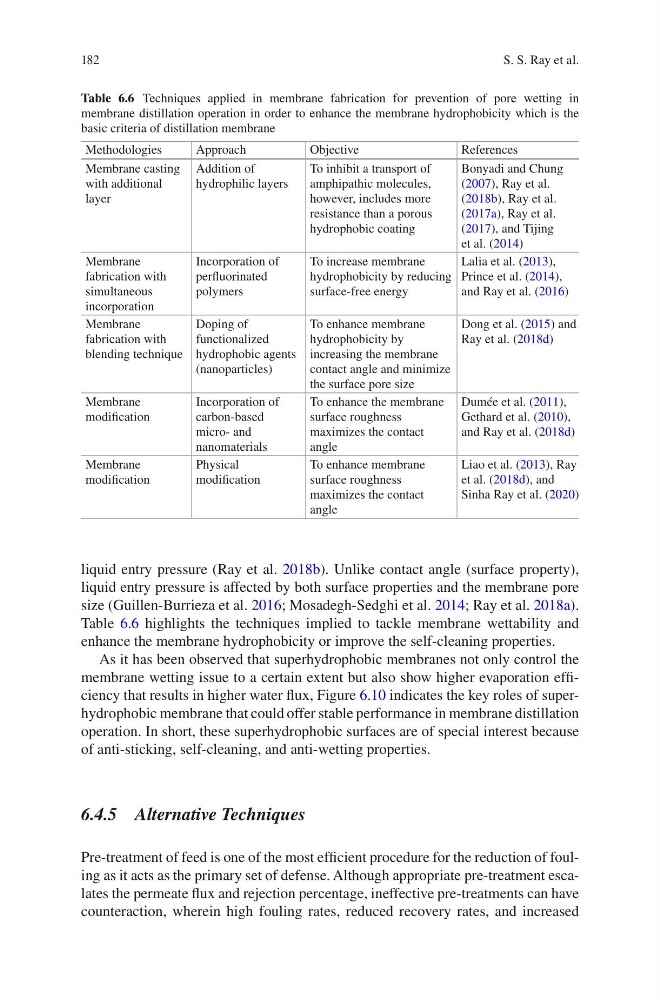
Table 6.6 highlights the techniques implied to tackle membrane wettability and
enhance the membrane hydrophobicity or improve the self-cleaning properties.
As it has been observed that superhydrophobic membranes not only control the
membrane wetting issue to a certain extent but also show higher evaporation efficiency that results in higher water flux, Figure 6.10 indicates the key roles of superhydrophobic membrane that could offer stable performance in membrane distillation
operation. In short, these superhydrophobic surfaces are of special interest because
of anti-sticking, self-cleaning, and anti-wetting properties.
6.4.5 Alternative Techniques
Pre-treatment of feed is one of the most efficient procedure for the reduction of fouling as it acts as the primary set of defense. Although appropriate pre-treatment escalates the permeate flux and rejection percentage, ineffective pre-treatments can have
counteraction, wherein high fouling rates, reduced recovery rates, and increased
S. S. Ray et al.
Table 6.6 Techniques applied in membrane fabrication for prevention of pore wetting in
membrane distillation operation in order to enhance the membrane hydrophobicity which is the
basic criteria of distillation membrane
Methodologies
Approach
Objective
References
Membrane casting
with additional
layer
Addition of
hydrophilic layers
To inhibit a transport of
amphipathic molecules,
however, includes more
resistance than a porous
hydrophobic coating
Bonyadi and Chung
(2007), Ray et al.
(2018b), Ray et al.
(2017a), Ray et al.
(2017), and Tijing
et al. (2014)
Membrane
fabrication with
simultaneous
incorporation
Incorporation of
perfluorinated
polymers
To increase membrane
hydrophobicity by reducing
surface-free energy
Lalia et al. (2013),
Prince et al. (2014),
and Ray et al. (2016)
Membrane
fabrication with
blending technique
Doping of
functionalized
hydrophobic agents
(nanoparticles)
To enhance membrane
hydrophobicity by
increasing the membrane
contact angle and minimize
the surface pore size
Dong et al. (2015) and
Ray et al. (2018d)
Membrane
modification
Incorporation of
carbon-based
micro- and
nanomaterials
To enhance the membrane
surface roughness
maximizes the contact
angle
Dumée et al. (2011),
Gethard et al. (2010),
and Ray et al. (2018d)
Membrane
modification
Physical
modification
To enhance membrane
surface roughness
maximizes the contact
angle
Liao et al. (2013), Ray
et al. (2018d), and
Sinha Ray et al. (2020)
liquid entry pressure (Ray et al. 2018b). Unlike contact angle (surface property),
liquid entry pressure is affected by both surface properties and the membrane pore
size (Guillen-Burrieza et al. 2016; Mosadegh-Sedghi et al. 2014; Ray et al. 2018a).
Table 6.6 highlights the techniques implied to tackle membrane wettability and
enhance the membrane hydrophobicity or improve the self-cleaning properties.
As it has been observed that superhydrophobic membranes not only control the
membrane wetting issue to a certain extent but also show higher evaporation efficiency that results in higher water flux, Figure 6.10 indicates the key roles of superhydrophobic membrane that could offer stable performance in membrane distillation
operation. In short, these superhydrophobic surfaces are of special interest because
of anti-sticking, self-cleaning, and anti-wetting properties.
6.4.5 Alternative Techniques
Pre-treatment of feed is one of the most efficient procedure for the reduction of fouling as it acts as the primary set of defense. Although appropriate pre-treatment escalates the permeate flux and rejection percentage, ineffective pre-treatments can have
counteraction, wherein high fouling rates, reduced recovery rates, and increased
S. S. Ray et al.