

nitrogen and phosphorus in wastewater, algal biomass production was less. Hence,
concentrated wastewater was used which increased the biomass yield. Nguyen et al.
(2010) studied starch accumulation in C. reinhardtii cells and found that it was
utilized by a hyperthermophilic bacterium, Thermotoga neapolitana, as substrate for
hydrogen evolution. Ulva lactuca is used for biogas production where the ratio of
C/N is between 20 and 30. The carbon limitation can be overcome when heterotrophic bacteria are cultivated with algal species, e.g., Chlorella sp. (Bai et al. 2015b).
Bacillus pumilus ES4 was reported to fix nitrogen resulting in enhancement of algal
cultivation of Chlorella vulgaris (Hernandez et al. 2009). The requirement of
phosphorus is essential for the growth of the algae. Algae take up inorganic
phosphorus coming from organic phosphorus in which bacteria play a major role
by the use of phosphatases (Zhu et al. 2013b). Li et al. (2020) reported hydrogen
production using Chlorella pyrenoidosa strain IOAC707S under nitrogen limitation.
When the cultures were nitrogen limited, photosystem II photochemical activity
efficiency and oxygen production decreased. The transcriptome showed that under
nitrogen limitation induction of hydrogenase enzyme took place and the metabolism
shifted toward hydrogen evolution analysis. Onwudili et al. (2020) have conducted
studies on three algae Chlorella vulgaris, Spirulina platensis, and Saccharina
latissima for hydrogen generation. They were processed under supercritical water
gasification in a batch reactor. The generation of hydrogen was found to be twice the
amount of hydrogen produced in the presence of sodium hydroxide. Among the
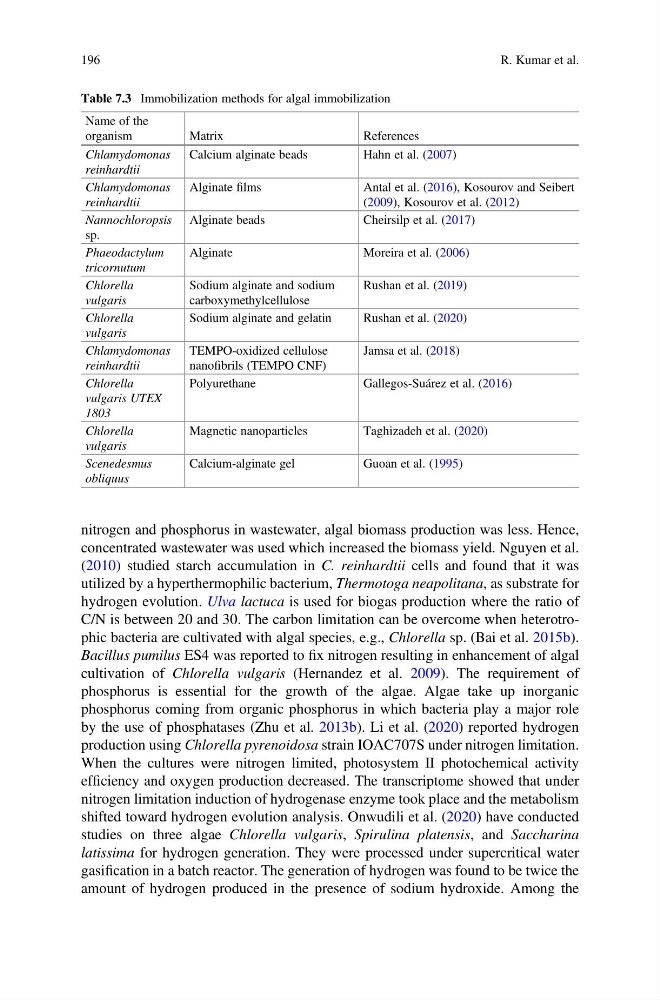
Table 7.3 Immobilization methods for algal immobilization
Name of the
organism
Matrix
References
Chlamydomonas
reinhardtii
Calcium alginate beads
Hahn et al. (2007)
Chlamydomonas
reinhardtii
Alginate films
Antal et al. (2016), Kosourov and Seibert
(2009), Kosourov et al. (2012)
Nannochloropsis
sp.
Alginate beads
Cheirsilp et al. (2017)
Phaeodactylum
tricornutum
Alginate
Moreira et al. (2006)
Chlorella
vulgaris
Sodium alginate and sodium
carboxymethylcellulose
Rushan et al. (2019)
Chlorella
vulgaris
Sodium alginate and gelatin
Rushan et al. (2020)
Chlamydomonas
reinhardtii
TEMPO-oxidized cellulose
nanofibrils (TEMPO CNF)
Jamsa et al. (2018)
Chlorella
vulgaris UTEX
1803
Polyurethane
Gallegos-Suárez et al. (2016)
Chlorella
vulgaris
Magnetic nanoparticles
Taghizadeh et al. (2020)
Scenedesmus
obliquus
Calcium-alginate gel
Guoan et al. (1995)
196
R. Kumar et al.
concentrated wastewater was used which increased the biomass yield. Nguyen et al.
(2010) studied starch accumulation in C. reinhardtii cells and found that it was
utilized by a hyperthermophilic bacterium, Thermotoga neapolitana, as substrate for
hydrogen evolution. Ulva lactuca is used for biogas production where the ratio of
C/N is between 20 and 30. The carbon limitation can be overcome when heterotrophic bacteria are cultivated with algal species, e.g., Chlorella sp. (Bai et al. 2015b).
Bacillus pumilus ES4 was reported to fix nitrogen resulting in enhancement of algal
cultivation of Chlorella vulgaris (Hernandez et al. 2009). The requirement of
phosphorus is essential for the growth of the algae. Algae take up inorganic
phosphorus coming from organic phosphorus in which bacteria play a major role
by the use of phosphatases (Zhu et al. 2013b). Li et al. (2020) reported hydrogen
production using Chlorella pyrenoidosa strain IOAC707S under nitrogen limitation.
When the cultures were nitrogen limited, photosystem II photochemical activity
efficiency and oxygen production decreased. The transcriptome showed that under
nitrogen limitation induction of hydrogenase enzyme took place and the metabolism
shifted toward hydrogen evolution analysis. Onwudili et al. (2020) have conducted
studies on three algae Chlorella vulgaris, Spirulina platensis, and Saccharina
latissima for hydrogen generation. They were processed under supercritical water
gasification in a batch reactor. The generation of hydrogen was found to be twice the
amount of hydrogen produced in the presence of sodium hydroxide. Among the
Table 7.3 Immobilization methods for algal immobilization
Name of the
organism
Matrix
References
Chlamydomonas
reinhardtii
Calcium alginate beads
Hahn et al. (2007)
Chlamydomonas
reinhardtii
Alginate films
Antal et al. (2016), Kosourov and Seibert
(2009), Kosourov et al. (2012)
Nannochloropsis
sp.
Alginate beads
Cheirsilp et al. (2017)
Phaeodactylum
tricornutum
Alginate
Moreira et al. (2006)
Chlorella
vulgaris
Sodium alginate and sodium
carboxymethylcellulose
Rushan et al. (2019)
Chlorella
vulgaris
Sodium alginate and gelatin
Rushan et al. (2020)
Chlamydomonas
reinhardtii
TEMPO-oxidized cellulose
nanofibrils (TEMPO CNF)
Jamsa et al. (2018)
Chlorella
vulgaris UTEX
1803
Polyurethane
Gallegos-Suárez et al. (2016)
Chlorella
vulgaris
Magnetic nanoparticles
Taghizadeh et al. (2020)
Scenedesmus
obliquus
Calcium-alginate gel
Guoan et al. (1995)
196
R. Kumar et al.